
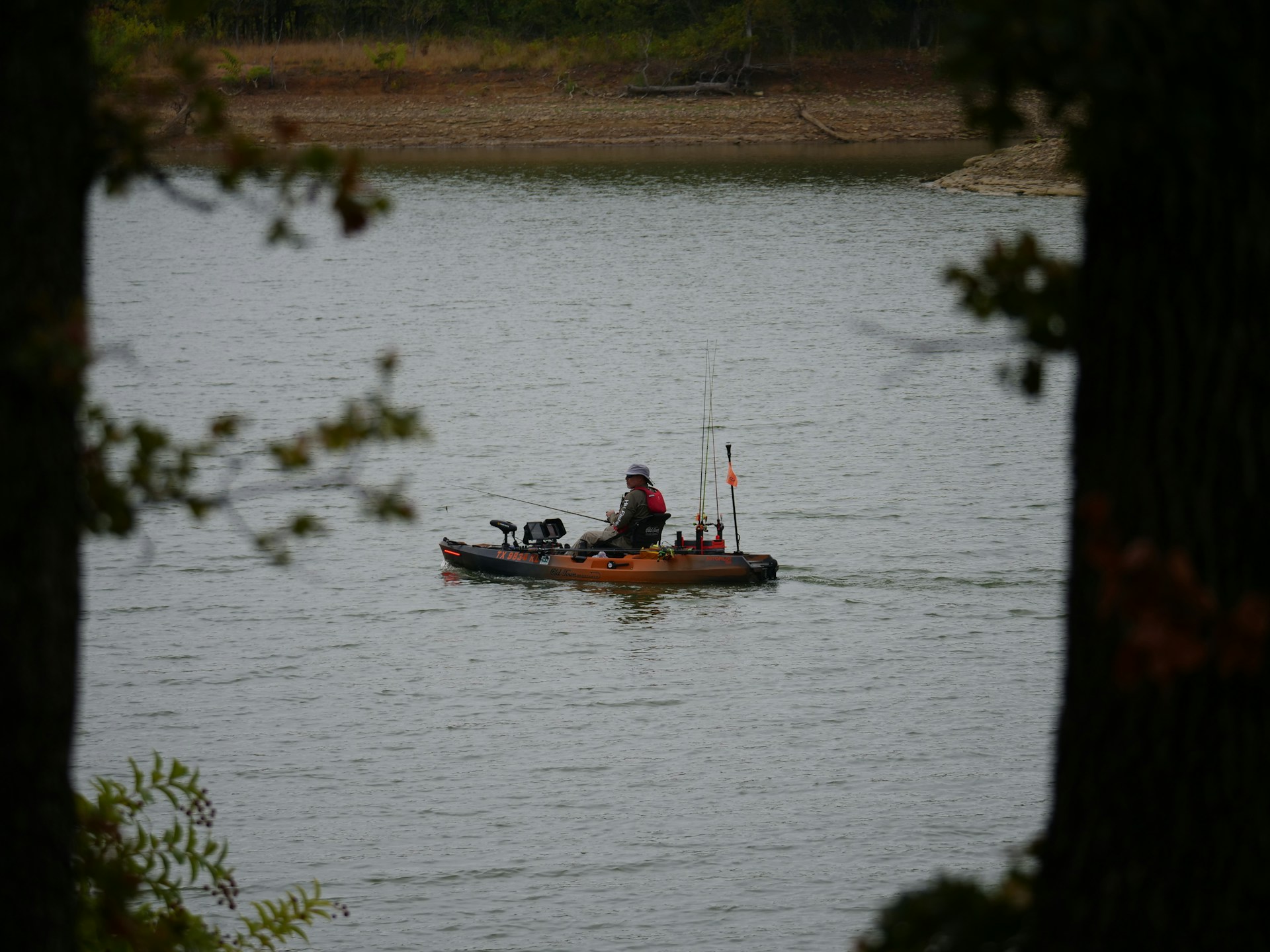
Old Town Sportsman 106 Review: Honest Take From A Kayak Angler
The first morning I slid the Old Town Sportsman 106 off the tailgate, it felt like way more kayak than 10 and a half feet should. I was expecting a little river toy I’d toss around and outgrow in a season; what I got was a compact barge that clearly wanted to fish.
That first trip was a small lake at daybreak, light fog hanging over glassy water. I paddled twenty yards, stopped to rig a rod, and the boat just sat there like it was anchored, barely a twitch under me. That was the moment I thought, “Okay, this thing is going to make a lot of people very happy.”
If you’re eyeing this fishing kayak, you’re probably in the same spot I was: you want a serious fishing platform, but you still need to lift it, store it, and drag it across a sketchy ramp without wrecking your back. This Old Town Sportsman 106 review is written with exactly that angler in mind.
Table of Contents
Quick Take – Is The Old Town Sportsman 106 Right For You?
Short version: this is a very stable, very fishy, compact sit-on-top that favors comfort and confidence over speed. If you want to stand, fish shallow water, and not think too hard about balance, it absolutely delivers. If you like long open-water paddles or chasing birds across wind-blown bays, you’ll feel its limits.
Best for:
- Small to mid-size freshwater lakes
- Protected inshore bays and marshes on reasonable weather days
- Slow to moderate rivers where you’re drifting more than grinding miles
Not ideal for:
- Long crossings on big reservoirs or open coastlines in heavy wind
- Folks who insist on fast hulls
- Anyone who already knows they want a pedal or motor boat in the near future
Old Town built this hull to feel like a compact fishing “tank,” and it does. At around 10’6″ long, 34.5″ wide, and roughly mid-70s pounds fully rigged, it is short and wide with a big Double-U style hull that’s all about stability and forgiveness.
If that tradeoff lines up with how and where you fish, keep reading. If you’re dreaming of 6-mile pedal missions, this probably isn’t your last kayak.
What You’re Actually Getting – A Look At The Boat
Just to be clear, I’m talking about the paddle version: the Old Town Sportsman 106 sit-on-top fishing kayak. Not the PDL pedal drive and not the Minn Kota motor version. Those share the family name but are different animals once you factor in drive weight and complexity.
On paper, the basics look like this:
- Length: 10′ 6″
- Width: 34.5″
- Total capacity: about 440 lb
- Usable capacity for paddler + gear: roughly mid-360s
- Assembled boat weight: about 77 lb (seat is around 6 lb of that)
- Propulsion: paddle
- Style: single-layer polyethylene sit-on-top, Element frame seat, bow hatch
That Double-U / pontoon style hull is the star. Old Town leans hard into the idea that you can stand up, move around, and not feel like you’re on a tightrope, and in my experience they’re not overselling it.
In the parking lot it feels chunky but not absurd. I can shoulder carry it for a short distance, but if I have to go more than 30–40 yards I throw it on a cart and save my energy for paddling. The deck looks busy in photos, yet when you climb aboard, the layout makes sense: big open cockpit, seat in a good power position, clean standing area, and a generous tankwell.
Stability & Hull Feel – Sitting, Standing, And Sketchy Moments
Let’s talk about the thing most people care about first: Old Town Sportsman 106 stability.
Sitting down, it feels like a dock. Primary stability is very strong. You can lean over to grab a tackle tray, swing around to check something in the tankwell, or twist to unhook a crankbait from the rear rod holder without that “oh no” wobble some narrower boats give you. When boat wakes roll in, it tends to rise and fall rather than snap side to side.
Standing is where this hull earns its keep. On calm water, I can plant the paddle across my lap, put my feet under me, and stand straight up without thinking much about it. Once I’m up, it feels a bit like standing in a jon boat. There’s some movement, sure, but it’s slow and predictable. The deck pads grip well, and the width gives you room for a shoulder-width stance instead of tip-toeing on a center ridge.
Realistically though, you can flip anything. The Sportsman 106 will let you get away with bad habits for a while, but if you step right on the edge during a boat wake, or you’re sideways in a steep river wave, it will go over. I had one “half-roll” when I got lazy, turned broadside to a wake near a dock, and stepped toward the rail while fiddling with a rod. The kayak gave me a big warning lean first. That part I liked.
On rivers, the wide hull gives you confidence when you’re drifting and making casts, but you can feel the current grab that big stern when you cross eddy lines. It’s not twitchy, just slow to react. That’s great for newbie nerves and not so great when you want to dance down technical boulder gardens.
As always, I’m a broken record about this: wear a PFD, and take the boat to warm, shallow water once and push it. Lean it to the rail, stand up, sit down, try to flip it and climb back in. Knowing the limit and your re-entry process makes all the difference when you get surprised later.
Paddling Performance – Speed, Tracking, And Wind
You don’t buy a 10’6″, 34.5″ wide fishing kayak because you love speed. You buy it because you want comfort and stability and you accept “good enough” paddling. That is exactly what the Sportsman 106 delivers.
At an easy all-day pace it will move you around the lake just fine. I cruise at what I’d call “fishing speed” without feeling like I’m working. Once I try to push it, the hull reminds me it is shaped like a bathtub. It will go faster, but each extra knot feels increasingly expensive.
Tracking is pretty solid for a stubby boat with no rudder. On calm water, trimmed reasonably well, it holds a line better than I expected. The wide hull resists edging tricks a bit, but small correction strokes and a relaxed cadence keep it straight. On a slow river, you actually appreciate that it is not hyper-responsive; it drifts predictably while you make casts.
Wind is the main tax you pay. Once a crosswind picks up, the big bow and wide sides start to catch it, and the kayak will try to weathercock. After an hour of fighting a stiff breeze across open water, you’ll be thinking harder about a pedal drive or a longer hull. Shifting a bit more weight toward the stern, using your crate and battery placement, helps tame it a bit, but only so much.
Versus something longer like the Sportsman 120, you definitely feel the trade. The 120 tracks and glides better, especially with a bit more waterline in play. The 106 answers back with easier storage, quicker turning in small spaces, and a little less hassle loading on a car or truck.
Fishability & Layout – How It Actually Fishes
The reason I keep this boat around is simple: day to day, Old Town Sportsman 106 fishing is just easy.
Starting at the bow, you get a proper hatch. It’s not a place I stuff things I need constantly, but it will swallow a dry bag with spare layers, a small emergency kit, or even a lightweight camp chair. It stays reasonably dry if you’re not punching surf all day.
The standing area in front of the seat is open and mostly flat with EVA pad coverage. I can plant both feet without stepping on scuppers or hardware. When I fish barefoot in summer, those pads are a nice touch.
The seat sits at a comfortable height for most people. You’re not way up in the sky, but you’re high enough that your knees are at a natural bend and it’s easy to stand. Under the seat you get a handy tray spot, and Old Town includes a little tackle box that fits there nicely.
Rod management is more thought-out than some competitors. You get flush mounts behind the seat that work well for storage or trolling small crankbaits. I usually stage one rod horizontal along the gunwale, tucked under the side, when I’m paddling into overhanging trees or low bridges. The accessory tracks along the cockpit make it simple to add a YakAttack style rod holder, a camera mount, or a small light without drilling holes.
The rear tankwell is generous for a 10’6″ boat. My milk crate with four rod tubes fits, plus a small soft cooler beside it, with room for a stakeout pole or folding cart on top. Rigged smartly, the back deck stays clean enough that I’m not constantly snagging line on bungees.
A typical “bass day” layout for me looks like this:
- 3 or 4 rods total
- Crate with 2–3 utility boxes and a small bag of soft plastics
- Net laid flat along the gunwale on the non-casting side
- Pliers and fish grips clipped to the seat frame
- Phone and keys in a dry box in the small console area
Nothing fancy, but it all has a home, and that makes a bigger difference in a compact boat than most people realize.
Comfort & Long-Day Ergonomics
Old Town’s Element style seat is one of the main reasons I can do a full day in this kayak without feeling wrecked. It’s a mesh frame seat that breathes well, with decent lumbar support once you find your angle.
For my average-height frame, the seat height and foot brace position let me use a reasonably efficient forward stroke. If you’re taller or shorter you still have enough adjustment range to avoid T-rex arms or straight-leg misery.
After 5 or 6 hours, something always starts to talk: usually my hips or lower back. In this boat, that “I’ve been sitting a while” feeling shows up later than in cheaper lawn-chair style seats I’ve used. I’ll occasionally loosen the backstrap a notch, slide forward, or stand up for ten minutes while fan-casting a flat. That resets everything.
Warm weather comfort is good. The mesh dries quickly and doesn’t feel like a sponge. In colder shoulder seasons, I plug the scuppers under the seat and run a thin closed-cell pad on the deck so my feet aren’t in cold water all day. That combo makes fall and early spring trips a lot more pleasant.
Getting in and out is friendly for stiff knees. The deck height is low enough that you can swing your legs over and stand in shallow water without feeling like you’re climbing down from a ladder. I’ve helped a few newer paddlers in and out of this hull at busy ramps and they all commented on how “solid” it felt under them.
Transport, Storage, And Rigging – Living With ~77 Pounds
On paper, 77 lb assembled doesn’t sound bad. In the real world, it depends what kind of shape you and your ramps are in.
Short carries from the truck to the water I’ll just grab the side handle and waddle it down. Anything longer and I use a scupper cart under the rear, grab the bow handle, and roll it like a wheelbarrow. That saves my shoulders for actual fishing.
Loading is where your setup matters. I usually truck-bed mine: tailgate down, a simple bed extender, bow strap up to a tie-down, red flag on the stern. If I need to car-top, I lean the bow on the rear crossbar from the ground, then lift the stern and slide it up. The length actually helps there – you don’t have a ton of kayak hanging past the front of the vehicle.
At home, I store it on its side on a pair of padded wall brackets in the garage. Single-layer poly boats like this are tough, but I still avoid baking it flat in the sun to prevent any long-term warping.
Rigging wise, the hull is pretty friendly. There is room and structure for an anchor trolley on each side, and the flat rear deck takes a short power-pole style shallow anchor mount if you want to go that route. The universal transducer mount makes fish finder installs cleaner than drilling and gluing random hardware under the hull.
Could you stick a small trolling motor off the stern or on a side-mount bracket? Sure. People do. But if you know you’re headed down the rabbit hole of batteries, wiring, and motor brackets, the Minn Kota version or a different hull purpose-built for power might be a better long-term move.
Where The Sportsman 106 Shines (And Where It Struggles)
As mentioned in this Old Town Sportsman 106 review, this thing leans very hard into being a compact, confidence-inspiring fishing platform. It is not trying to be an all-water expedition boat.
Where it’s in its element:
- Small to medium lakes where you hop point to point and stand a lot to flip or pitch
- Protected salt marshes and back bays when the forecast is friendly
- Slow rivers where you float, fish, and eddy out more than you sprint
Where it starts to struggle:
- Long open-water paddles into a stiff wind
- Big reservoirs with afternoon whitecaps where glide and speed really matter
- Technical, fast rivers that reward quick acceleration and nimble hulls
My personal love list:
- The relaxed stability, especially for newer anglers or those who stand a lot
- Deck layout that feels thought-out right out of the box
- Compact footprint that actually fits in garages, small yards, and standard truck beds
And the stuff that bugs me:
- Lack of glide once you stop paddling – it slows quickly
- Wind cocking when you’re quartering across a breeze
- Weight that is manageable but right on the edge of “doable” for some solo anglers
Old Town Sportsman 106 vs Other Popular Options
Sportsman 106 vs Sportsman 120 (Paddle)
The jump from 10’6″ to 12′ does not sound like much on paper, but you feel it. The 120 keeps that Double-U style stand-up stability, yet the extra length helps with tracking and carrying speed between spots. It also bumps capacity, which is nice if you are a bigger paddler or you load heavy.
In tight creeks, carports, and short truck beds, the 106 is simply easier to live with. If most of your paddling is under a couple miles round trip and your storage or transport is limited, I lean toward the 106. If you routinely cover more water or fish bigger reservoirs, the 120 starts looking like the better long-term partner.
Sportsman 106 (Paddle) vs 106 PDL & Minn Kota
The PDL and Minn-Kota versions bolt on serious capability: hands-free propulsion for the PDL, and an integrated electric motor for the Minn-Kota. They also bolt on cost, weight, and complexity.
The PDL 106 hull with drive climbs well over 100 lb. The Minn-Kota version is heavier again. They shine when:
- You fish big windy water and want to move without paddling
- You troll a lot or cast while moving along a shoreline
- You have shoulder issues that make long paddling days unpleasant
The paddle 106 shines when:
- You want simpler, lighter, cheaper
- You are still figuring out your fishing style
- You launch from rough spots where a delicate drive would stress you out
If you’re torn between them, it is worth reading up on pedal vs paddle tradeoffs and being honest about your water and budget. A lot of us start in paddle boats, fall in love with kayak fishing, then step up to pedals or motors later once we know what we actually need.
Sportsman 106 vs Similar-Sized Fishing Kayaks
Compared to other 10–11 foot fishing kayaks from brands like Bonafide, Native, or Perception, Old Town leans heavier and “boat-like.” Many paddlers describe them as feeling like mini skiffs: super stable, a bit slow to paddle, and very confidence-inspiring.
Some competitors trade a little stability for noticeably better speed and turning. If you care more about efficiency than a rock-steady feel, you might like those better. But if your priority is a calm, forgiving platform that you can stand on and grow into, the Sportsman 106 makes a strong case for itself.
Who Should Buy This Kayak (And Who Should Skip It)
I think in terms of “kayak angler personas” more than specs. Here is where the Sportsman 106 fits.
Perfect fit:
- Weekend bass angler on small lakes who wants to stand and pitch at docks without feeling tippy
- Inshore marsh angler who launches in muddy, unimproved spots and needs a tough, simple boat that can handle oysters and sandbars
- River angler who floats slow to moderate current, fishes eddies and laydowns, and is not trying to run class III rapids
Probably happy but should demo first:
- Bigger paddlers pushing the weight limit with lots of gear – check capacity and freeboard with your actual load
- Anglers who want to dabble in longer paddles now and then, but mostly fish closer to the ramp
Should probably skip it:
- Anyone regularly paddling 3–5 miles one way on big water
- Folks obsessed with standing 90 percent of the time in wind and chop and wanting the widest, flattest barge possible
- Anglers who already know they want pedals or a motor from day one
If you read that and thought “That first category sounds exactly like me,” this kayak will likely feel like home. If you saw yourself in the last category, you might be happier stretching the budget once and getting the pedal or motor boat you’re already dreaming about.
Buying Tips, Setup Ideas, And First-Trip Checklist
If you’re shopping new, it’s mostly about color, price, and dealer support. Used is where you need to pay closer attention. On a used Old Town Sportsman 106 pre-purchase review, I’d check:
- Hull for deep gouges, especially along the keel and under the seat
- Soft spots on the bottom from being stored on a single crossbar in hot weather
- Seat frame welds and fabric for bending or tears
- Scuppers for cracks
- Hardware around the bow hatch and accessory tracks
For a first-time rigging, I’d keep it simple:
- One crate with 2–3 rod holders
- Two or three rods, not six
- Small anchor or stakeout pole with clean routing so it doesn’t tangle your feet
- Pliers, knife, and whistle clipped where you can reach them without twisting
First few trips, plan to:
- Pick calm, familiar water and stay within an easy paddle of the launch
- Practice leaning, standing, and re-entering somewhere safe and shallow
- Wear your PFD every time and check your local rules on lights, sound devices, and any registration requirements if you later add a motor
That little bit of prep and practice will do more for your confidence than any accessory you bolt on.
Final Thoughts
That first foggy morning on the lake set the tone for my relationship with the Sportsman 106. It felt like a boat that wanted me to relax, focus on the next cast, and not worry about every little ripple. Since then it has bounced off rocks, slid over oyster shells, and carried way too many tackle boxes without much complaint.
If your fishing life looks like short drives to local lakes, protected bays, or mellow rivers, and you care more about stability and simplicity than outright speed, this kayak is very easy to recommend. If you can, sit in one rigged at a shop or borrow a friend’s and see how it feels under you. A good fishing kayak should disappear under your routine so you can think about the bite, not the boat.
I hope you’ve enjoyed my honest Old Town Sportsman 106 Review and please contact me if you have any questions!