Best Bait for Redfish From a Kayak: Natural Baits & Lures
A fishing kayak can be a useful redfish platform because it can reach shallow marshes, flats, creek mouths, and protected shorelines that are difficult for larger boats to access. That advantage still depends on boat control: hull slap, unnecessary paddle strokes, poor positioning, and drifting directly over fish can erase much of the benefit.
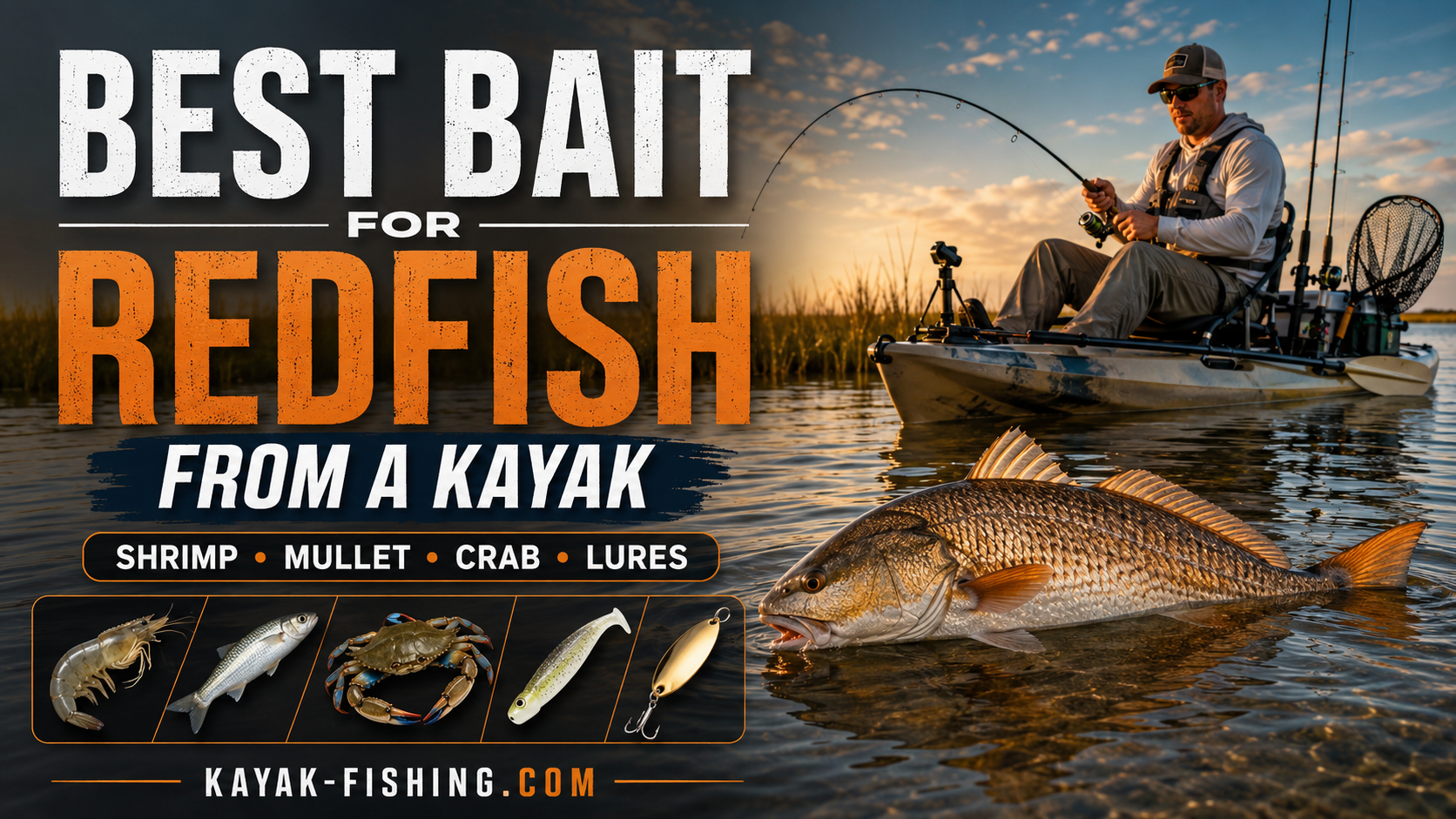
The best bait for redfish from a kayak is not one universal choice. Live shrimp, finger mullet, and blue crab are all documented redfish baits, while soft-bodied jigs, spoons, and topwater plugs are established artificial options. The better choice depends on local forage, water depth and clarity, current, cover, fish behavior, and how much water you need to search.
This guide focuses on a compact bait and lure system that makes sense from a kayak, with practical rigging and presentation guidance that can be adjusted to different Gulf and Atlantic redfish fisheries.
Quick Answer: What Is the Best Bait for Redfish?
Live shrimp is one of the best all-around starting baits for redfish because it is natural forage and can be fished under a cork, lightly weighted, or near the bottom. Florida FWC specifically recommends live shrimp under a popping cork, while Texas Parks & Wildlife also lists finger mullet and small live blue crab among productive natural baits.
| Bait or Lure | Best Role | Kayak Advantage |
|---|---|---|
| Live shrimp | Versatile natural presentation | Works under a cork, lightly weighted, or around current and structure |
| Finger or cut mullet | Baitfish-oriented redfish and stationary presentations | Useful when you want scent or a bait that stays in a defined zone |
| Blue crab | Natural bottom bait | Can be positioned around passes, channels, shell, and deeper edges |
| Paddle tail | Covering water | One lure can be adjusted for depth, grass, current, and wind |
| Weedless spoon | Searching grass and shallow structure | Simple retrieve and relatively snag resistant |
| Topwater | Active fish in suitable shallow-water conditions | Covers water without carrying live bait |
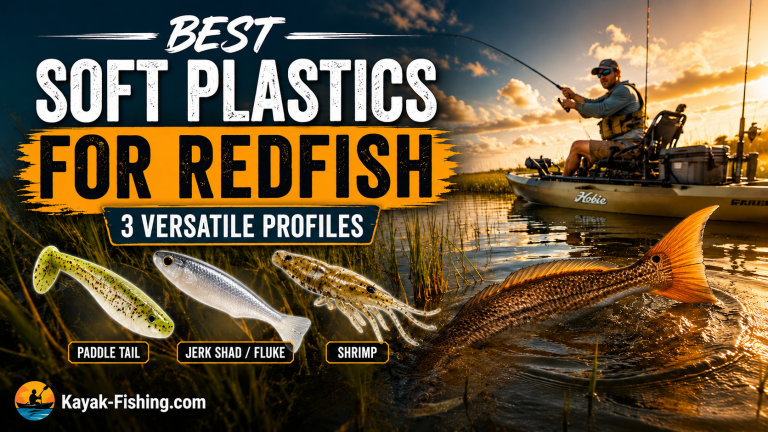
If you want to fish artificials instead of natural bait, our best soft plastics for redfish guide breaks down paddle tails, jerk shads, and shrimp-style plastics in more detail.
Table of Contents
Top Natural Baits for Redfish From a Kayak
Red drum feed on fishes and invertebrates. Florida FWC specifically identifies shrimp, crabs, mullet, pinfish, and killifish as prey, while Texas Parks & Wildlife lists live shrimp, small finger mullet, Atlantic croaker, and small live blue crabs among productive natural baits.
That makes shrimp, mullet, and blue crab a defensible three-bait starting point. It does not mean all three perform equally in every estuary or season.
Shrimp
Live shrimp is one of the broadest natural bait options for redfish. It can be presented shallow or deep and works in both moving and relatively protected water.
Why shrimp belongs in the lineup:
- FWC specifically recommends floating a live shrimp under a popping cork for redfish.
- TPWD also lists live shrimp among its top natural red drum baits.
- The same bait can be adjusted for shallow flats, marsh drains, creek mouths, or deeper edges by changing the rig and weight.
Practical rigging options:
- Popping cork: Use enough leader to keep the shrimp in the intended part of the water column. Leader length should match depth, grass, current, and how close fish are feeding to the surface.
- Lightly weighted or free-moving presentation: Useful when you want the shrimp to move more naturally with current.
- Bottom or slip-sinker rig: Useful around channels, deeper holes, passes, or other areas where fish are feeding near bottom.
Hook size should match the shrimp and expected fish rather than a universal number. A hook that is too large can restrict the bait; one that is too small may not match the tackle or fish being targeted.
Mullet: Live Finger Mullet and Cut Mullet
Mullet is another well-established redfish food source. FWC notes that redfish chase mullet, and TPWD recommends small finger mullet as a natural bait and fresh cut mullet among the options used for larger adult red drum.
Live finger mullet can be useful when redfish are feeding on baitfish around shorelines, points, creek mouths, and other movement corridors. TPWD describes lip-hooking baitfish or hooking them near the back behind the dorsal fin, with slip-sinker rigs used for bottom presentations.
Cut mullet is more of a stationary scent-based option. It can make sense when you want to hold a bait in a drain, channel edge, pass, deeper pocket, or other defined travel area instead of constantly casting.
Do not assume cut mullet automatically selects only large redfish. Bait size, fish size, competing species, current, and location all affect what actually eats it.
Blue Crab
Crabs are part of the redfish diet, and both FWC and TPWD identify crab as red drum forage or bait. TPWD specifically lists small live blue crabs and describes fishing them near the bottom.
Blue crab can be useful where a natural bottom presentation fits the water: passes, channel edges, shell, deeper holes, or other places where a stationary bait can intercept moving fish.
The exact way a crab may be possessed, harvested, cut, or used as bait varies by jurisdiction. Check current state regulations before collecting or transporting live bait.
What about fiddler crabs? Redfish eat a range of crustaceans, but the strongest official sources reviewed for this guide specifically identify blue crab rather than fiddler crab as a primary red drum bait. For that reason, blue crab is the better default recommendation here.
Best Artificial Lures for Kayak Redfish
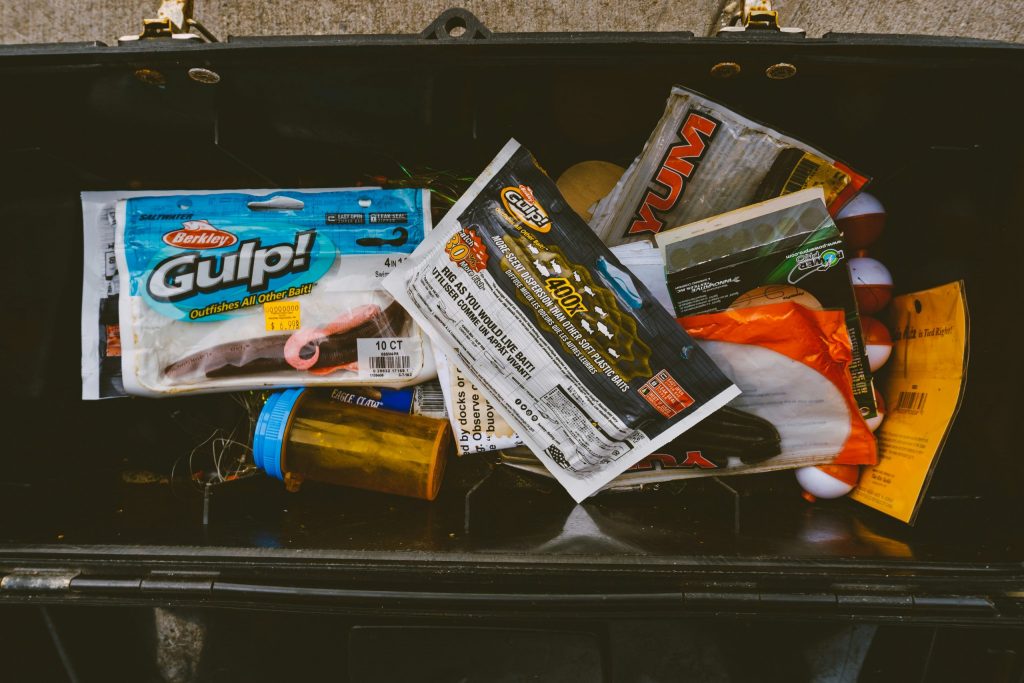
Artificial lures make sense when you want to cover water, avoid maintaining live bait, or quickly change presentation as depth and cover change. FWC identifies soft-bodied jigs, spoons, and topwater plugs as redfish options, while TPWD also recommends spoons, plugs, and shrimp-like plastics.
Soft Plastic Paddle Tails
A 3- to 4-inch paddle tail is a useful general-purpose profile because it can imitate small baitfish and be rigged for shallow grass, open shorelines, drains, shell edges, and deeper water.
Rather than assigning one jighead weight to one exact depth, start with the lightest weight that still provides the control you need. Increase weight as current, wind, depth, or bottom-contact requirements increase. In grass or shell, a weedless weighted hook may reduce snagging compared with an exposed jig hook.
For a more detailed breakdown of paddle tails, jerk shads, shrimp imitations, colors, and rigging choices, see our best soft plastics for redfish from a kayak.
Weedless Spoons
Spoons are a long-established redfish lure. TPWD specifically identifies shallow-running gold, copper, and silver spoons and notes that weedless versions are useful around heavy vegetation.
- Use them to cover grass lines, shorelines, flats, and other shallow structure.
- Retrieve speed can be adjusted to keep the lure above grass or closer to bottom.
- Choose weight based on casting distance, depth, wind, current, and vegetation rather than one fixed size.
Topwater Plugs
Topwater plugs are another established redfish option. They are most practical when fish are feeding high in the water column or when shallow conditions let you work a surface bait efficiently over grass, potholes, shoreline edges, and other cover.
Low-light periods can be useful, but there is no universal time, water depth, or temperature that guarantees a topwater bite. Bait activity, water clarity, pressure, tide, and fish position should drive the decision.
Jerk Shads and Shrimp Imitations
Jerk shads and shrimp-style plastics provide lower-vibration alternatives to paddle tails and spoons. They can be useful when you want a slower fall, quieter landing, or more subtle presentation around shallow grass, potholes, drains, oyster edges, and visible fish.
- Jerk shads: Rig weightless, lightly weighted, or on a jighead depending on depth and cover.
- Shrimp-style plastics: Fish under a cork, on a light jighead, or weedless where structure requires it.
How Seasonal Conditions Change Bait Choice
Redfish range across a large portion of the Atlantic and Gulf coasts, so a rigid “spring bait / summer bait / fall bait” calendar is not reliable everywhere. Water temperature, forage availability, salinity, tide, rainfall, local migration, and spawning behavior can matter more than the month printed on the calendar.
Use these seasonal sections as a decision framework rather than a coast-wide rule.
Spring: Follow the Available Forage
As water warms in many systems, baitfish and crustacean activity can increase and redfish may spend more time in shallow feeding areas. Where shrimp and small baitfish are present, shrimp, paddle tails, jerk shads, and small baitfish presentations can all make sense.
In cooler water, slow the presentation and pay more attention to deeper edges, dark bottom, protected creeks, or other locally warmer water rather than assuming fish will already be shallow.
Summer: Manage Heat, Current, and Bait Activity
Warm-season bait choice should reflect the forage actually present. Shrimp, mullet, crab, paddle tails, spoons, and topwaters can all be relevant, but fish may reposition through the day as temperature, tide, dissolved oxygen, current, and boat pressure change.
When fish are actively moving along shorelines or flats, artificials can cover water efficiently. When fish are holding in a drain, channel, pass, or other defined travel lane, a natural bait held in the zone can be the simpler approach.
Fall: Match Concentrated Bait and Local Migration
Fall can produce strong redfish opportunities in many coastal systems, but the exact pattern changes by latitude and fish size. Adult red drum spawning occurs during late summer and fall in portions of their range, while juvenile inshore fish may continue feeding around estuarine structure.
Mullet, shrimp, crab, paddle tails, spoons, and other baitfish imitations remain useful choices when they match what fish are actually feeding on. Avoid assuming that “fall” automatically means one bait or one depth.
Winter: Slow Down and Pay Attention to Habitat
FWC notes that Florida redfish can be found in winter around seagrass, muddy or sandy bottoms, oyster bars, and spring-fed creeks. Other regions have different winter temperatures and migration patterns, so local fishery information matters.
Where cold conditions reduce fish activity, slower shrimp presentations, lightly weighted plastics, and well-placed cut bait can make more sense than rapidly covering water. The practical principle is to match presentation speed and depth to fish position rather than treating “slow and on the bottom” as an absolute rule.
How to Present Bait From a Kayak
Kayaks can approach shallow structure with less draft and less engine noise than many larger boats, but quiet access still depends on how the boat is handled.
Approach and Positioning
- Use wind and current deliberately: Set up so the kayak can drift along or toward the target without constantly correcting position.
- Avoid drifting directly over the fish: Stop outside the target area and make the cast from a distance that matches water clarity and conditions.
- Use an anchor or stakeout system only when conditions support it: Holding position can improve presentation, but current, boat traffic, changing tide, and bottom type affect whether anchoring is appropriate.
If boat positioning is the problem rather than lure choice, our guide to kayak fishing anchors explains common anchor types and where each makes sense.
Casting Angles
- Present natural baits so current carries scent and movement through the area you expect fish to use.
- With artificials, cast across or ahead of travel lanes so the lure spends more of the retrieve in productive water.
- When sight-casting, lead the fish enough that the bait can enter its path without landing directly on top of it. The correct distance depends on fish speed, water clarity, wind, and lure weight.
Bait Management
- Keep live bait, leader material, pliers, and hooks reachable without standing or twisting excessively.
- Secure bait containers so a wake, wave, or sudden turn cannot send them across the deck.
- Pre-tie a small number of appropriate leaders rather than filling the kayak with multiple redundant rigs.
Best Areas to Target Redfish From a Kayak
TPWD identifies shallow bay edges, submerged vegetation, oyster reefs, coves, points, jetties, pilings, and guts as recurring red drum habitat. Those features are especially useful to kayak anglers because many can be fished with short, structure-oriented routes.
Marsh Drains and Creeks
Drains and creek mouths can concentrate moving water and forage. On a falling tide, water leaving marsh habitat may carry small fish and crustaceans toward deeper creek or bay water.
- Fish the edges of current rather than assuming the strongest flow is always best.
- Look for depth changes, eddies, points, and nearby shell where fish can hold with less effort.
Grass Flats and Edges
Submerged vegetation is documented red drum habitat. On grass flats, pay attention to potholes, sand transitions, cuts, and depth changes rather than treating the entire flat as equally productive.
Weedless spoons, weedless soft plastics, live shrimp under a cork, and other presentations that can stay above or move through vegetation are useful tools here.
Oyster Bars and Shell
Both FWC and TPWD identify oyster habitat in connection with redfish. Shell can concentrate food and create current breaks, but it also creates abrasion and snagging problems.
- Fish the edges, points, cuts, and eddies around shell rather than dragging every presentation directly across the sharpest structure.
- Inspect leaders frequently for abrasion.
- Give exposed oyster shell enough clearance to protect the kayak and the angler.
Shoreline Points and Wind-Influenced Banks
Points and shoreline breaks can funnel current and create ambush structure. Wind can also move surface water and forage, but a wind-blown bank is not automatically productive—and it may be a poor kayak position when chop, exposure, or the return route becomes difficult.
Fish the area only when the boat-control problem is manageable. If wind is dictating every cast, solve the positioning issue before changing bait.
Rigging Tips for Kayak Redfish Anglers
Keep the System Simple
Two or three ready-to-fish setups can cover most of the presentations in this guide without turning the stern into a rod forest.
- Bait/cork setup: Live shrimp or shrimp imitation.
- Jig or weedless-plastic setup: Paddle tail, jerk shad, or shrimp-style plastic.
- Optional search-bait setup: Spoon or topwater.
The right number of rods depends on the kayak layout, target water, and angler. The goal is to keep the deck manageable and avoid carrying combinations that duplicate the same job.
Leaders and Line
Line and leader strength should match the structure and expected fish rather than one universal redfish setup. TPWD notes that heavier line is useful around oyster shell, rocks, and pilings, while lighter line can be used on open grass flats.
Choose a leader that gives you enough abrasion resistance without adding unnecessary stiffness. Inspect it after contact with shell, rocks, pilings, or fish.
For braid-to-leader and terminal connections, see our kayak fishing knots guide. A well-tied knot that you can reproduce consistently is more useful than choosing a complicated connection you cannot tie reliably in wind or low light.
Hook Choices
Circle hooks are a strong option for natural bait, particularly when catch-and-release is likely. South Carolina DNR research found that non-offset circle hooks lip-hooked red drum more often and produced less deep-hooking than J-hooks or offset circle hooks in its study.
Hook requirements can also be regulated by location or fishery. Check the current rules where you fish and match hook size to the bait, tackle, and expected fish rather than relying on one universal size chart.
For artificials, choose jigheads, weighted swimbait hooks, or weedless hooks based on lure profile, vegetation, shell, depth, and current.
Safety Considerations for Kayak Redfish Trips
Tides and Currents
Tidal current can improve a fishing spot while making the trip home more difficult. Plan the route around the expected current and wind for the entire outing rather than assuming one or both will automatically help on the return.
- Check tide predictions for the specific area.
- Account for local lag between published tide times and actual current in creeks, passes, and backwater areas.
- Turn around before conditions exceed your ability to make progress back to the launch.
Weather and Thunderstorms
National Weather Service guidance is clear that thunderstorms can create rapidly changing wind and wave conditions and that all thunderstorms produce lightning. A kayak provides no enclosed shelter.
If thunderstorms are forecast for the period you expect to be on exposed water, choose a different window. If weather develops unexpectedly, head for a safe landing rather than waiting for the storm to reach you.
Oyster Shell and Structure
Oyster shell is sharp enough to damage skin, footwear, tackle, and some kayak surfaces. Avoid stepping onto shell whenever possible, protect your feet, and keep the boat under control around exposed bars.
Core Safety Gear
Federal rules generally require an appropriate U.S. Coast Guard-approved wearable life jacket for each person aboard. State rules can add requirements, so check the jurisdiction where you launch and fish. The Coast Guard recommends wearing the life jacket while the vessel is underway rather than relying on being able to reach it after a capsize.
- Properly sized, serviceable U.S. Coast Guard-approved wearable PFD.
- Required sound-producing and lighting equipment for the jurisdiction and operating conditions.
- Waterproof communication appropriate for the route.
- Drinking water, sun protection, and clothing matched to weather and water conditions.
- A float plan or at minimum a trusted person who knows the launch, general fishing area, and expected return time.
For broader planning around PFDs, weather, cold water, boat traffic, and re-entry, read our kayak fishing safety guide.
FAQs
What is the best all-around bait for redfish from a kayak?
Live shrimp is one of the best all-around starting choices. Florida FWC specifically recommends live shrimp under a popping cork, and Texas Parks & Wildlife also lists live shrimp among productive natural red drum baits. It is not automatically the best bait in every fishery or condition, so local forage and fish position still matter.
What natural baits do redfish eat?
Official fisheries sources identify shrimp, crabs, mullet, pinfish, killifish or mud minnows, croaker, and other fishes and invertebrates as redfish forage or natural bait options. Which one is most useful depends on what is locally available and how the fish are feeding.
Can artificial lures replace live bait for redfish?
Yes. Soft-bodied jigs, spoons, plugs, and other artificials are established redfish options. They are especially useful when you want to cover water, avoid carrying live bait, or adjust quickly to changing depth and cover. No lure is equally effective in every situation.
How should I choose redfish bait on a given day?
Start with the forage and structure in front of you. Shrimp is a versatile natural option; mullet or crab can fit baitfish- or bottom-oriented situations; paddle tails and spoons are useful for covering water; and topwaters can work when fish are feeding high in suitable shallow-water conditions. Also account for tide, current, water clarity, depth, and boat-control limits.
How many rods should I bring for kayak redfish?
Two or three setups are a practical starting point: one bait or popping-cork rod, one soft-plastic or jig rod, and an optional spoon or topwater setup. The best number depends on your kayak layout and fishing plan. Carry enough to change presentations without creating unnecessary deck clutter.
Sources and Method
This guide does not claim firsthand kayak-fishing or redfish experience. Natural-bait, habitat, lure, and hook guidance was checked against official fisheries sources. Kayak-Fishing.com analysis is used to translate those documented redfish patterns into practical small-craft choices involving boat position, tackle simplicity, and route planning.
- Florida Fish and Wildlife Conservation Commission — Red Drum
- Texas Parks & Wildlife Department — Red Drum
- South Carolina Department of Natural Resources — Red Drum Hook Research
- U.S. Coast Guard — Life Jacket Wear
- National Weather Service — Safe Boating and Thunderstorms
Fishing regulations, bait rules, hook requirements, seasons, and harvest limits vary by state and can change. Verify current rules with the agency responsible for the water you plan to fish.
Final Thoughts
The best redfish bait system for a kayak is small enough to manage and flexible enough to match the water in front of you.
- Live shrimp: versatile natural bait for corks, current, and bottom presentations.
- Mullet: useful as live bait or cut bait when redfish are feeding on baitfish or moving through defined travel areas.
- Blue crab: a documented natural redfish bait for bottom-oriented situations.
- Paddle tails, spoons, jerk shads, and topwaters: artificial options that let you cover water and adapt without maintaining live bait.
Rather than searching for one “magic” bait, match the presentation to local forage, structure, current, water clarity, and fish behavior. From a kayak, add one more filter: choose the bait and rig you can fish effectively while keeping the boat under control.
That approach is more repeatable than carrying a large tackle selection and changing lures every few casts—and it keeps the kayak organized enough to focus on positioning, safe travel, and putting the bait where redfish are actually feeding.