Best PFDs for Kayak Fishing: 7 Life Jackets Compared
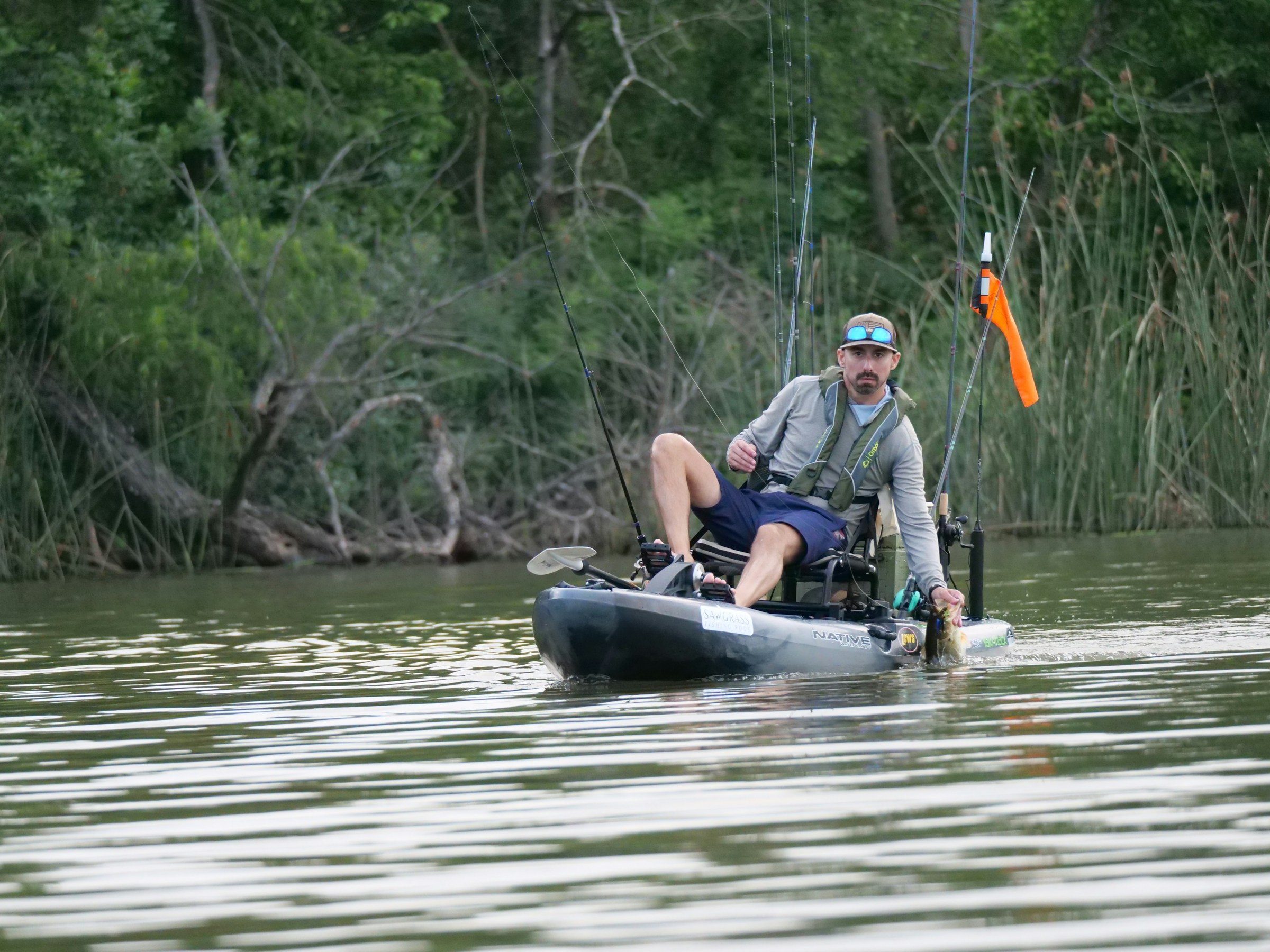
Choosing the best PFD for kayak fishing is less about finding the vest with the most pockets and more about finding one that fits your body, works with your kayak seat, matches the water you fish, and is comfortable enough to stay on for the entire trip.
For most kayak anglers, an inherently buoyant foam PFD is the simplest choice because it provides flotation as soon as you enter the water and does not depend on an inflator or CO₂ cylinder. Inflatable PFDs can reduce bulk, but they add maintenance requirements and are not the best match for every type of kayak fishing.
This guide compares seven current kayak fishing PFDs and life jackets for different buyers, including high-back seats, hot weather, tighter budgets, women’s fit, maximum storage, and anglers considering an inflatable.
Best PFDs for Kayak Fishing at a Glance
These seven picks cover different types of kayak anglers instead of ranking several similar life jackets just to make a longer list.
Table of Contents
How We Chose These Kayak Fishing PFDs
A useful kayak fishing life jacket has to do more than meet an approval standard. It has to work while you are seated, paddling, casting, reaching for tackle, and trying to get back onto the kayak after an unexpected swim.
The seven recommendations above were separated by buyer use case. The main factors considered were:
- Approval and intended use: The exact model should carry appropriate U.S. Coast Guard approval for its intended use.
- Kayak-seat compatibility: High-back, mesh-back, or thin-back construction matters with modern framed fishing-kayak seats.
- Fit and adjustment: A vest that rides up or interferes with movement is a poor choice even if its feature list looks impressive.
- Storage without excessive bulk: Fishing pockets can be useful, but more pockets are not automatically better.
- Ventilation: Heat management matters because a PFD only helps when it is being worn.
- Maintenance: Inflatables require more inspection and rearming than inherently buoyant foam models.
- Distinct buyer value: Each recommendation needs a clear reason to exist rather than duplicating another pick.
Foam vs Inflatable PFDs for Kayak Fishing
Foam PFDs: the simpler choice for most kayak anglers
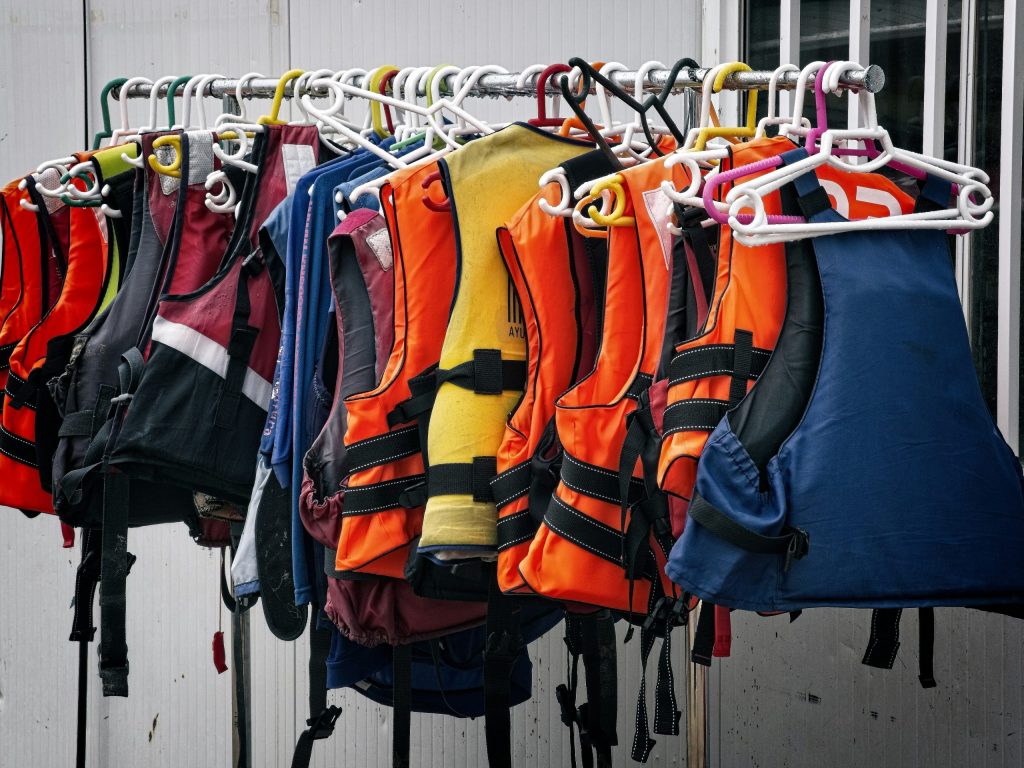
Foam PFDs provide inherent flotation without waiting for a bladder to inflate. For beginners, anglers who fish around frequent splashing, and anyone who wants the least complicated system, that simplicity is a major advantage.
Fishing-specific foam models can also integrate seat-friendly backs, pliers storage, attachment points, and tackle pockets. Their main disadvantages are heat and bulk, which is why fit and ventilation deserve as much attention as storage.
Inflatable PFDs: lower bulk, more responsibility
An inflatable PFD can feel dramatically less bulky while casting and paddling. The tradeoff is that the inflation system, cylinder, status indicator, bladder, and rearming components all need to be maintained according to the manufacturer’s instructions.
Manual-only models also require the wearer to activate them. Automatic/manual convertible models can change how the device behaves, but the exact operating instructions and approved configuration matter. Always read the label and owner documentation for the specific model.
For many new kayak anglers, a comfortable foam PFD remains the easier starting point. Experienced anglers who specifically value low bulk may decide the maintenance requirements of an inflatable are worth the trade.
What to Look For in a Kayak Fishing Life Jacket
A back panel that works with your kayak seat
The best PFD for a high-back kayak seat is not necessarily the model with the least foam. What matters is where the flotation sits relative to the seatback. Some designs place flotation high above the seat, while others use a thinner full-back panel that can rest against the seat without pushing the wearer forward.
If possible, try the PFD while sitting in your actual kayak seat before removing tags.
A secure fit that does not ride up
A PFD should fit snugly enough that pulling upward at the shoulders does not send it toward your ears or chin. Follow the manufacturer’s size chart rather than assuming your normal shirt size will translate directly.
Enough storage, not maximum storage
Kayak anglers often want pliers, line cutters, a phone or radio, and a few small tackle items within reach. The downside of loading a PFD with gear is increased bulk and more snag points around line, hooks, and leashes.
Ventilation for hot-weather kayak fishing
For summer fishing, mesh backs, airflow channels, and lower-profile foam can materially improve wearability. A PFD that stays on your body is more useful than a feature-rich vest that becomes uncomfortable enough to remove.
Visibility
Reflective accents and brighter color options can improve visibility around boat traffic and low-light conditions. Color alone does not replace required lighting or other safety equipment, but visibility is still worth considering when two otherwise suitable PFDs are available in different colors.
The 7 Best PFDs for Kayak Fishing
1. NRS Chinook PFD — Best Overall
The current NRS Chinook is the strongest all-around choice in this group because it combines fishing-specific organization with a medium-profile design and extensive adjustment without becoming a full chest-mounted tackle system.
NRS lists three front pockets, internal organization, a rod-holder loop, knife lash tab, strobe attachment point, reflective accents, four side adjustments, and two shoulder adjustments. NRS also uses graded sizing so the flotation and pattern change with the size rather than simply scaling one shell up and down.
Best for: anglers who want one fishing-specific foam PFD that works across typical lake, river, and protected inshore kayak fishing.
Main advantage: Strong balance of organization, adjustment, and fishing-specific features.
Main drawback: Anglers who carry almost nothing on their chest may prefer a cleaner, more minimalist PFD.
2. Astral V-Eight Fisher — Best PFD for Hot-Weather Kayak Fishing
The Astral V-Eight Fisher is the clearest hot-weather pick. Astral’s Airescape airflow system is built around ventilation, while the high mesh back is specifically intended to work with high-back seats.
It is still fishing-focused: Astral lists a pliers holster, easy-access slip pocket, zippered pocket, and attachment points for small tools. The design buoyancy is listed at 16 pounds, and the current model carries U.S. Coast Guard Type III approval.
Best for: summer fishing, humid climates, and anglers who tend to overheat in bulky foam vests.
Main advantage: Strong ventilation without giving up useful fishing storage.
Main drawback: It does not provide the maximum pocket capacity of gear-heavy fishing PFDs.
3. Stohlquist Keeper — Best for High-Back Kayak Seats
The Keeper is the strongest choice here for anglers who want substantial fishing storage but are especially concerned about a tall framed seat. Stohlquist uses a thinner back panel specifically to reduce interference with high-back kayak seats.
The current Keeper also includes eight adjustment points, a cross-chest cinch system, multiple organized front pockets, phone sleeves, a dedicated pliers pocket, hand-warmer pockets, attachment points, and reflective accents. Stohlquist lists 16 pounds 8 ounces of buoyancy and current Level 70N / U.S. Coast Guard approval information.
Best for: fishing kayaks with tall lawn-chair-style seats and anglers who want a lot of organization.
Main advantage: Thin back panel plus unusually complete fishing storage.
Main drawback: The official Stohlquist store currently shows the Keeper as unavailable, so retailer availability may be inconsistent.
4. Onyx Kayak Fishing Life Jacket — Best Budget Pick
The Onyx Kayak Fishing Life Jacket makes sense for buyers who want an actual fishing layout without moving immediately into premium pricing. Onyx currently lists a high foam back for high-back seats, breathable mesh lower back, six adjustment straps, neoprene shoulder pads, and several fishing-oriented pockets.
Those pockets include a large cargo pocket, drop-down tackle-box pocket, fleece-lined pockets, chest pocket, and lash tab. That makes the Onyx more useful for fishing than a generic inexpensive boating vest.
Best for: beginners, occasional anglers, and buyers searching for a budget kayak fishing PFD.
Main advantage: Fishing-specific layout at a lower cost than many premium PFDs.
Main drawback: Universal/oversize sizing is less precise than the graded sizing offered by some premium models.
5. Astral Layla — Best Women’s PFD for Kayak Fishing
The Astral Layla is not a dedicated fishing vest, but its women’s-specific shaping makes it a better buying choice than forcing a poorly fitting unisex fishing PFD simply to gain extra tackle pockets.
Astral uses hinged princess seams, sculpted chest cups, articulated flotation, and soft organic kapok in the Layla. There is also a large front pocket with internal organization. For many anglers, a comfortable shaped PFD plus kayak-based tackle storage will be a better system than carrying everything on the vest.
Best for: women who prioritize fit, mobility, and comfort over maximum chest-mounted tackle storage.
Main advantage: Purpose-built women’s shaping rather than a generic unisex cut.
Main drawback: Less fishing-specific storage than the Chinook, Keeper, or Leviathan.
6. Kokatat Leviathan — Best for Maximum Storage
The Kokatat Leviathan is the clear pick for anglers who deliberately want to carry a large amount of gear on the PFD itself. Kokatat currently lists 14 pockets, multiple attachment options, body-mapped foam, and a high-back design with a quick-drying mesh lower back.
The upside is organization. The downside is that every tool, lure, radio, snack, and accessory added to a PFD increases bulk and can create more opportunities for line to catch. The Leviathan makes the most sense when that extra on-body storage is actually part of the way you want to fish.
Best for: tackle-heavy anglers, colder-season fishing, and buyers who want maximum on-body organization.
Main advantage: Far more pocket capacity than the other picks in this guide.
Main drawback: Maximum storage can become unnecessary bulk if you prefer to keep most gear in the kayak.
7. Mustang MIT 100 Convertible A/M — Best Inflatable PFD for Kayak Fishing
The Mustang MIT 100 Convertible A/M is the low-bulk option in this guide. Mustang lists 28 pounds of buoyancy when inflated and says the current design can be switched between automatic and manual inflation modes.
That additional buoyancy and low-profile feel are appealing, but an inflatable is a system that has to be maintained. The cylinder, inflator status, bladder, rearming components, and approved configuration all matter. Mustang lists the MIT 100 for uses including coastal and inshore excursions, fishing, paddling, sailing, and boating.
Best for: experienced anglers who specifically prioritize low bulk and are willing to maintain an inflatable PFD correctly.
Main advantage: Much less foam bulk around the torso before inflation.
Main drawback: More maintenance and more reliance on the inflation system than an inherently buoyant foam PFD.
How to Fit a Kayak Fishing PFD
Do the fit check before removing tags. Wear the clothing layers you expect to use, then follow the PFD manufacturer’s adjustment sequence and sizing instructions.
- Start with the correct size. Use the manufacturer’s chest or weight range rather than your normal shirt size.
- Snug the lower adjustments first. Then work upward through the side and shoulder adjustments as directed.
- Check for ride-up. Pull upward at the shoulders. If the PFD travels toward your ears or chin, the fit needs adjustment or a different size/model.
- Sit in your kayak seat. Lean back and check whether the rear foam pushes you forward.
- Simulate paddling and casting. Make large paddle strokes, reach across your body, and mimic a hookset to find rubbing or restricted movement.
- Check loaded pockets. If you plan to carry tools or tackle on the PFD, repeat the movement test with those items in place.
Fit is one reason there is no universal “best rated PFD for kayak fishing.” A model that works perfectly with one torso and seat combination can be uncomfortable with another.
Kayak Fishing PFD Safety
The U.S. Coast Guard recommends wearing a life jacket while underway. For kayak fishing, that is the practical standard to follow: a PFD stored under bungees or behind the seat cannot help during an unexpected capsize.
Understand the approval label
Older U.S. PFDs may use Type I, II, III, or V labeling, while newer devices increasingly use performance levels such as Level 70. The number refers to minimum buoyancy, but buoyancy level alone does not tell you whether a device has turning performance. Read the label and intended-use icons on the exact PFD.
Do not confuse flotation with unconscious turning
Many paddling PFDs are buoyancy aids designed for active users. Do not buy a typical fishing PFD assuming it will automatically roll an unconscious wearer onto their back. If face-up turning performance is important for your situation, select a life jacket specifically approved and labeled for that performance.
Inflatables require inspection
Before relying on an inflatable, inspect the cylinder, inflator, status indicators, bladder, and rearming components according to the manufacturer’s instructions. After deployment, rearm and repack the PFD exactly as directed before using it again.
Practice re-entry safely
Re-entry practice can show whether a PFD interferes with climbing back onto the kayak. Practice only in controlled conditions appropriate to your ability, ideally with another person present, and avoid creating a cold-water or current hazard just to test equipment.
Related kayak-fishing safety and setup guides:
PFD Care and Maintenance
Foam PFDs
- Rinse salt, mud, and grime with fresh water when needed.
- Dry the PFD thoroughly according to the manufacturer’s instructions before storage.
- Inspect fabric, straps, buckles, zippers, seams, and foam for damage or permanent compression.
- Do not use the PFD as a seat cushion or repeatedly crush the flotation material.
- Replace a damaged PFD rather than assuming cosmetic wear has no effect on performance.
Inflatable PFDs
- Check the inflation system and status indicator before use.
- Inspect the CO₂ cylinder and replace used, damaged, or corroded components as required.
- Follow the manufacturer’s leak-test, oral-inflation, rearming, and repacking procedures.
- Use the exact rearming kit specified for the model.
Kayak Fishing PFD FAQs
What is the best PFD for kayak fishing?
The NRS Chinook is the best all-around choice in this guide because it combines fishing-specific storage, adjustment, and a seat-friendly design. The better choice can change if your priority is hot-weather ventilation, a women’s-specific fit, a very tall seatback, maximum storage, budget, or low-bulk inflatable flotation.
What is the best kayak fishing PFD for a high-back seat?
The Stohlquist Keeper is the strongest high-back-seat pick here because its thin back panel is specifically designed to reduce interference with tall kayak seats. The Astral V-Eight Fisher is another strong option because its high mesh back is designed for seat clearance and ventilation.
What is the best budget kayak PFD?
The Onyx Kayak Fishing Life Jacket is the budget pick in this guide. It includes a high-back-compatible design, six adjustment straps, breathable lower mesh, and fishing-specific pockets without moving into the price range of the premium models above.
Is a PFD the same thing as a life jacket?
“PFD” means personal flotation device, while “life jacket” is the more familiar consumer term. Product labels and regulatory terminology can distinguish different performance categories, so the important step is checking the approval label and intended use of the exact device rather than relying only on the name used in a retailer listing.
Is an inflatable PFD good for kayak fishing?
It can be, especially for experienced anglers who value low bulk and will maintain the inflation system correctly. Foam PFDs remain simpler because flotation is inherently present without depending on inflation hardware. Conditions, age/weight restrictions, intended-use labeling, and the exact inflatable model all matter.
What PFD is best for kayak fishing in cold water?
A PFD does not replace cold-water immersion protection. Prioritize a properly fitted, approved PFD you will wear continuously, then choose clothing appropriate for the water temperature and conditions. See the kayak fishing clothing guide for layering considerations.
Should a kayak fishing PFD have lots of pockets?
Only if you will use them. Pockets can keep pliers, line cutters, a radio, and small tackle within reach, but overloading the front of a PFD adds bulk and snag points. Anglers who keep most tackle in a crate or seat storage may be better served by a cleaner vest.
Can a Level 70 kayak PFD turn an unconscious person face-up?
Do not assume that it can. Many Level 70 paddling PFDs are buoyancy aids without self-turning performance. Check the exact product label for turning-performance information if face-up support is a requirement for your use.
Final Verdict: Which Kayak Fishing Life Jacket Should You Buy?
For most anglers: Start with the NRS Chinook.
For hot weather: Choose the Astral V-Eight Fisher.
For a tall framed seat: Compare the Stohlquist Keeper.
For a tighter budget: Start with the Onyx Kayak Fishing Life Jacket.
For women prioritizing shaped fit: Look at the Astral Layla.
For maximum on-body storage: Look at the Kokatat Leviathan.
For experienced anglers who specifically want an inflatable: Compare the Mustang MIT 100 Convertible A/M.
The best kayak fishing PFD is ultimately the one that fits correctly, works with your seat, matches its approved intended use, and stays on your body for the whole trip. Treat pockets and fishing features as secondary to fit, flotation, and wearability.
If you are building your first setup, pair the PFD with a conservative gear load and simple boat-control system. The kayak fishing beginner guide and kayak anchor guide are useful next reads.