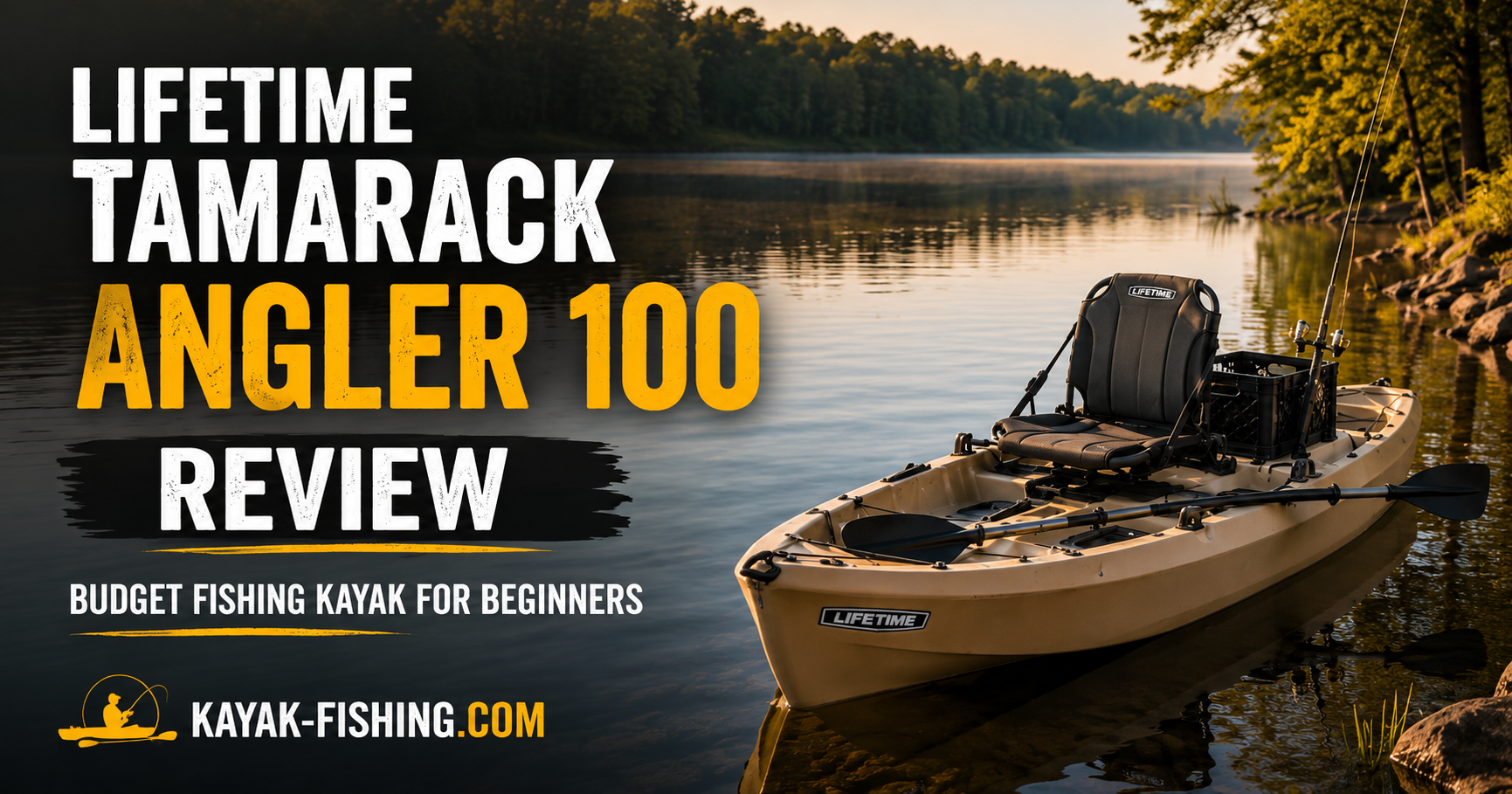
Lifetime Tamarack Angler 100 Review: Is It Worth Buying?
The Lifetime Tamarack Angler 100 is one of the most common starter fishing kayaks for a reason. It is short, manageable, widely available, and already comes with the basic fishing features most new kayak anglers want: rod holders, bungee storage, a storage hatch, molded footrests, and a simple sit-on-top layout.
That makes it tempting if you want to start kayak fishing without jumping straight into an expensive pedal drive or heavy tournament-style kayak.
This Lifetime Tamarack Angler 100 review is written for the angler trying to decide whether this kayak is a smart first buy or something you will outgrow after a few trips.
The Tamarack Angler 100 can be a good first fishing kayak if you use it where it belongs. Its best fit is ponds, small lakes, protected coves, slow creeks, and short calm-water trips. It is a poor fit for anglers who want to stand and fish, cross big windy water, or carry a heavy load of gear.
That is not really a knock on it. It is just what this kayak is: a budget-friendly sit-on-top fishing kayak that works best when you keep the setup light and the water forgiving.
Review basis: Key specifications and factory features were checked against current Lifetime product documentation. Retailer packages can vary. This is buyer-focused analysis and does not claim hands-on testing by Kayak-Fishing.com.
Lifetime Tamarack Angler 100 Review: Quick Verdict
Best for: New kayak anglers fishing ponds, small lakes, protected coves, and slow creeks.
Not ideal for: Big windy lakes, long paddles, standing to fish, heavy gear loads, or all-day comfort.
Biggest strength: Low cost, manageable size, and a fishing layout that is easy to understand.
Biggest weakness: The basic padded seat is the clearest comfort compromise compared with fishing kayaks that use framed seats.
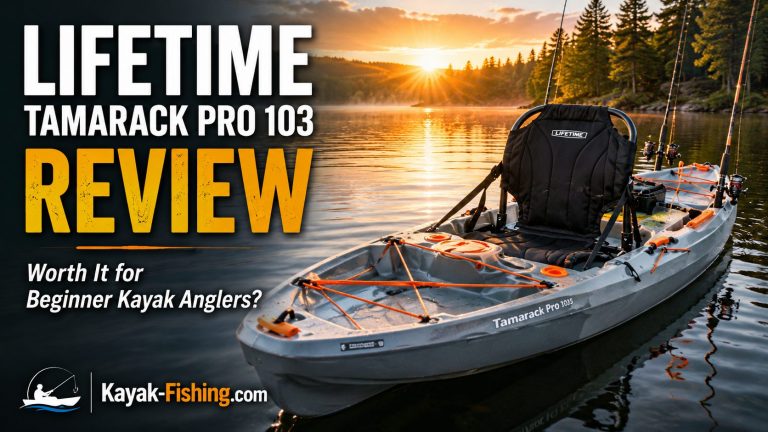
Best upgrade path: The Tamarack Pro 103 if you want a better seat, more capacity, and a more modern fishing layout.
Bottom line: Good starter kayak for calm water. Not a stand-up platform or a big-water kayak.
Merchant note: Amazon’s exact Tamarack Angler 100 listing may not always have a featured offer. Walmart currently carries a Tamarack Angler 10-foot variant; verify the model number, included accessories, and specifications before ordering.
If you are still comparing options, do not just look at the sticker price. Also think about seat comfort, your body weight plus gear, how far you need to paddle, and whether you want to stand. Those details matter more than the name on the side of the kayak.
Lifetime Tamarack Angler 100 Specs
Specs and included accessories can vary by model number and retailer package, including whether a paddle is bundled. Before buying, check the exact listing you are ordering from. The core specifications below are based on Lifetime’s current Tamarack Angler 100 documentation from the official Lifetime Tamarack Angler 100 product page.
| Spec | Lifetime Tamarack Angler 100 |
|---|---|
| Length | 120 inches, or 10 feet |
| Width | 31 inches |
| Height | 14 inches |
| Weight | About 49.8 pounds |
| Capacity | 275 pounds |
| Material | UV-protected high-density polyethylene, or HDPE |
| Seat | Padded seat pad with adjustable padded backrest |
| Rod holders | Two flush-mounted rod holders and one top-mount/adjustable rod holder |
| Storage | Front and rear shock cord storage plus a 6-inch hatch compartment |
| Warranty | 5-year limited warranty |
Capacity note: The 275-pound capacity includes you, the paddle, crate, tackle, anchor, water bottle, dry bag, safety gear, and anything else in the kayak. If you are close to the limit before adding gear, look at a higher-capacity kayak.
Who Should Buy the Tamarack Angler 100?
The Tamarack Angler 100 makes the most sense for someone who wants a simple, affordable way to start kayak fishing on easy water.
Think farm ponds, neighborhood lakes, small reservoirs, protected coves, slow creeks, and calm evening trips close to the launch. That is where this kayak feels useful instead of underpowered.
It is also a decent choice if transportation and storage are big concerns. A 10-foot kayak is easier to store in a garage, slide into a truck bed, or manage on a roof rack than many heavier fishing kayaks.
Where people get disappointed is when they expect too much from it. This is not a stand-up bass boat. It is not built for rough open water. It is not made for long paddles with a heavy crate, cooler, anchor, electronics, and three rods. Keep your expectations realistic and it makes a lot more sense.
What the Tamarack Angler 100 Does Well
The Tamarack Angler 100 keeps the layout simple. You get a 10-foot sit-on-top hull, basic rod storage, molded footrests, bungee areas, a paddle keeper, and rear deck space that can accommodate a small crate.
For a first fishing kayak, that can be enough. You can launch it without a trailer, fish a shoreline for a couple of hours, and learn how kayak fishing actually feels before spending serious money.
The 49.8-pound listed weight is a big part of the appeal. It is still an awkward object to lift onto a roof rack, but it is substantially lighter than many larger fishing kayaks. A truck bed, proper roof-rack system, or small kayak cart can simplify transport.
Lifetime describes the hull as a stable flat-bottom design with chine rails intended to reduce tipping, which fits the Angler 100’s role as a seated fishing kayak for protected water.
That simplicity is the real value: it gives a new angler an inexpensive platform for learning boat position, wind drift, paddle management, and tackle organization.
Where It Falls Short
The seat is the clearest price-point compromise. The Tamarack Angler 100 has a padded seat pad and adjustable backrest, but it is not a raised frame seat. That keeps the kayak simple and inexpensive, but it offers less support and separation from the deck than a framed fishing-kayak seat.
The layout is also basic. You get useful fishing features, but not a modern rigging platform with gear tracks everywhere, a high-low seat, a rudder, or a motor-ready stern. You can add accessories, but there is a point where bolting a bunch of upgrades onto a budget kayak stops making sense.
Wind is another issue. Short, light kayaks move around. A little breeze across open water can turn a clean drift into constant correction strokes. That gets old when you are trying to work a weed edge, fish a dock line, or keep a bait in one lane.
The hatch is useful for storage, but it should not replace a dedicated dry bag or waterproof case for a phone, keys, wallet, license, or spare clothing.
Pros
- Affordable entry point for kayak fishing
- Manageable 10-foot size
- Good calm-water seated stability
- Rod holders and basic storage included
- Rear area works for a small crate
- Light enough for many anglers to transport
Cons
- Basic seat gets uncomfortable on longer trips
- Not a true stand-up fishing platform
- Limited rigging compared with newer fishing kayaks
- Can be pushed around by wind
- Capacity may be tight for bigger anglers with gear
- Not ideal for big water or fast current
Stability: Good Seated, Not Built for Standing
The Angler 100’s flat bottom and chine rails are designed around initial stability, which is the kind of stability that matters most for normal seated casting, reaching for tackle, and handling fish on calm water.
That makes the design best suited to seated fishing on ponds, calm coves, slow creeks, small lakes, and other protected water.
Standing is different. Lifetime explicitly says this model was not designed for stand-up casting and does not recommend standing in it. The deck layout, low seat position, hull shape, and 31-inch width should therefore be treated as a seated-fishing design.
If standing is important to you, buy a wider kayak with a flatter open deck and a seat system designed for that style of fishing. Do not buy this one hoping it turns into a mini bass boat.
Comfort: Fine for Short Trips, Limited for Long Ones
Comfort is where the Tamarack Angler 100 shows its price point. The seat pad and backrest are usable, but they are not the same as a framed lawn-chair-style kayak seat.
You sit low in the kayak with your legs stretched forward. That position keeps the seating simple and low, but it does not provide the support, airflow, or posture of a framed seat. The difference matters more as fishing sessions get longer.
Seat comfort can affect the whole fishing day. A less supportive seating position can make longer sessions, repeated paddle corrections, and reaching behind the seat less comfortable than they would be from a framed-seat kayak.
A simple seat pad or cushion is a low-cost comfort upgrade to consider. Be careful with modifications that raise the seating position because they also raise the paddler’s center of gravity. Test any seating change in controlled, shallow, calm water.
Fishing Layout and Gear Storage
The Tamarack Angler 100 gives you enough layout to fish cleanly if you do not overload it. The two rear flush-mounted rod holders are useful for a spare rod or transport. The top-mount rod holder works for bait fishing, slow trolling, or setting a rod down while you retie.
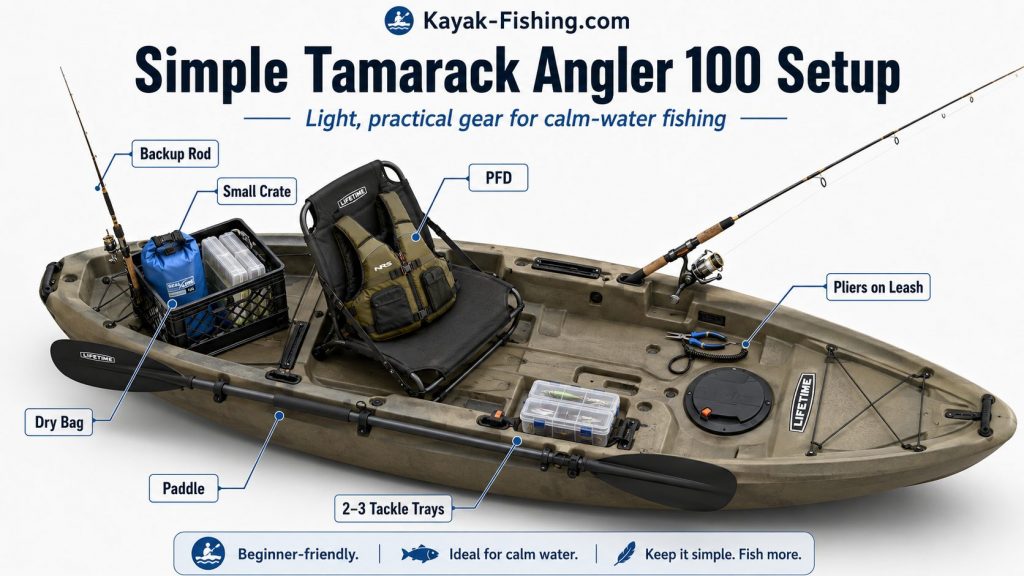
A lean setup fits this kayak best:
- One rod in your hand
- One backup rod in a rear holder
- A small crate behind the seat
- Two or three tackle trays
- Pliers on a leash
- A compact dry bag for phone, keys, license, and wallet
- A comfortable PFD worn the whole time
The rear storage area is the best spot for a small crate. Keep it low if you fish creeks or tight banks. Tall rod tubes sticking up behind you can grab branches and make sidearm casting more annoying than it needs to be.
Avoid cluttering the footwell. Loose line, hooks, soft-plastic bags, and extra tools create unnecessary snag and entanglement points around your legs.
An anchor trolley can help on calm lakes or slow water, but be careful anchoring in current. A small kayak pinned sideways in moving water can become dangerous fast. The kayak anchor guide explains safer setup choices by water type.
Recommended Simple Setup
A practical Tamarack Angler 100 setup is one rod in hand, one backup rod, a small crate, a dry bag, pliers, and essential safety gear. Keeping the load simple preserves the main advantages of this kayak: manageable weight, open working space, and straightforward rigging.
Paddling and Tracking
This kayak is built for short fishing trips, not long-distance paddling. On calm water, it paddles well enough to work a shoreline, cross a small pond, or slide along a protected cove.
The deep hull channels help it hold a line better than a completely flat plastic tub. It still has the usual short-kayak limitations. It turns easily, but it will not glide like a longer touring kayak.
Wind is the part to respect. A light kayak with your body, rods, crate, and paddle above the waterline can get pushed around. If the forecast is breezy, launch where you can fish protected banks instead of committing to a long open-water crossing. See the kayak fishing in wind guide for boat-control and trip-planning considerations.
A simple habit helps: start your trip by paddling into the wind when possible. That way, when you get tired, the wind helps push you back toward the launch instead of away from it.
If your package includes a paddle, use it to get started. A lighter paddle is a smart future upgrade because every correction stroke feels easier.
Transport and Storage
The 10-foot length is one reason this kayak works for beginners. It is easier to store, easier to move around a garage, and easier to haul than many larger fishing kayaks.
That does not mean it is weightless. A wet 50-pound kayak is still awkward, especially over your head or after fishing in summer heat. A small kayak cart is worth considering if your launch has a long walk from the parking area.
Use a transport system rated for the kayak and follow the rack, strap, vehicle, and local overhang requirements that apply to your setup. For car-topping, secure the kayak according to the rack manufacturer’s instructions rather than relying on a single loose strap.
Store the kayak out of direct sun when you can. Support the hull properly, and avoid leaving it strapped down tight in summer heat for long periods.
Best Upgrades for the Tamarack Angler 100
The goal is not to turn this kayak into a money pit. Put upgrade money toward safety, comfort, and organization first.
Comfortable Fishing PFD
A PFD comes before any fishing accessory. Choose one that is comfortable enough to wear while seated and paddling. See the best PFDs for kayak fishing guide for options.
Better Paddle
A lighter paddle makes every trip easier, especially when you are correcting wind drift or paddling back to the launch.
Seat Pad or Cushion
A seat pad or cushion is one of the simplest comfort upgrades to consider. Keep any modification modest and test stability after changing the seating position.
Small Kayak Crate
A small crate behind the seat keeps tackle from sliding around. Do not bring every lure you own. Two or three trays are plenty for most short trips.
Rod Leash
A rod leash is cheap insurance. Kayak rods get bumped by paddles, branches, fish, and your own feet.
Visibility Flag
A flag makes you easier to see, especially around bends, grass lines, boat docks, and low-light launches.
Anchor Trolley
An anchor trolley can help in calm water, but learn safe anchoring first. Avoid anchoring in strong current or heavy boat wake.
Best Places to Use the Tamarack Angler 100
This kayak is at its best when the water is protected and the trip is short.
- Farm ponds
- Small neighborhood lakes
- Electric-only lakes
- Protected reservoir coves
- Slow creeks with easy launches
- Calm backwaters with little boat traffic
The Angler 100 makes the most sense when the fishing is close to the launch: working a bank, drifting a weed edge, fishing shaded pockets, or picking apart nearby cover instead of trying to cover miles.
Where the Tamarack Angler 100 Makes Less Sense
The Tamarack Angler 100 is a poor fit for big windy lakes, fast rivers, rough inshore water, long open-water paddles, or cold-water trips without the clothing and safety planning appropriate to the conditions.
Big water exposes short kayaks quickly. Wind pushes you around. Boat wakes get annoying. Long crossings become tiring. If the weather changes, you do not have the speed or efficiency of a longer kayak to cover distance comfortably.
Fast rivers are a separate concern. Current, strainers, bridge pilings, and bad anchoring decisions can turn a normal trip into a dangerous one. New paddlers should learn moving water with experienced people and conservative conditions.
Cold water deserves the same respect. Dress for the water, not just the air. A stable kayak does not remove the risk of immersion. For a broader starting point, read the kayak fishing safety guide.
Tamarack Angler 100 vs Tamarack Pro 103
The Tamarack Pro 103 is the better choice if you can spend more and already know you will fish often. The biggest reason is the seat. A better seating position can change how long you actually enjoy being on the water.
The Angler 100 still makes sense when price, weight, and simplicity matter most. It is the cheaper, simpler first step. The Pro 103 is the more comfortable and more refined fishing platform.
| Feature | Tamarack Angler 100 | Tamarack Pro 103 |
|---|---|---|
| Best fit | Budget first kayak for calm-water fishing | More comfortable fishing kayak for regular use |
| Length | 10 feet | 10 feet 3 inches |
| Width | 31 inches | 31 inches |
| Weight | About 49.8 pounds | About 57.5 pounds |
| Capacity | 275 pounds | 300 pounds |
| Seat | Basic padded seat and backrest | Adjustable framed seat |
| Rigging | Basic fishing layout | More modern layout with track mount and improved storage |
Buy the Angler 100 if you want a low-cost first kayak for calm water. Consider the Pro 103 if you expect longer trips, more fishing days, or a setup you are less likely to outgrow after one season.
Better Alternatives to Consider
The Tamarack Angler 100 is not the only kayak in this beginner price range. Before buying, think about what you will want six months from now.
If comfort matters most, look for a budget kayak with a raised frame seat. That is usually the biggest quality-of-life upgrade for fishing.
If you are a bigger angler or carry a lot of gear, look for more capacity. Kayak capacity disappears quickly once you add tackle, crate, anchor, water, safety gear, and a cooler.
If hands-free boat control matters, save for a pedal kayak. It costs more, but it changes how you fish docks, grass lines, windblown points, and moving fish.
If standing matters, buy a wider platform built for standing. Do not expect a compact budget kayak to do that job well.
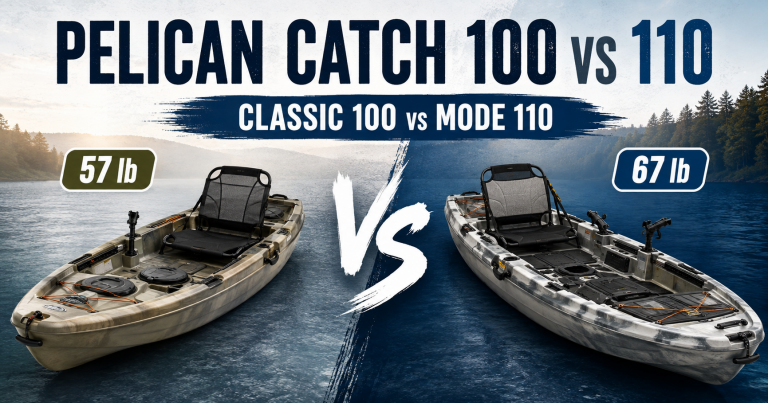
If the Angler 100 feels too limited, compare it with the Tamarack Pro 103 and the broader Pelican Catch lineup before spending money on extensive modifications.
Final Verdict: Is the Tamarack Angler 100 Worth It?
The Lifetime Tamarack Angler 100 is worth buying if you want an affordable first fishing kayak for calm water and short trips. It is stable enough for seated fishing, light enough for many anglers to transport, and simple enough to rig without turning your first season into a project.
Buy it if you fish ponds, small lakes, slow creeks, and protected coves, and you want to keep the budget under control.
Skip it if you want to stand and fish, paddle long distances, carry a heavy load, or spend full days on bigger water.
Upgrade to the Pro 103 if you can afford the jump and know seat comfort will matter.
If you are not committed to Lifetime, compare the Angler 100 with other starter options in our Best Fishing Kayaks for Beginners buyer guide.
For the right angler, the Tamarack Angler 100 is the good kind of basic. Add a comfortable PFD, keep the crate light, launch on calm mornings, and use it to learn how wind, balance, and boat position work before chasing more demanding water.
FAQs About the Lifetime Tamarack Angler 100
Is the Tamarack Angler 100 good for fishing?
Yes, the Tamarack Angler 100 is good for basic calm-water fishing. It has a sit-on-top design, rod holders, bungee storage, a hatch, and enough rear space for a small crate. It is best for ponds, small lakes, slow creeks, and protected coves.
Can you stand in the Lifetime Tamarack Angler 100?
No. Lifetime says the Tamarack Angler 100 was not designed for stand-up casting and does not recommend standing in it. Treat it as a seated fishing kayak.
Is the Tamarack Angler 100 good for beginners?
Yes. It is a good beginner kayak for someone who wants a low-cost way to start fishing calm water. It is manageable, stable enough for seated casting, and not overloaded with complicated features.
Is it good for rivers?
It can work on slow, gentle creeks and mild rivers with safe access. It is not a strong choice for fast current, technical runs, or anchoring in moving water. New paddlers should be especially cautious around strainers, bridge pilings, and changing water levels.
What is the Lifetime Tamarack Angler 100 weight limit?
Lifetime lists the Tamarack Angler 100 at a 275-pound maximum weight capacity. That includes the paddler plus the paddle, PFD, crate, tackle, rods, water, anchor, dry bag, and every other item carried aboard. If your body weight plus fishing gear puts the kayak close to that maximum, consider a higher-capacity fishing kayak rather than shopping by body weight alone.
Does the Lifetime Tamarack Angler 100 come with a paddle?
It depends on the exact model number and package. Lifetime sells Tamarack Angler 100 configurations with different included-accessory packages, and retailer listings can vary. Confirm the specific listing before ordering rather than assuming a paddle is included.
What should you upgrade first?
Start with safety and comfort. A comfortable PFD comes first, followed by a better paddle or seat pad. After that, add a small crate, rod leash, visibility flag, and only the accessories you actually use.
Can you upgrade the Lifetime Tamarack Angler 100 seat?
The simplest comfort upgrade is a removable seat pad or cushion that does not interfere with drainage or the existing seat system. A full framed-seat conversion is a much more substantial aftermarket modification because it changes seating height and the kayak’s center of gravity. If a framed seat is the main upgrade you want, compare the Tamarack Pro 103 before spending heavily modifying the Angler 100.
Can you put a trolling motor on the Lifetime Tamarack Angler 100?
Lifetime does not list the Tamarack Angler 100 as compatible with its Power Mate trolling-motor mount. Lifetime says the Power Mate is designed for its Sport Fisher and Manta kayaks and specifically states that it does not fit the Tamarack Angler. Aftermarket motor mounts may exist, but they are modifications rather than a manufacturer-supported setup. If a trolling motor is a priority, a fishing kayak designed for motor use is a better starting point.