Kayak Fishing for Beginners: Safe, Simple Setup and First-Trip Game Plan
I still remember my first real kayak fishing morning: cheap paddle, used sit-on-top, milk crate full of way too much tackle, and a healthy dose of “I hope I don’t flip this thing.” I’d fished from banks and jon boats for years, but sitting that low to the water in a narrow plastic hull felt… different.
What I wish I’d had back then was a calm, simple guide that said: “Here’s the basic kayak, here’s the basic gear, here’s how not to scare yourself or the fish on your first few trips.” That’s what this is.
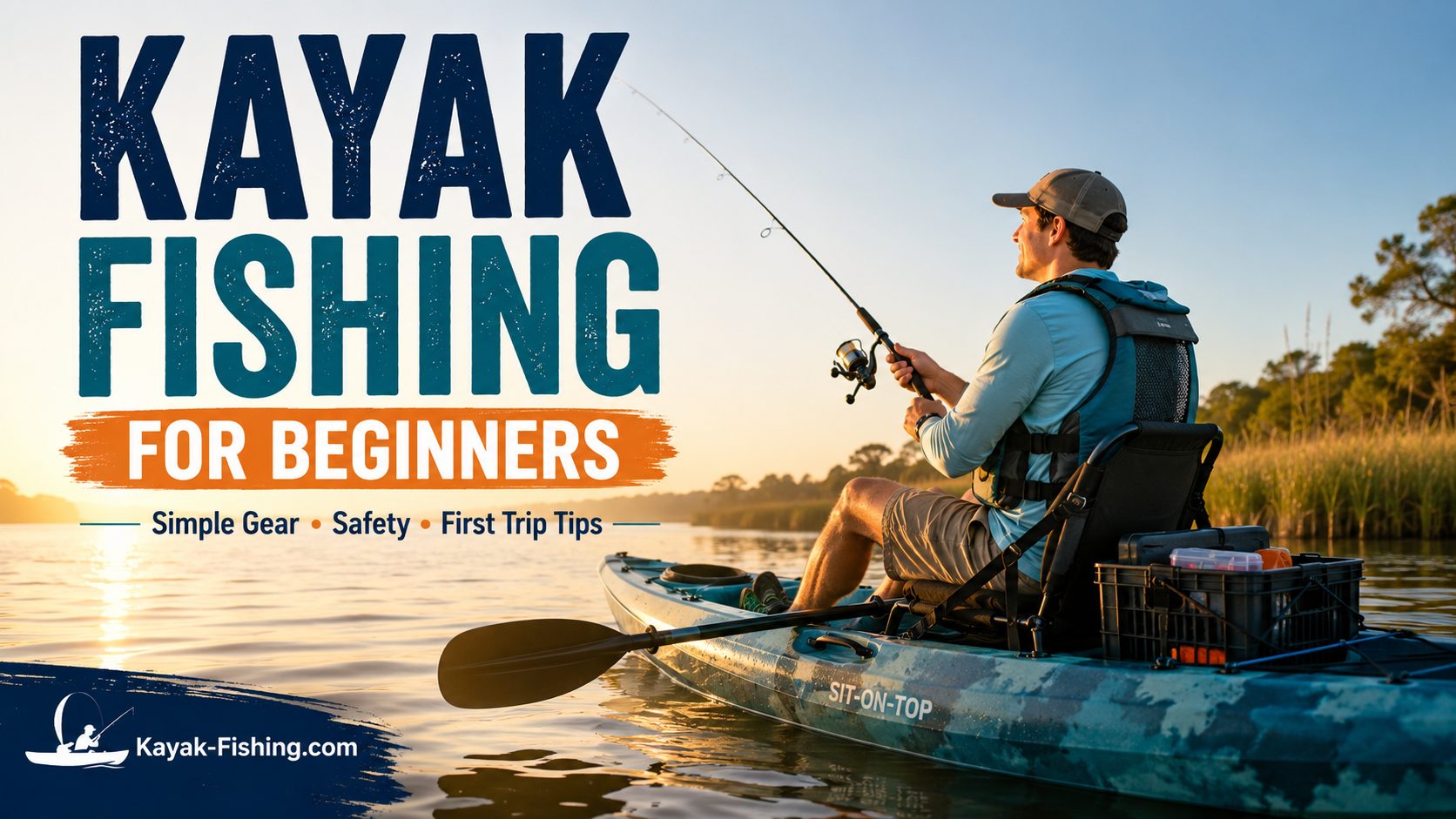
This kayak fishing for beginners guide is built for anglers who have, or are about to buy, a basic sit-on-top fishing kayak and want a simple roadmap from “kinda nervous” to “I’ve got this” on typical U.S. lakes, ponds, slow rivers, and beginner-friendly inshore bays.
Kayak Fishing for Beginners: Quick Start Cheat Sheet
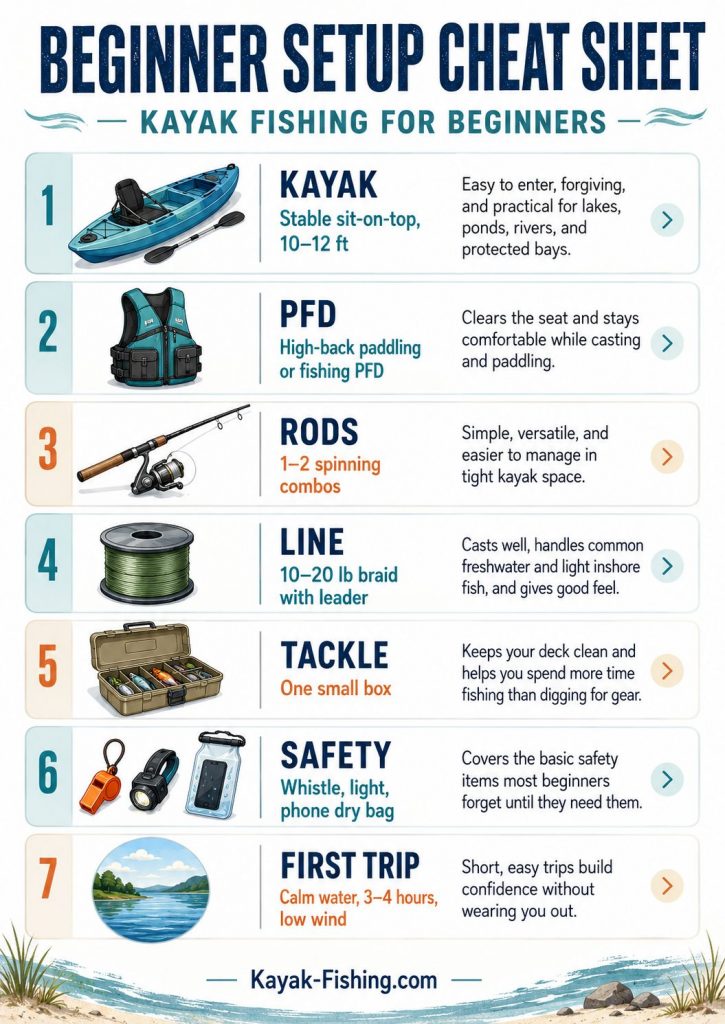
Table of Contents
Before Step 1: Choose Your Beginner Starting Point
Not every beginner starts in the same place. Some people already have a kayak in the garage. Others are still trying to figure out what to buy. Some are comfortable anglers but nervous paddlers. Others are comfortable paddlers but brand new to fishing.
Use this quick table to figure out where to focus first.
| Beginner Situation | Start Here |
|---|---|
| I already own a kayak | Practice paddling first, then add simple fishing gear. |
| I need to buy a kayak | Choose a stable 10–12 ft sit-on-top before worrying about electronics or accessories. |
| I fish small lakes and ponds | Bring two rods, one tackle tray, basic tools, water, and a light anchor. |
| I want to fish inshore bays | Add tide awareness, corrosion-resistant tools, extra water, and a more serious weather check. |
| I’m nervous about flipping | Start in warm, shallow water with a buddy and practice getting in and out near shore. |
| I tend to overpack | Limit yourself to two rods, one main tackle box, one crate, and only the tools you can reach quickly. |
That one decision — starting with the right level of simplicity — makes kayak fishing feel a lot less intimidating.
Step 1: Get Comfortable With the Kayak You Actually Have
You don’t need a fancy pedal drive, a battery box, and a giant graph to start kayak fishing. For most people, a simple fishing kayak is perfect for learning the basics.
Think of this section as “know your boat,” not “go buy more stuff.”
What makes a good beginner fishing kayak?
If you’re still choosing, or just want to sanity-check the one you’ve got, here’s what usually works well for kayak fishing for beginners:
- Sit-on-top style:
Much easier to get in and out of, drains water through scuppers, and feels less claustrophobic if you’re not used to kayaks. - Stable, not speedy:
A wider, flatter hull is more forgiving when you shift your weight to land a fish or reach for gear. You’re not racing; you’re fishing. - 10–12 feet long:
Shorter, around 10 ft, is easier to transport and turn on small ponds and tight creeks. Longer, around 11–12 ft, tracks better and feels more at home on open lakes or windy bays. - Basic fishing features:
A couple of molded-in rod holders, some gear tracks, and a decent seat are enough to start. Don’t worry if it looks “plain” compared to catalog boats.
My first “real” fishing kayak was a no-frills 11-footer with a basic lawn-chair style seat and two flush-mount rod holders. No electronics, no rudder. I caught a ton of fish out of that thing just by learning how it liked to sit in the water and figuring out where to put my gear.
Before you fish, just paddle it
If you can, dedicate your first short outing to paddling only:
- Launch with just your paddle, PFD, and maybe one empty crate or small dry bag.
- Practice getting in and out near shore.
- Lean a bit side to side to feel the “secondary stability,” which is how the kayak feels once it tips a little.
- Do some tight turns and short sprints so you know how it responds.
I skipped this step once and went straight into a windy morning with a deck full of rods and gear. A side gust hit me as I reached for a tackle tray, and the kayak did a little sideways lurch I wasn’t ready for. Nothing dramatic happened, but my heart rate definitely spiked. A half-hour of “play time” in calm water beforehand would’ve made that a non-event.
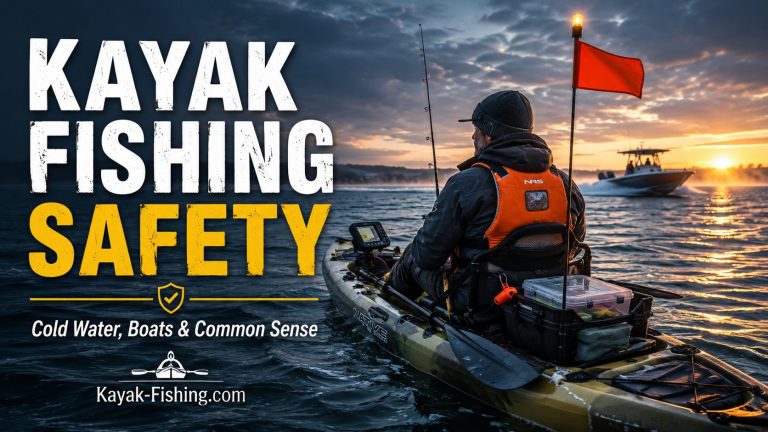
Step 2: Safety First (Yes, Really) – Simple Habits That Matter
We’ll get to lures and crates, but none of that matters if you’re cold, exhausted, or trying to climb back into a kayak without a life jacket on.
I’m not here to lecture, but I am going to be blunt about a few things.
PFD: Wear it every single time
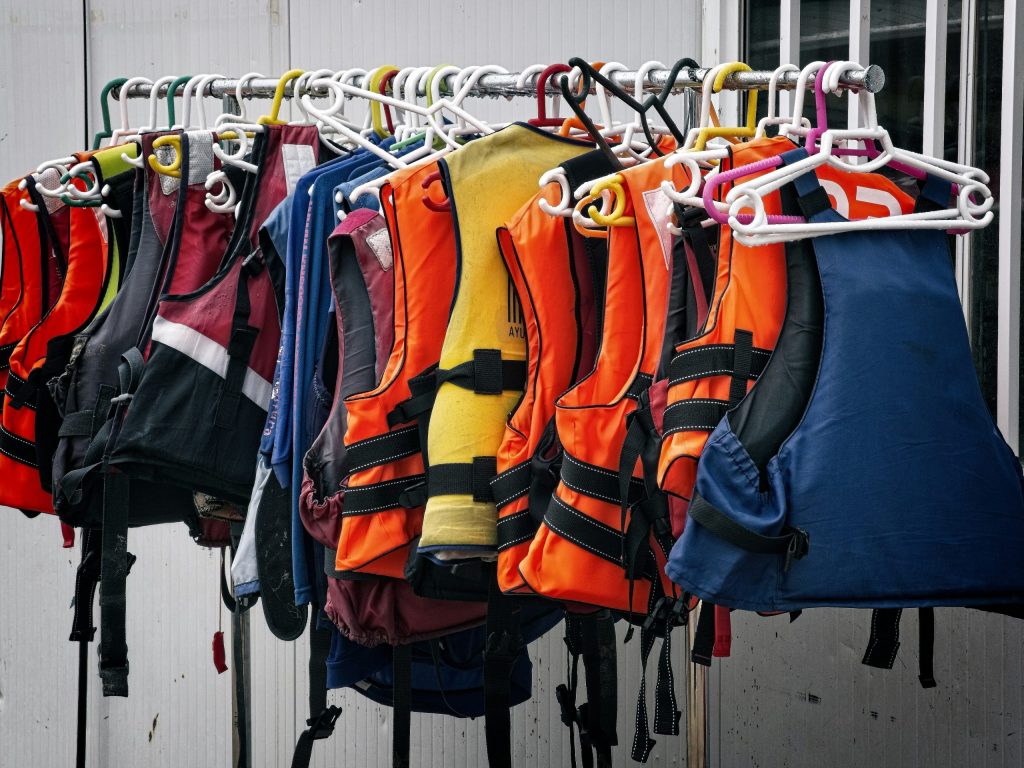
A properly fitted PFD made for paddling or kayak fishing is non-negotiable. Not strapped behind your seat. Not “I’ll put it on if it gets rough.” Wear it.
Look for:
- High-back design so it clears your kayak seat.
- Good arm mobility so paddling doesn’t feel restricted.
- Simple pockets for a whistle, small knife, and maybe your phone in a waterproof case.
I once slid off the side reaching for a snagged rod in waist-deep water. I wasn’t in danger, but I was standing in a muddy, uneven bottom, and my kayak wanted to drift away. The PFD turned that from “mini panic” into “annoying but fine.” If it had been over my seat instead of on my body, that moment would’ve felt very different.
Quick safety checklist, general not legal advice:
- PFD on and snug
- Whistle or sound signal
- Light if you’re out in low light, after dark, or before sunrise
- Phone in waterproof case or dry bag
- Water, sun protection, and basic first-aid items
- Someone on shore who knows where you’re launching and when you expect to be back
Always check local regulations for required gear; they vary by state and by whether you’re on inland or coastal waters.
Dress for getting damp, not for staying dry
You will get wet in a kayak. Paddles drip, splash happens, and sometimes you end up kneeling or sitting on a damp deck.
For spring through fall:
- Warm months: Quick-dry shorts or pants, synthetic shirts, sandals or water shoes. Avoid heavy cotton that stays wet and cold.
- Cooler shoulder seasons: Think in layers. Use a base layer that wicks, a light insulating layer, and a wind or water-resistant shell. Even if it’s sunny, a cold breeze over wet clothes gets old fast.
- Feet and hands: Thin neoprene boots or socks make a big difference when air is warm but water is chilly. Light gloves can help with paddle grip and sun.
If your local waters get truly cold, there’s a whole world of dry suits and immersion gear. For this beginner-focused guide, the key is: don’t underestimate how cold a wet breeze feels when you’re sitting still for hours.
Step 3: Basic Kayak Fishing Gear You Actually Need
Let’s build a compact, realistic list of basic kayak fishing gear. This is where a lot of beginners go overboard. I did. Think “small, simple, and within arm’s reach.”
Beginner Kayak Fishing Gear Checklist
Before you buy a bunch of accessories, focus on the basics that keep you safe, organized, and fishing.
| Gear | What to Look For | Helpful Guide |
|---|---|---|
| PFD | High-back, comfortable while seated, easy to paddle in | Best PFDs for Kayak Fishing |
| Anchor | Light setup for lakes, ponds, and protected water | Best Kayak Anchors |
| Clothing | Quick-dry layers, sun protection, water shoes | What to Wear Kayak Fishing |
| Knots | A few simple knots you can tie from the seat | Kayak Fishing Knots |
| Wind plan | Know when to go, when to stay close, and when to skip it | Kayak Fishing in Wind |
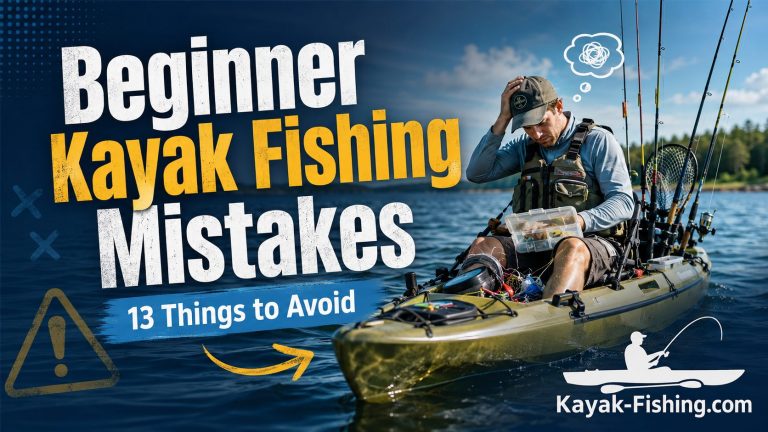
| Mistake check | Overpacking, poor launch choice, messy deck, ignoring weather | Beginner Kayak Fishing Mistakes |
Rods and reels: Start with two
You likely already own something that will work. For typical bass, panfish, and inshore fishing in the U.S., I’d suggest:
- Rod 1: Spinning combo, medium or medium-light, 6’6″–7′
Spooled with 10–15 lb braid and an 8–12 lb fluoro or mono leader. This can throw small plastics, light jigs, and live bait. - Rod 2: Spinning or baitcaster, medium or medium-heavy, 6’6″–7′
Spooled with 20–30 lb braid and a 12–15 lb leader. This handles slightly heavier lures, spinnerbaits, small swimbaits, or inshore spoons.
That’s enough to cover most freshwater plus simple inshore marsh fishing. Bring more rods later if you want; for now, two is easier to manage in tight quarters.
Lures and baits: A small, focused box
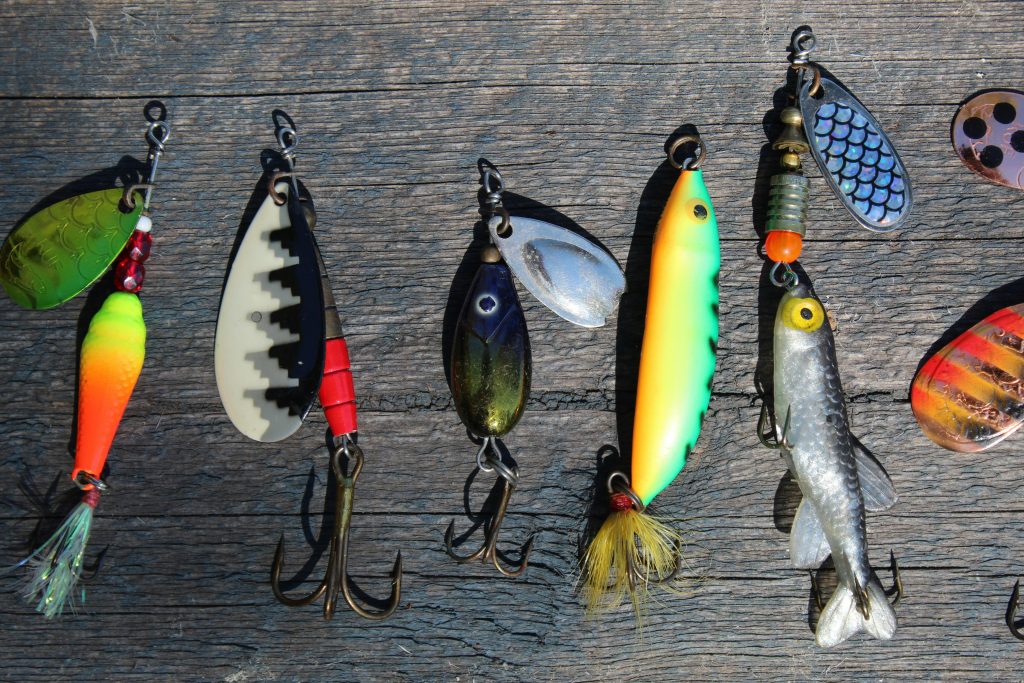
Instead of dragging your entire garage, think like this: “If I had to fish a lake or marsh all day with one small box, what would be in it?”
For lakes, ponds, and slow rivers:
- A few Texas-rig soft plastics, such as worms, craws, or creature baits, with 1/8–1/4 oz weights
- A couple of weedless swimbaits or paddletails on 1/8–1/4 oz jigheads
- 1–2 spinnerbaits or chatter-style baits for covering water
- 1 topwater, such as a popper or walking bait, for calm mornings
- A small assortment of hooks, weights, and snap swivels
For beginner-friendly inshore water, such as protected bays, marshes, and flats:
- 3–5 soft plastics, such as paddle tails or shrimp imitations
- 1–2 packs of 1/8–1/4 oz jigheads
- A spoon or two for covering flats
- A popping cork setup if that’s common where you fish
Plus:
- Small pack of terminal tackle in a divider box
- A few pre-tied leaders so you’re not fumbling in the wind
I once filled a milk crate with six boxes of lures “just in case” and spent half my morning digging instead of fishing. Now, most trips start with one main box and maybe a small backup pouch, and I catch more fish because I’m actually casting.
Tools and small essentials
These are the little things that make your day go smoothly:
- Fish grips, especially handy with toothy fish or treble hooks
- Needle-nose pliers or forceps
- Line cutters, such as small scissors or dedicated snips
- Net, optional but helpful for inshore fish or larger bass
- Small towel or rag for slimy hands
- Polarized sunglasses to see structure and protect your eyes
- Sunscreen and a hat because the sun reflects hard off the water
The crate: Your simple “tackle station”
For a beginner kayak fishing setup, a basic milk crate or simple plastic crate behind your seat is perfect:
- Holds your main tackle box
- Holds a small dry bag for wallet, keys, snacks, and backup items
- Can carry a couple of extra items like a small cooler or water bottle
Add rod holders later if you want. For now, keep it simple and open. The more “stuff” sticking up, the more there is to snag your line.
The day I realized I overdid it was when I tried to reach into a crate loaded with four tackle trays, dry bags, and a thermos, and my line somehow found every single rod holder and bungee cord. I spent ten minutes untangling instead of casting. Now I keep the layout clean and limit what goes back there.
Step 4: Setting Up the Kayak – Clean Deck, Clear Mind
Think of your kayak like a tiny fishing room. If the floor of that room is covered in random stuff, you’ll trip over it. Same idea here.
A simple front-to-back layout
Here’s a basic layout I’ve used for years on different boats:
- Bow, front:
Lightweight items you don’t need constantly: rain jacket, spare water, anchor line neatly coiled, maybe your lunch in a small dry bag. - Between your feet:
As empty as possible. Maybe a small tackle tray or net flat on the deck if you have the space and it doesn’t trip your feet. - Seat area:
Pliers clipped to your PFD or on a retractable tether by your thigh, line cutters on a lanyard, one rod in your hand, and the other in an easy-to-reach holder. - Behind the seat:
Crate with main tackle box, dry bag for wallet and keys, small cooler or insulated bag, and anchor or stake-out pole secured to one side.
A few habits that prevent chaos
- Leash the paddle.
Cheap insurance. You’ll thank yourself the first time you bump it reaching for a rod. - Limit what’s on top of the crate.
One or two things max. Everything else goes inside. - Keep hooks away from your seat and foot area.
A snagged hook in a seat strap or footwell can become a minor crisis when you’re drifting toward a dock or reeds. - Secure your rods for transport and landing.
Crossing wakes or sliding off a muddy bank is when rods like to hop overboard.
Over time, you’ll tweak this. But starting with a simple, clean layout will make your first kayak fishing trip way less stressful.
Step 5: Launching and Landing Without Drama
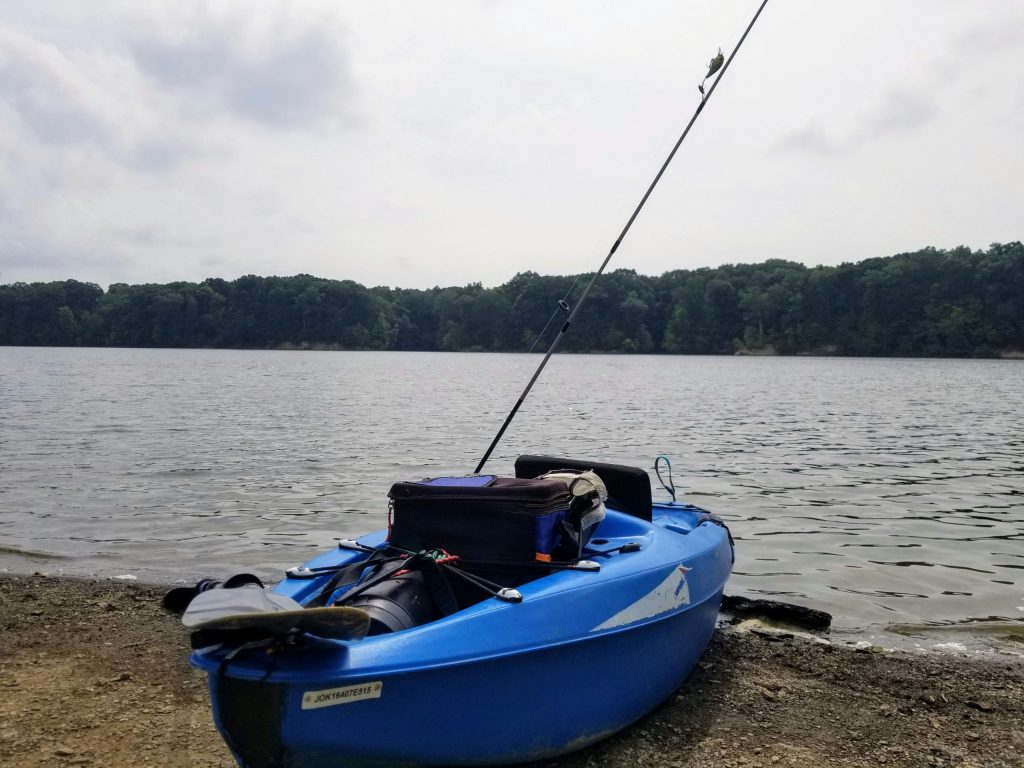
Most new kayak anglers are more nervous about launching and landing than actual fishing. That’s normal. A couple of simple routines make it much less awkward.
Load your kayak in stages
Instead of lugging a fully rigged spaceship to the water, load the kayak in two stages.
At the car:
- Put your PFD on.
- Load your paddle, rods, and empty crate into the kayak.
- Keep small valuables, such as keys and phone, on you in a pocket or small dry bag.
At the water’s edge:
- Slide the kayak in enough that it floats lightly but is still touching bottom.
- Put heavier or loose items, such as cooler and extra tackle, in the crate or storage area.
- Double-check paddle leash, rod leashes if you use them, and PFD fit.
I learned the hard way that rigging everything on a sloped ramp with wakes rolling in is a great way to watch a brand-new lure box float away. Now I keep the “dockside hustle” to a minimum.
Getting in from a low bank or ramp
For a typical low bank or concrete ramp:
- Put the kayak in shallow water, parallel to the shore if you can.
- Place your paddle across the kayak behind your seat for balance.
- Stand beside the seat area, holding both sides of the kayak.
- Sit your butt in the seat first, then bring your legs in one at a time.
- Push off gently with your paddle or hand.
Take your time. No one at the ramp is judging as much as you think they are. Most are worried about their own stuff.
Coming back in
When you paddle back:
- Approach the shore slowly, ideally upwind or up-current so you’re in control.
- Glide in and let the hull bump bottom gently.
- Keep your weight low as you swing your legs out and stand up.
If it’s a steeper ramp, use your paddle as a brace again while you stand. No style points are awarded here. Slow and steady wins.
Step 6: Boat Control 101 – Wind, Current, and Quiet Feet
If you only remember one thing from this section, let it be this: fish from stable positions, not while you’re constantly fighting the kayak.
Understanding wind, the invisible boss
Wind pushes your kayak way more than you expect at first. I learned this one breezy morning when I turned sideways “just for a second” to tie a knot and ended up 40 yards off my spot before finishing the clinch.
Basic wind rules:
- Start your drift upwind or up-current of where you want to fish. Let the kayak quietly move you through the zone.
- Face into the wind when you want to stay put longer; it slows your drift.
- Use short, quiet paddle strokes to adjust your angle, not big flailing ones that send you spinning.
On small lakes and ponds, even a light breeze can turn your kayak. Use it instead of fighting it: set up to drift along a weed edge or shoreline and make casts as you go.
For a deeper beginner breakdown, read this guide on kayak fishing in the wind before launching on breezy days.
Simple anchoring options
You don’t need a fancy anchor trolley right away, but you do need a way to pause:
- Light anchor, 2–3 lb, with 30–50 ft of rope:
Good for lakes and bays with a soft bottom. Drop it slowly from the front or back, not the side, so you don’t get pulled sideways. - Stake-out pole or shallow-water stick:
Great for marshes, flats, and shallow coves. Stick it in the mud or sand and clip or tie it off to the kayak.
Always be cautious about anchoring in current. In stronger river flows or fast tidal cuts, it’s often safer to drift through and paddle back up, especially as a beginner.
If you’re trying to choose your first anchor setup, this breakdown of the best kayak anchors for lakes, rivers, and inshore fishing will help you avoid overbuying.
Quiet movements matter
Fish absolutely feel bumps and bangs on the hull:
- Place rods down gently, don’t drop them.
- Avoid stomping or shifting weight abruptly.
- Don’t toss pliers onto the deck; set them down.
I’ve watched shallow redfish and bass spook hard from a single loud clunk on plastic. In a kayak, your stealth is a major advantage. Use it.
Step 7: Planning Your First Kayak Fishing Trip
This is where a lot of beginners overthink things. Let’s keep your first few trips simple and realistic.
Pick easy water and a short route
For your first kayak fishing trip, I’d aim for:
- Small to medium lake, calm pond, or very gentle river bend
Protected inshore bay or marsh cove if you’re coastal, with little boat traffic. - Short paddle from the launch
Stay within 10–15 minutes of the ramp at first. You’ll be surprised how much you can fish without going far. - Stable weather forecast
Morning or evening with light wind, ideally under about 10 mph, and no thunderstorms predicted. Always check the local weather.
Bring a printed or saved map on your phone showing:
- The launch point
- A few shorelines, points, or coves you want to fish
- Obvious hazard areas such as shallow rocks, stump fields, or stronger current
Time of day and trip length
For spring through fall:
- Early morning or evening: Less boat traffic, lower wind, and better fishing more often than not.
- Trip length: Plan for 3–4 hours on the water, especially at first. Long enough to fish, short enough not to get worn out.
Shoulder seasons, like spring and fall, add extra considerations: cooler mornings, warmer afternoons, and sometimes cold water. If you’re out in those conditions, pack a light extra layer and keep a closer eye on the forecast.
A simple game plan
An example plan for a beginner on a lake:
- Launch at sunrise from a public ramp on a small lake.
- Paddle along the right-hand shoreline, staying 20–30 yards out.
- Target visible structure: docks, laydowns, weed edges.
- Fish with a simple soft plastic or spinnerbait, covering water steadily.
- After an hour, take a break, drink water, and check in with yourself: “Am I warm, comfortable, and still confident?”
- Turn around in time that you’re back at the ramp a little before the wind typically picks up.
If you’re inshore, same idea: stay in a protected creek or marsh pocket, watch the tide level, and don’t stray too far from the launch until you’re comfortable.
Beginner rule: Your first few trips should feel almost too easy. Easy launch, easy weather, easy route, easy gear. Save the long paddles, sketchy wind, and complicated rigging for later.
Step 8: Actually Catching Fish from a Kayak (Without Overcomplicating It)
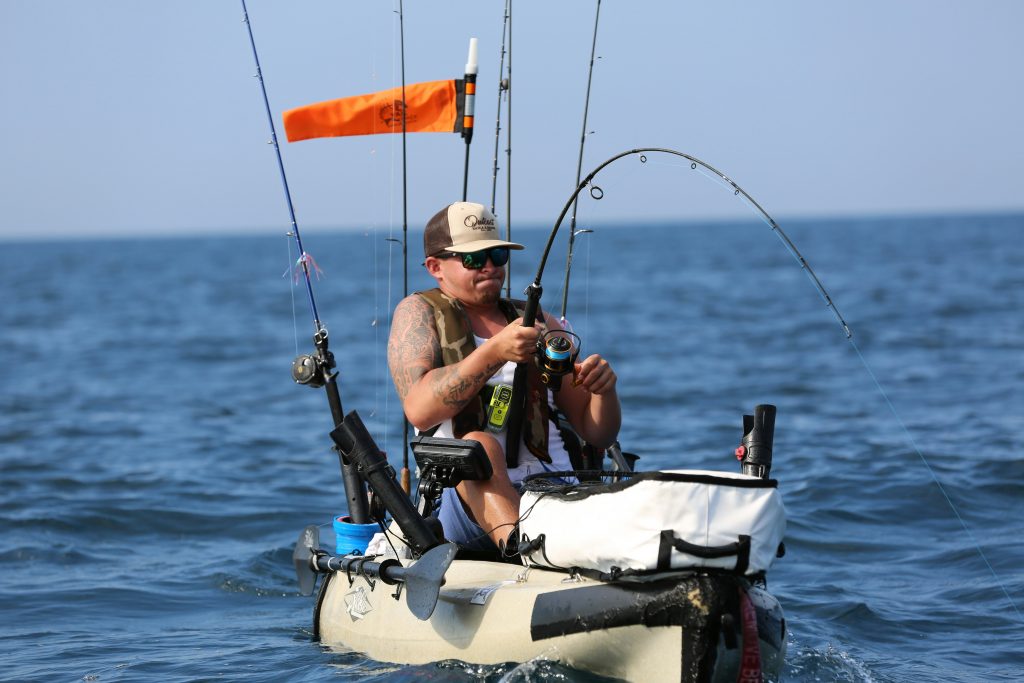
Here’s the good news: almost everything you know from bank or boat fishing still applies. You’re just lower to the water with a bit more stealth and a bit less room.
Fish the same “good looking stuff” you already trust
In lakes and ponds:
- Shoreline transitions such as rock to mud, sand to weeds, or shallow to deeper banks
- Points and pockets
- Laydown trees, stumps, and dock posts
- Edges of visible grass or pads
In marshes and bays:
- Edges of grass lines
- Points where creeks enter a bay
- Oyster edges, while being careful with your hull
- Small drains and cuts on a falling tide
The kayak’s secret sauce is how quietly it can slide into these spots.
Casting angles from the kayak
One thing that feels different is casting angles:
- Try to position the kayak slightly off to the side of your target, not directly on top of it.
- Make casts parallel to shorelines or structure, not just straight in and straight out.
- If you hook a fish, keep the rod low and to the side to use the kayak’s stability rather than lifting straight up.
Remember: the kayak will move when a decent fish pulls. That’s okay. Let it tow you a bit if needed; you don’t have to horse the fish.
Keep your lure choices simple
On a beginner kayak fishing setup, I’d approach most freshwater trips with:
- Bottom contact lure: Texas-rig worm or creature bait
- Moving lure: Spinnerbait, small swimbait, or chatter-style bait
- Surface or subsurface finesse: Small topwater or weightless stick bait
For inshore:
- Soft plastic on a jighead as your main workhorse
- Spoon or swimbait for covering flats or points
- Popping cork plus soft plastic or live bait if that’s common in your area
Pick one or two “confidence” lures per outing and commit some time to them rather than constantly swapping.
Step 9: Learn from Your First Five Trips (and Avoid Common Mistakes)
You don’t have to be perfect on day one. In fact, you won’t be. The trick is to learn on easy days, in easy places, with forgiving setups.
Here are some very common beginner mistakes I either made myself or watched from close range:
- Overpacking:
Bringing six rods, ten boxes of tackle, and a cooler big enough for a week.
Fix: Two rods, one or two boxes, small cooler, and basic tools. - Ignoring the wind:
Launching with a strong wind at your back and drifting way down the lake without thinking about paddling back.
Fix: Start by paddling into the wind so the way back is easier. - Not drinking or eating enough:
It’s easy to forget when you’re focused on staying upright and untangling line.
Fix: Set a mental reminder to sip water every 20–30 minutes. - Messy deck layout:
Hooks, tools, and line all over the footwell.
Fix: Everything has a home. If it doesn’t, it probably doesn’t need to be there. - Skipping practice re-entry:
If you’re in warm, shallow, safe water with a buddy nearby, practicing a wet exit and re-entry can be confidence-boosting.
Fix: When conditions are safe, intentionally flip the kayak near shore and climb back in a few times.
For more details, read Beginner Kayak Fishing Mistakes I Wish Someone Warned Me About.
After each of your first few trips, ask yourself:
- What did I actually use?
- What never left the crate?
- What annoyed me or felt unsafe?
- What felt surprisingly easy?
Adjust one or two things next trip — gear, route, launch time — rather than changing everything at once.
Shoulder season adjustments
As you gain confidence and the seasons shift:
- Cut trips a bit shorter in colder weather.
- Pack a backup dry shirt in a small dry bag.
- Take wind and water temperature more seriously.
- Double-check that your PFD fit and layers still feel good when seated and paddling.
You don’t have to become a hardcore cold-water angler, but if you’re pushing into spring and fall, build habits now that keep you safe later.
Kayak Fishing for Beginners FAQs
What is the best kayak for beginner kayak fishing?
For most beginners, the best kayak is a stable sit-on-top fishing kayak in the 10–12 foot range. It does not need to be expensive or loaded with electronics. A comfortable seat, decent stability, a few rod holders, and enough space for a small crate are more important than speed or fancy accessories.
Is kayak fishing safe for beginners?
Kayak fishing can be safe for beginners when you choose calm water, wear your PFD, watch the weather, stay close to the launch, and avoid strong current or heavy boat traffic. Most problems start when new anglers overpack, ignore wind, or try to fish water that is too advanced for their skill level.
How many rods should I bring kayak fishing?
One or two rods is plenty for a beginner. Two rods let you keep one moving bait and one slower bait ready without cluttering the deck. Bringing four or five rods too early usually creates more tangles and stress than it solves.
What gear do I actually need to start kayak fishing?
At a minimum, you need a stable kayak, paddle, properly fitted PFD, whistle or sound signal, basic rod and reel, small tackle box, pliers, line cutters, water, sun protection, and a way to keep your phone and keys dry. A crate, small anchor, and net are helpful but do not need to be complicated.
Should beginners anchor a kayak?
Beginners can anchor a kayak in calm lakes, ponds, and protected bays, but they should be careful in current. Never anchor from the side in moving water. If the current feels strong or unpredictable, it is often safer to drift through the area and paddle back up instead of anchoring.
What wind speed is too much for beginner kayak fishing?
As a simple beginner rule, try to fish when winds are light, ideally under about 10 mph. Exact comfort depends on your kayak, waterbody, wind direction, current, boat traffic, and experience level. When in doubt, stay close to the launch or pick a more protected spot.
Can you kayak fish without a fish finder?
Yes. A fish finder can help later, but beginners can catch plenty of fish by learning shoreline structure, weed edges, docks, points, laydowns, current seams, and visible bait activity. Good boat control and simple lure choices matter more than electronics at the beginning.
If you’re still building confidence, bookmark this kayak fishing for beginners guide and come back to it before each of your first few trips.
Bringing It All Together on the Water
Kayak fishing for beginners doesn’t have to mean reading 20 tabs and buying everything in a catalog. It can be as simple as:
- A stable, basic sit-on-top kayak
- A solid PFD and a few safety habits
- A compact set of rods, lures, and tools
- A clean, thoughtful layout
- Short, well-planned trips on forgiving water
From there, you’ll naturally figure out what matters for your style of fishing. Maybe you’ll eventually add a fish finder, upgrade your paddle, or rig an anchor trolley. But none of that is required to start catching fish and enjoying quiet mornings a few paddle strokes from the ramp.
If you can walk away from your first handful of trips thinking, “That was fun, I felt safe, and I learned something,” you’re doing it right.
The fish will come.