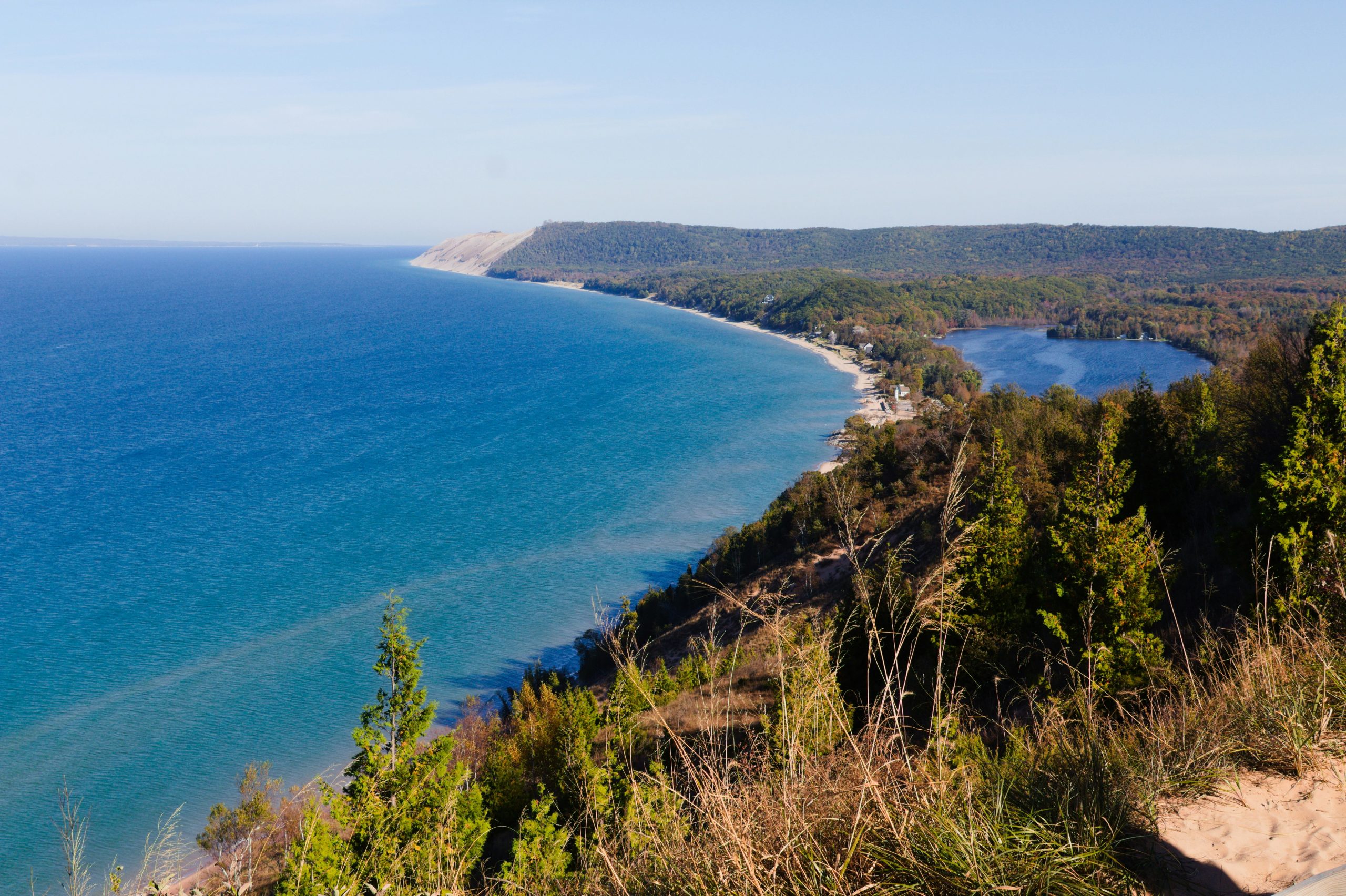
Kayak Fishing Lake Michigan: Best Areas, Seasons, and Tactics for Salmon, Trout & Smallmouth
Kayak Fishing Lake Michigan can feel more like fishing an inland ocean than a typical lake. Clear, cold water, long shorelines, steep drops, river mouths, harbors, breakwalls, and rocky shorelines create excellent opportunities for salmon, trout, smallmouth bass, and perch. But the same water that makes Lake Michigan exciting can turn dangerous fast when wind, waves, storms, or cold water are involved.
This guide breaks down the best kayak fishing areas on Lake Michigan, where to launch, what species to target, seasonal patterns, productive lures, safety gear, and the big-water decisions you should make before every trip.
Affiliate note: Some links on this page may be affiliate links. If you buy through those links, Kayak-Fishing.com may earn a small commission at no extra cost to you. I only recommend gear that makes sense for kayak anglers and the type of fishing discussed here.
Table of Contents
Quick Answer: Is Lake Michigan Good for Kayak Fishing?
Yes, Lake Michigan can be excellent for kayak fishing, especially around protected harbors, river mouths, breakwalls, rocky points, and nearshore structure. The best opportunities are usually spring and fall for salmon and trout, late spring through fall for smallmouth bass, and localized summer/fall windows for perch.
The key is choosing protected launches, watching the marine forecast, and staying realistic about your skill level. Lake Michigan is not the place to “figure it out as you go.” Start conservative, fish close to shore, and build experience gradually.
| Best For | Where to Focus | Main Species | Best Season | Kayak Difficulty |
|---|---|---|---|---|
| Beginner-friendly protected water | Harbors, marinas, inner breakwalls | Smallmouth, perch, trout | Spring through fall | Easier on calm days |
| Salmon and trout trolling | Harbor mouths, river plumes, first contour breaks | Coho, chinook, browns, steelhead | Spring and fall | Moderate to advanced |
| Smallmouth bass | Rocky shorelines, reefs, shoals, breakwalls | Smallmouth bass | Late spring through fall | Moderate |
| Perch fishing | Soft-bottom pockets, humps, weed/rock transitions | Yellow perch | Local summer/fall windows | Moderate |
| Advanced big-water trips | Open nearshore contours and deeper breaks | Salmon, trout, lake trout | Stable weather windows only | Advanced only |
Before You Go: Check These Lake Michigan Resources
Lake Michigan touches four states, and fishing rules can change by state, species, season, and location. Always check the current regulations for the exact water you plan to fish. Also check a real marine forecast, not just a basic weather app.
| Resource | Use It For |
|---|---|
| Illinois Lake Michigan Fishing | Chicago-area Lake Michigan access, sportfish information, regulations, ramps, and maps. |
| Wisconsin DNR Lake Michigan Fishing | Wisconsin Lake Michigan fishing reports, access information, tributaries, and safety resources. |
| Michigan DNR Fishing Regulations | Michigan fishing rules, seasons, limits, and Great Lakes trout/salmon regulations. |
| Indiana DNR Lake Michigan Fishing | Indiana Lake Michigan fishing access, seasonal notes, and local fishing information. |
| NWS Lake Michigan Marine Forecast | Open-water and nearshore marine forecast zones for wind, waves, warnings, and changing conditions. |
| NWS Cold Water Safety | Cold-water safety basics, including why you should dress for the water temperature, not the air. |
| USCG Life Jacket Guidance | Life jacket fit, approval, sizing, and safe use information. |
Best Kayak Fishing Lake Michigan Areas
Lake Michigan is too big to treat as one simple fishery. The best kayak fishing usually happens where big-water fish are pushed close to kayak range: harbors, river mouths, rocky shorelines, breakwalls, nearshore reefs, and the first few major contour breaks.
Chicago Shoreline
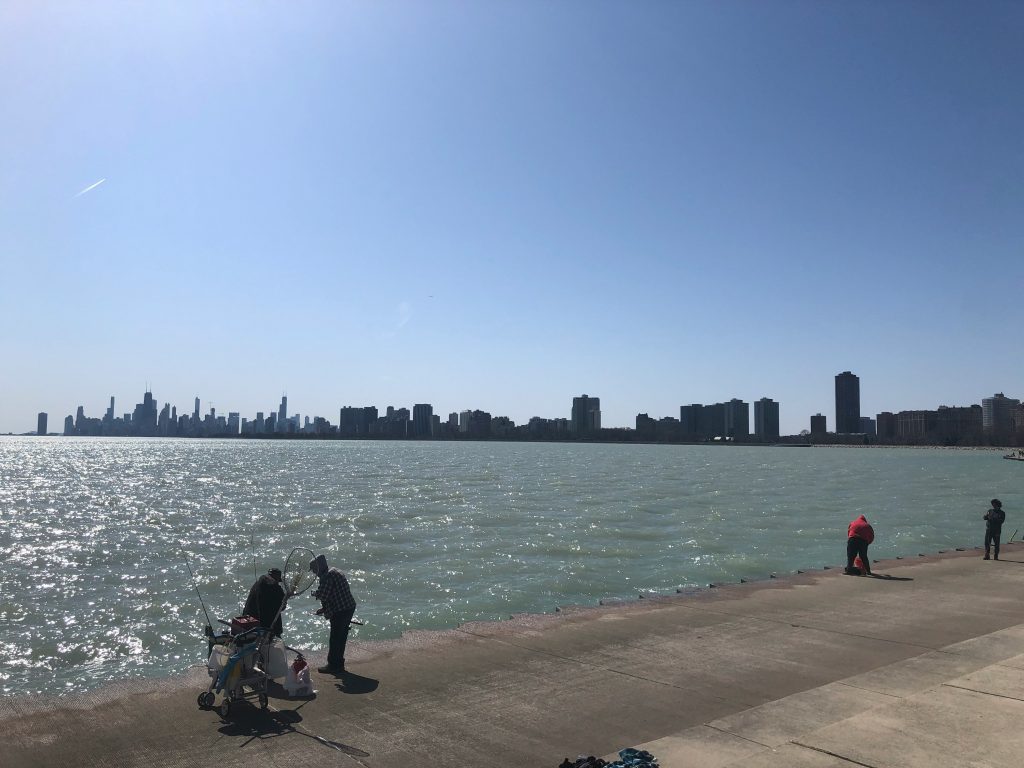
The Chicago lakefront is one of the most accessible kayak fishing areas on Lake Michigan. It offers harbors, breakwalls, beaches, river influence, and nearshore structure within reach of protected launches.
Why it’s productive:
- Harbors and breakwalls create current breaks, shade, bait-holding edges, and ambush points.
- River and discharge influence can pull salmon, trout, and baitfish shallow during spring and fall.
- Rock walls, riprap, and rubble hold smallmouth during warmer months.
- Protected harbor water gives kayak anglers a safer backup option when the main lake is too rough.
Best targets:
- Spring: Coho, brown trout, some chinook, and early smallmouth.
- Summer: Smallmouth bass along rock, walls, and shoreline structure.
- Fall: Chinook, coho, brown trout, and steelhead around harbor mouths and river influence.
- Perch: Localized and regulation-dependent around harbor mouths, flats, and soft-bottom areas.
Kayak approach:
- Launch from protected harbor areas and check conditions at the harbor mouth before committing to open water.
- Fish first light around breakwalls, pier heads, and current seams for salmon and trout.
- Work rock edges with tubes, swimbaits, jerkbaits, and drop-shot rigs for smallmouth.
- Stay out of main traffic lanes and assume powerboats may not see you right away.
Door County, Wisconsin
Door County is one of the best kayak fishing regions on Lake Michigan, especially for smallmouth bass. The peninsula has rocky points, protected bays, reefs, islands, harbors, and classic clear-water structure.
Why it’s special:
- Rocky shorelines, boulder fields, points, and shoals create excellent smallmouth habitat.
- Protected bays give kayak anglers more options when exposed shorelines are too rough.
- Salmon and trout can be reachable near harbors, deeper breaks, and main-lake edges during the right windows.
- The variety of protected and semi-protected water makes it easier to adjust to wind direction.
Best targets:
- Smallmouth bass: Late spring through fall around rock, points, shoals, and clear-water structure.
- Salmon and trout: Harbor mouths, deeper breaks, and staging areas during spring and fall.
- Perch: Protected bays, weed/rock transitions, and soft-bottom areas when seasons and local populations line up.
Kayak approach:
- Start from protected bays such as Sturgeon Bay, Egg Harbor, Fish Creek, or Sister Bay, then work outward only if conditions allow.
- Use natural-colored tubes, drop-shot baits, swimbaits, and jerkbaits for clear-water smallmouth.
- On calm days, troll modest passes along 20- to 60-foot breaks for salmon and trout, but stay within a comfortable return distance.
- Pay close attention to wind direction because one side of the peninsula may be much safer than another on the same day.
Grand Haven, Michigan
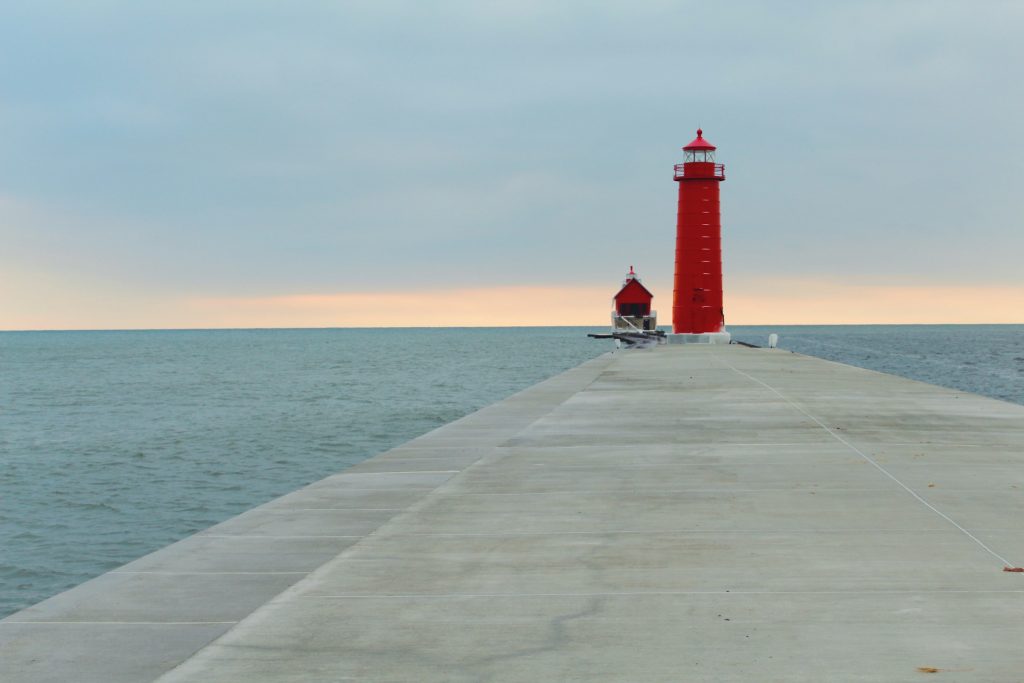
Grand Haven sits where the Grand River meets Lake Michigan, making it a classic river-mouth fishery. For kayak anglers, that means access to harbor structure, pier heads, plume lines, and nearby contours without always needing a long open-water run.
Why it’s good:
- The Grand River plume can concentrate bait and gamefish near the pier heads and first offshore breaks.
- Harbor and channel structure give anglers a place to fish when the open lake is marginal.
- Spring and fall salmon/trout staging can put big fish within realistic kayak range.
- Nearby rock, riprap, and breaklines can also hold smallmouth and occasional trout.
Best targets:
- Spring: Brown trout, coho, and early salmon/trout opportunities around plume edges and nearshore water.
- Summer: Smallmouth, perch where available, and occasional low-light trout/salmon windows.
- Fall: Chinook, coho, browns, and steelhead staging near the river mouth and pier heads.
Kayak approach:
- Launch from river or harbor-side access and evaluate lake conditions before moving outside the pier heads.
- Troll shallow stickbaits, spoons, or small crankbaits along plume lines at first and last light.
- When waves build, retreat inside and fish channel edges, riprap, or protected structure.
- Avoid fishing too close to pier heads when boat traffic, current, wind, or wave rebound makes boat control difficult.
Milwaukee and Wisconsin’s North Shore
Milwaukee and the nearby North Shore communities offer strong kayak fishing opportunities around harbors, breakwalls, river mouths, and nearshore structure. This area can be especially productive for salmon and trout during spring and fall windows.
Why it’s productive:
- Harbor mouths and breakwalls concentrate bait and create obvious structure.
- River discharges can warm early in spring and attract fish late into fall.
- Rock and breakwall edges hold smallmouth, browns, and other nearshore fish.
- Protected harbor water gives kayakers a way to fish even when the main lake is not ideal.
Best targets:
- Coho and chinook salmon: Spring and fall around harbor mouths, river plumes, and nearshore contours.
- Brown trout and steelhead: Cooler water periods near rivers, harbors, and breakwalls.
- Smallmouth bass: Summer around rocks, breakwalls, and shoreline structure.
- Perch: Localized soft-bottom and harbor areas when seasons and population cycles line up.
Kayak approach:
- Launch inside protected harbors and test the lake at the mouth before running outside.
- Troll crankbaits, stickbaits, or spoons along plume edges, walls, and the first few contour breaks.
- For smallmouth, stay close to rock and breakwall edges with jigs, tubes, swimbaits, and finesse rigs.
- Watch for rebound waves near walls; they can make a kayak feel unstable even when the main lake looks manageable.
Launch Points for Kayak Fishing Lake Michigan
The best Lake Michigan kayak launch is usually not the closest one. It is the one that gives you protected rigging water, a safe exit, a short route to fishable structure, and an easy bailout if the wind or waves build.
| Area | Launch Style | Best Use | Beginner Friendly? | Notes |
|---|---|---|---|---|
| Chicago harbors | Protected harbor launches | Breakwalls, harbor mouths, salmon/trout, smallmouth | Yes, on calm days | Watch boat traffic and stay clear of main lanes. |
| Door County bays | Protected marinas, bays, and town launches | Smallmouth, perch, salmon/trout windows | Yes to moderate | Choose your side of the peninsula based on wind direction. |
| Grand Haven river/harbor | River or harbor-side access | Pier heads, plume lines, salmon/trout staging | Moderate | Do not force it outside the pier heads if conditions are rough. |
| Milwaukee harbor area | Protected harbor and marina access | Harbor mouths, breakwalls, river influence | Moderate | Stay visible and avoid high-traffic harbor routes. |
| Exposed beaches or open shoreline | Beach launch | Short nearshore sessions only | No, unless very calm | Requires surf-launch and landing judgment. |
General launch tips:
- Launch from protected water whenever possible.
- Rig your kayak away from the main ramp and avoid blocking trailer lanes.
- Choose launches that let you fish productive water without a long open-water crossing.
- Have a bailout route planned before you leave the launch.
- Check local rules for parking, launch fees, harbor restrictions, and paddlecraft access.
If you are new to big-water kayak fishing, start inside protected harbors or bays before you try open Lake Michigan. Many beginners get in trouble by launching on a calm-looking morning and underestimating how quickly the return paddle can change.
Seasonal Patterns on Lake Michigan
Lake Michigan changes dramatically by season. Water temperature, bait movement, river influence, wind direction, and spawning behavior all affect whether fish are within kayak range.
| Season | Best Kayak Targets | Best Areas to Check | Main Caution |
|---|---|---|---|
| Spring | Coho, brown trout, early chinook, smallmouth | Harbor mouths, river plumes, warm discharges, shallow breaks | Cold water and unstable weather |
| Summer | Smallmouth, perch, low-light trout/salmon windows | Rocky points, reefs, breakwalls, soft-bottom perch areas | Afternoon wind, boat traffic, deeper fish |
| Fall | Chinook, coho, browns, steelhead, smallmouth | River mouths, harbor entrances, plume lines, rocky structure | Fast-changing weather and cold fronts |
| Winter | Protected harbor trout or tributary-related opportunities | Harbors and protected areas only for very experienced paddlers | Cold shock, ice, storms, and limited rescue margin |
Spring
Spring is one of the best times for kayak anglers because cold-water species often push close to shore. Coho, brown trout, and some chinook may be reachable around harbor mouths, river plumes, and warm-water influence. Smallmouth also begin staging as rocky bays and shorelines warm.
Kayak focus: Troll or cast shallow to mid-depth lures around harbor mouths, plume edges, first contour breaks, and protected shoreline structure. Dress for cold water, not warm air.
Summer
Summer can be excellent for smallmouth and perch, while salmon and trout often move deeper or become more dependent on low-light and temperature conditions. For kayaks, this usually means smallmouth become the most consistent target in many areas.
Kayak focus: Fish rocky points, breakwalls, reefs, shoals, and humps for smallmouth. Look for perch on soft-bottom areas and subtle depth changes where regulations allow. If you target trout or salmon, start very early and keep your plan conservative.
Fall
Fall is prime time for salmon and trout near river mouths, harbor entrances, and staging areas. Chinook and coho move toward tributaries, while browns and steelhead may cruise nearshore as temperatures drop. Smallmouth can also feed aggressively before winter.
Kayak focus: Work harbor mouths, plume lines, pier heads, and nearby contours. Keep safety first because fall weather can change fast and water temperatures start working against you.
Winter
Winter main-lake kayak fishing is advanced and often not worth the risk for most anglers. Cold shock, hypothermia, ice, wind, and limited rescue windows create serious danger. Some protected harbor or tributary-related opportunities may exist, but winter Lake Michigan is not beginner water.
For most kayak anglers, winter is better spent maintaining gear, studying maps, replacing worn tackle, and planning spring trips.
Main Species to Target from a Kayak
Salmon: Chinook and Coho
Salmon are the big draw for many Lake Michigan anglers, but kayak anglers need to be selective. The most realistic kayak windows are when salmon move nearshore in spring or stage near river mouths and harbor entrances in fall.
- Best kayak areas: Harbor mouths, river plumes, nearshore breaks, pier heads, and first contour lines.
- Best seasons: Spring for coho and some chinook; fall for staging chinook and coho.
- Best methods: Trolling spoons, crankbaits, stickbaits, or casting metals and swimbaits near active bait.
- Kayak note: Keep your rod setup simple. Two rods can already be a lot to manage in wind, waves, and current.
Trout: Browns, Lake Trout, and Steelhead
Brown trout, lake trout, and steelhead all offer kayak opportunities, but not always in the same places or seasons. Browns are often the most kayak-friendly trout near shorelines, harbor mouths, and discharges during cool-water periods. Lake trout are often deeper, while steelhead can move nearshore or toward tributaries during seasonal movements.
- Best kayak areas: Harbor mouths, rocky shorelines, river influence, cooler nearshore water, and contour breaks.
- Best seasons: Spring and fall, with some winter harbor opportunities for advanced anglers.
- Best methods: Spoons, jerkbaits, crankbaits, swimbaits, and slow trolling passes.
Smallmouth Bass
Smallmouth bass may be the most reliable Lake Michigan kayak target once water warms. They relate to rock, boulders, breakwalls, reefs, shoals, and clear-water edges. Door County is the most famous smallmouth area, but good structure exists all around the lake.
- Best kayak areas: Rock, rubble, boulder fields, breakwalls, points, shoals, and reef edges.
- Best seasons: Late spring through early fall.
- Best methods: Tubes, drop-shot rigs, swimbaits, jerkbaits, Ned rigs, and medium-diving crankbaits.
- Kayak note: Long casts and lighter leaders help in clear water.
Yellow Perch
Perch can be a fun kayak target, but they are highly local. Populations, regulations, and open seasons vary by state and year, so check the current rules before planning a perch-specific trip.
- Best kayak areas: Soft-bottom pockets, subtle humps, weed edges, harbor areas, and nearby flats.
- Best seasons: Often summer into fall, depending on location and regulations.
- Best methods: Two-hook perch rigs, drop-shot rigs, small minnows, worms, soft plastics, and light jigging.
- Kayak note: Perch fishing is often about staying on the school, so a fish finder can be especially useful.
Recommended Gear for Kayak Fishing Lake Michigan
Lake Michigan is not the place to pack light on safety. You do not need to bring every gadget you own, but a few pieces of gear make a major difference in visibility, communication, warmth, and control.
| Gear | Why It Matters on Lake Michigan |
|---|---|
| Fishing PFD | A properly fitted life jacket is non-negotiable on big water. |
| VHF radio | Better emergency communication than relying only on a cell phone. |
| Kayak flag and light | Helps powerboaters see you around harbors, haze, and low light. |
| Cold-water clothing | A wetsuit, drysuit, or proper layers may be needed when the water is cold. |
| Fish finder | Useful for finding depth breaks, bait, perch schools, and trolling contours. |
| Rod holders | Helps manage simple trolling spreads for salmon and trout. |
| Landing net | Important for big salmon, trout, and smallmouth beside the kayak. |
| Dry bag or waterproof case | Protects phone, keys, wallet, extra layers, and emergency items. |
| Paddle leash | Prevents a lost paddle from turning into a serious problem. |
For most Lake Michigan kayak trips, I would rather have fewer rods and better safety gear than a crate full of tackle. A simple salmon/trout trolling setup, one smallmouth spinning combo, a few high-confidence lures, and the right safety equipment will cover most realistic kayak situations.
Recommended Lures and Techniques
Trolling for Salmon and Trout
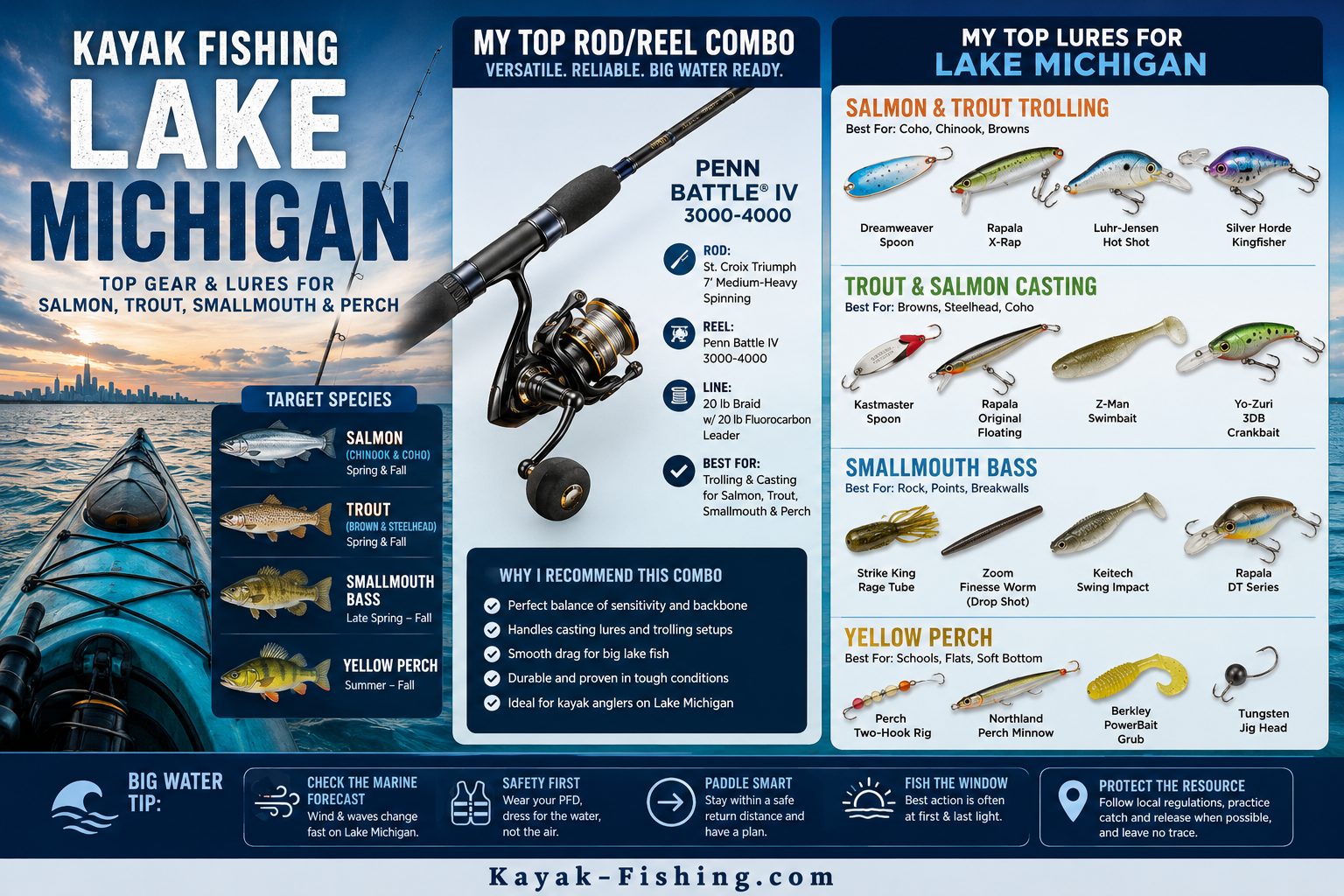
Kayak trolling works well when salmon and trout are within nearshore range. Keep your setup simple, avoid too many rods, and focus on making controlled passes along edges instead of wandering aimlessly offshore.
- Rod: Medium or medium-heavy spinning or trolling rod with enough backbone for salmon and trout.
- Line: 20- to 30-pound braid or 12- to 20-pound mono, usually with a fluorocarbon leader.
- Lures: Small to medium spoons, shallow to medium-diving crankbaits, stickbaits, and minnow-style plugs.
- Where to troll: Plume edges, harbor mouths, pier-head areas, contour breaks, and parallel to breakwalls.
- Kayak tip: Two rods maximum is plenty for most kayak anglers. One rod may be smarter in wind or traffic.
Casting and Jigging Nearshore
When fish are around bait, breakwalls, or current seams, casting can be more controlled than trolling. This is especially true around harbor mouths, plume lines, and rocky shoreline structure.
- Spoons and metals: Good for salmon and trout when fish are chasing bait nearshore.
- Swimbaits: Three- to five-inch paddle tails on jig heads work for trout, salmon, and smallmouth.
- Jerkbaits: Clear-water staples for brown trout and smallmouth around rock and shoreline structure.
- Jigs: Useful around bottom transitions, deeper rock, and fish holding close to structure.
Cast upwind or up-current when possible and work your lure back naturally along the edge. Count baits down to different depths until you find where fish are actually holding.
Smallmouth Bass Tactics
Smallmouth fishing on Lake Michigan often rewards patience and precision. In clear water, fish may follow baits a long way, so long casts, natural colors, and subtle presentations matter.
- Tubes: One of the best choices around rock, goby-looking bottom, and boulder fields.
- Drop-shot rigs: Excellent for vertical fishing or casting to deeper edges and clear-water fish.
- Ned rigs: Good when fish are pressured or holding close to bottom.
- Swimbaits: Great for covering water along breakwalls and shoreline rock.
- Jerkbaits: Strong choice in spring, fall, and clear-water smallmouth situations.
Use 8- to 12-pound fluorocarbon leaders for finesse fishing and keep your kayak positioned far enough off the structure to avoid spooking fish in clear water.
Perch Rigs
Perch fishing from a kayak is usually simple: find the school, stay close, and keep small baits near bottom. A fish finder helps because perch may shift around flats, humps, and soft-bottom pockets.
- Rod: Light or medium-light spinning rod.
- Line: Six- to ten-pound mono or braid with a fluorocarbon leader.
- Rigs: Two-hook perch rigs, drop-shot rigs, small jigheads, or simple live-bait rigs.
- Baits: Minnows, worms, small soft plastics, and tiny jigging presentations.
- Kayak tip: Use a light anchor, controlled drift, or pedal drive to stay over active fish without constantly repositioning.
Always check perch regulations before keeping fish. Perch rules can be very specific by state and may change over time.
Kayak Safety on Lake Michigan
Lake Michigan is beautiful, but it deserves full respect. The biggest kayak risks are sudden wind, steep waves, cold water, boat traffic, fog, storms, and getting farther from shore than your skill level allows.
If you are still learning, read beginner kayak fishing mistakes and kayak fishing in wind before planning a big-water trip.
Lake Michigan Go/No-Go Safety Guide
This is not a hard rule for every paddler, but it is a useful conservative starting point. Your kayak, fitness, experience, launch location, wind direction, water temperature, and rescue options all matter.
| Condition | Beginner | Intermediate | Advanced |
|---|---|---|---|
| Wind under 8 mph | Usually reasonable in protected water | Good window | Good window |
| Wind 8-12 mph | Caution; stay protected | Usually fishable with planning | Fish-specific decision |
| Wind 12-15 mph | No-go for open water | Caution; protected water only | Depends on direction and waves |
| Wind over 15 mph | No-go | Usually no-go | Advanced judgment only |
| Waves 2 feet or more | No-go | Usually no-go | Advanced only |
| Thunderstorms possible | No-go | No-go | No-go |
| Cold water without immersion gear | No-go | No-go | No-go |
| Fog or low visibility | No-go | No-go | Usually no-go |
Check the Marine Forecast, Not Just the Weather App
A regular weather app may tell you temperature, rain chance, and general wind. That is not enough for Lake Michigan. Check the marine forecast for wind direction, wave height, small craft advisories, storm warnings, and nearshore conditions.
Pay special attention to wind direction. An offshore wind can make the lake look flat near shore while quietly pushing you away from land. An onshore wind can make landing difficult. Wind against river current or harbor outflow can also stack waves near entrances.
Cold Water Is a Serious Risk
Lake Michigan can remain dangerously cold even when the air feels warm. In spring and fall, falling in without the right clothing can quickly become a survival problem.
- Always wear a properly fitted, Coast Guard-approved PFD.
- Dress for the water temperature, not the air temperature.
- Use a wetsuit or drysuit when conditions call for immersion protection.
- Carry a dry bag with extra layers, a towel, and emergency items.
- Practice deep-water re-entry before you need it for real.
For more clothing guidance, see what to wear kayak fishing.
Boat Traffic and Harbor Entrances
Harbors are productive because they create structure and concentrate fish, but they also concentrate boat traffic. Assume larger boats have limited visibility and less ability to maneuver around you quickly.
- Stay out of marked traffic lanes whenever possible.
- Use a visibility flag and light in low-light conditions.
- Do not stop in narrow entrances, channel mouths, or blind corners.
- Point your bow into large wakes instead of taking them broadside.
- Keep rods, nets, and tackle secured so a wake does not turn into chaos.
Big-Lake Paddling Strategy
- Paddle upwind first, then let conditions help you return.
- Set a hard distance limit before you launch.
- Do not chase birds, bait, or fish marks beyond your safe range.
- Keep your first few trips short and close to protected launches.
- Tell someone where you are launching, where you plan to fish, and when you expect to be back.
The best kayak anglers are not the ones who paddle the farthest. They are the ones who make good decisions before conditions force bad decisions.
Simple Lake Michigan Kayak Fishing Trip Plan
If this is your first time kayak fishing Lake Michigan, keep the plan simple. Pick one protected launch, one primary target species, one backup area, and one hard turnaround time.
| Step | What to Do |
|---|---|
| 1. Choose your target | Pick salmon/trout, smallmouth, or perch. Do not try to do everything in one trip. |
| 2. Pick a protected launch | Choose a harbor, bay, or river-side launch close to productive structure. |
| 3. Check regulations | Confirm license, season, size limits, bag limits, and rod rules for the state water you will fish. |
| 4. Check the marine forecast | Look at wind direction, wave height, advisories, storms, and cold-water risk. |
| 5. Set your route | Plan a short loop that keeps you close to shore, structure, or protected water. |
| 6. Pack safety first | PFD, communication, visibility, immersion clothing, dry bag, light, and emergency plan. |
| 7. Fish the best window | Start at first light and plan to be off the water before wind and traffic build. |
This kind of conservative plan may not sound exciting, but it gives you the best chance of actually catching fish and getting home safely. Once you learn a launch, wind pattern, and fishery, you can expand from there.
FAQs About Kayak Fishing Lake Michigan
Can beginners kayak fish Lake Michigan?
Yes, but beginners should start in protected water on calm days. Harbors, bays, and inner breakwalls are much better starting points than exposed open shoreline. Beginners should avoid high wind, big waves, thunderstorms, fog, cold water without immersion gear, and long offshore paddles.
Do I need a special kayak for Lake Michigan?
You do not necessarily need an ocean kayak, but you do need a kayak that handles chop, tracks well, has good stability, and gives you a realistic chance of re-entering after a capsize. Many anglers prefer 12- to 14-foot sit-on-top fishing kayaks, pedal kayaks, or touring/fishing hybrids for big-water trips.
A short, wide recreational kayak may feel stable on a pond but can be inefficient and uncomfortable on open Lake Michigan. Boat control matters more as wind and waves build.
How far offshore should I go in a kayak?
There is no safe universal distance. The better question is: how quickly can you get back if the wind doubles, fog rolls in, or waves build? Many kayak anglers stay within a mile of shore, and beginners should usually stay much closer than that. On Lake Michigan, productive water often exists near harbors, breakwalls, river mouths, and nearshore contours, so long offshore runs are not always necessary.
What is the best time of year to kayak fish Lake Michigan?
Spring and fall are usually best for nearshore salmon and trout. Late spring through fall is best for smallmouth bass. Perch opportunities depend heavily on location, season, and current regulations. Winter main-lake kayak fishing is generally not recommended for most anglers because of cold water, ice, storms, and limited rescue margin.
What lures should I bring for Lake Michigan kayak fishing?
For salmon and trout, bring spoons, shallow to medium-diving crankbaits, stickbaits, swimbaits, and casting metals. For smallmouth, bring tubes, drop-shot baits, Ned rigs, swimbaits, jerkbaits, and crankbaits. For perch, bring small hooks, two-hook rigs, drop-shot rigs, minnows, worms, and tiny soft plastics.
Do I need a fishing license for Lake Michigan?
Yes. You need a valid fishing license for the state waters you are fishing: Illinois, Indiana, Michigan, or Wisconsin. If you launch in one state and cross into another, make sure you understand the rules for each state. Regulations for salmon, trout, bass, perch, number of rods, seasons, and harvest limits can vary, so check official state resources before every trip.
Is Lake Michigan safer than the ocean for kayaks?
Not necessarily. Lake Michigan does not have ocean tides, but it has long fetch, strong wind-driven waves, cold water, storms, boat traffic, currents near river mouths, and dangerous conditions around piers and breakwalls. Treat it like big water, not like a small inland lake.
Should I anchor on Lake Michigan?
Anchoring can be useful in protected water for perch or structure fishing, but be careful in current, waves, boat traffic, or around harbor entrances. Use an anchor trolley, quick-release setup, and enough line for the depth. If conditions are rough or you are unsure, drifting or controlled positioning is usually safer than anchoring.
For more help, see this guide on choosing a kayak anchor.
How does Lake Michigan compare to other Great Lakes for kayak fishing?
Lake Michigan offers excellent salmon, trout, smallmouth, and perch opportunities, but it also requires serious big-water judgment. If you are comparing options, you may also want to read the kayak fishing Lake Erie guide, since Lake Erie can offer a different mix of species, structure, and conditions.
Final Thoughts
Kayak fishing Lake Michigan can be outstanding, but it rewards anglers who plan carefully. From Chicago’s harbor lines to Door County’s rocky smallmouth water, Grand Haven’s river plume, and Milwaukee’s breakwalls, a kayak can put you close to fish that many anglers only reach from larger boats.
The safest and most productive approach is simple: choose protected launches, fish near high-value structure, match your tactics to the season, check official regulations, and build every trip around the marine forecast. Lake Michigan is not a lake to take lightly, but with the right plan, it can become one of the most rewarding kayak fishing destinations in the Midwest.
Start close, learn one launch at a time, and expand only when your skills, gear, and conditions all line up.