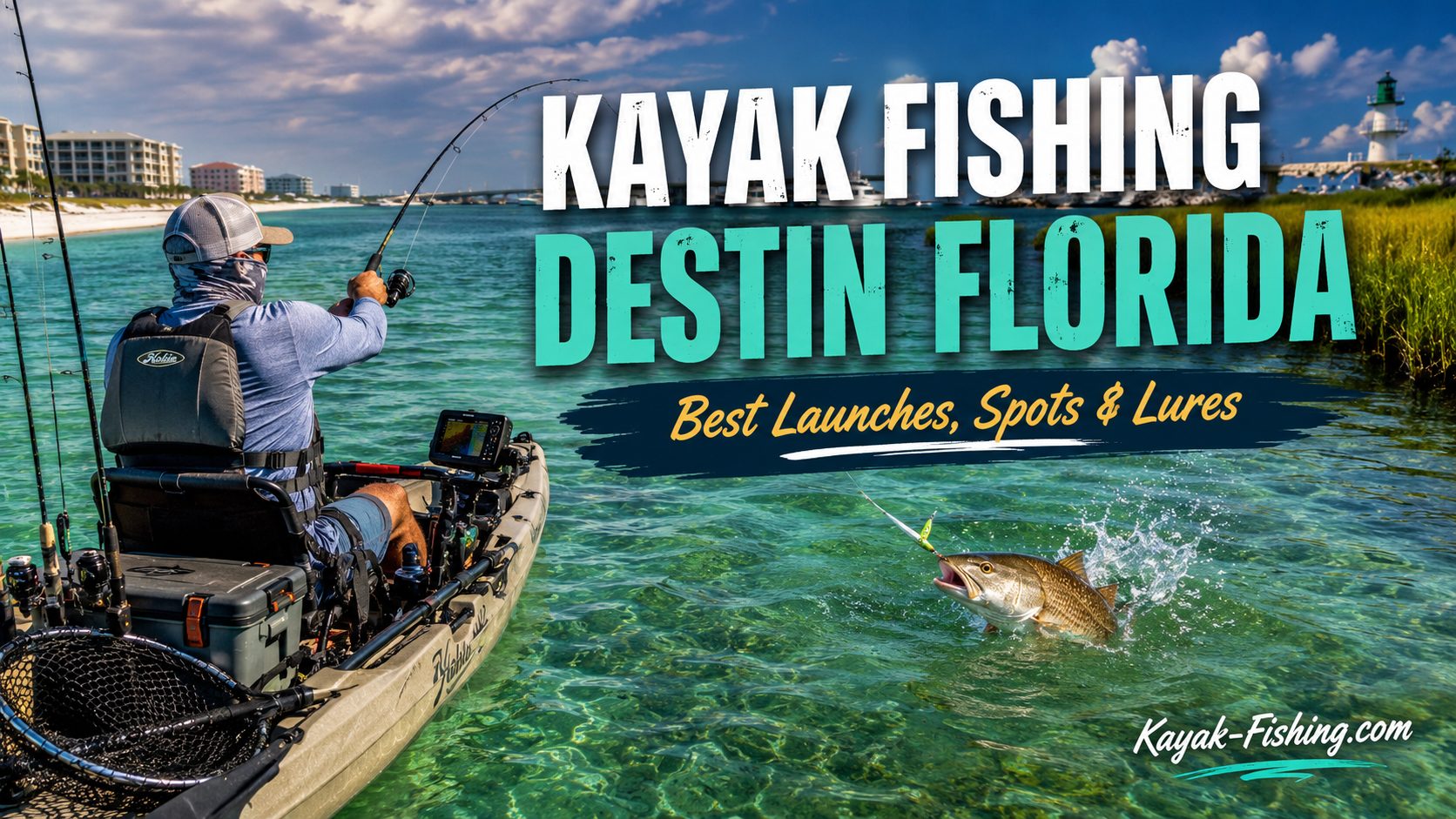
Kayak Fishing Destin Florida: Best Spots, Seasons, and Tactics for Inshore & Nearshore Success
Destin, Florida is known as “The World’s Luckiest Fishing Village” for a reason. Clear Gulf water, productive bays, grass flats, bayous, bridges, sandbars, and pass-driven current make it one of the more exciting kayak fishing destinations on the Florida Panhandle. The trick is not just knowing that Destin has fish. It is knowing where a kayak actually belongs on a given wind, tide, and boat-traffic day.
This guide breaks kayak fishing Destin into a practical plan: the best inshore and nearshore zones, specific launch options to research, safe beginner routes, seasonal patterns, target species, and a simple lure lineup that works from Choctawhatchee Bay to the edges of East Pass.
Quick answer: Kayak fishing Destin is best for anglers who want protected inshore water, grass flats, bayous, docks, channel edges, and occasional nearshore Gulf structure on calm days. Beginners should start on the bay side for redfish, speckled trout, and flounder. Experienced kayak anglers can fish East Pass edges, Crab Island drop-offs, and nearshore reefs only when tide, wind, boat traffic, and surf conditions are safe.
Table of Contents
Best Kayak Fishing Spots in Destin (Inshore & Nearshore)
Choctawhatchee Bay (Destin Side)
Choctawhatchee Bay is the main inshore playground when kayak fishing Destin. It is a large, shallow estuary with grass flats, oyster bottom, bayous, docks, points, and deeper channel edges. On days when the Gulf is too rough or East Pass is too busy, the bay is usually where kayak anglers should spend most of their time.
Why it’s great for kayaks:
- Large areas of fishable water in roughly 2–8 feet
- More protected than the open Gulf on many wind days
- Good mix of grass, sand, docks, bayous, and drop-offs within kayak range
Focus on:
- Grass flats and sandy potholes for speckled trout and redfish
- Dock lines and channel edges for redfish, trout, and flounder
- Bayous and feeder creeks, especially on moving water, for mixed inshore action
- Wind-protected shorelines where bait gets pushed against grass, points, or seawalls
East Pass & Destin Harbor Edges
East Pass connects Choctawhatchee Bay to the Gulf and funnels bait, current, and gamefish through a relatively narrow opening. It can be productive, but it is not a casual beginner kayak zone.
From a kayak, target:
- Current seams and drop-offs along the edges of the Pass, not the main boat lane
- Bridge and jetty-adjacent structure only during calm, manageable windows
- Harbor edges early or late when traffic is lighter
- Bait schools getting pushed along channel edges and sandy drop-offs
Expect jack crevalle, bluefish, occasional mackerel, trout, redfish, and mixed inshore species when bait is thick. Avoid the throat of East Pass on strong outgoing tide unless you are very experienced, have the right safety gear, and are fully comfortable around current and boat traffic.
Crab Island & Sandbar Edges
Crab Island is a submerged sandbar near the Destin Bridge that turns into a very busy boating and party area in peak season. For kayak fishing, the actual sandbar is usually less important than the edges around it.
Kayak strategy:
- Fish early, on weekdays, or during quieter off-peak windows
- Work the drop-offs where shallow sand meets deeper channels
- Watch for bait schools getting swept along the edge of the sandbar
- Leave before the heavy pontoon, jet ski, and tour-boat traffic builds
This can be a fun area when conditions line up, but it is not where I would send a first-time kayak angler on a busy summer weekend.
Destin Nearshore Gulf Reefs & Structure (Experienced Kayakers)
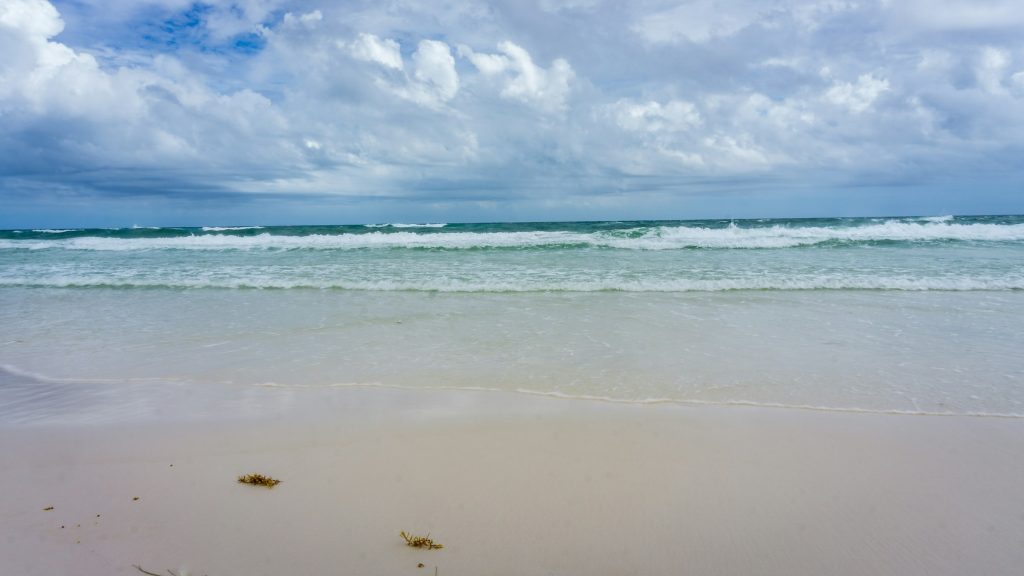
On calm days, experienced kayak anglers can launch on the Gulf side and reach nearshore reefs, hard bottom, and other structure within a manageable paddle. This is where Destin offers the bigger-fish potential that gets people excited, but the margin for error is much smaller than inside the bay.
These nearshore areas can hold:
- Red snapper and other snapper species
- Triggerfish, when in season
- Amberjack and jacks
- King and Spanish mackerel during migrations
Nearshore Gulf outings require careful planning, ideal weather, a realistic paddle distance, a reliable float plan, and strong kayak-handling skills. If the surf, wind, current, or storm forecast looks questionable, fish protected bay water instead.
Launch Points and Access for Kayak Fishing Destin
Destin has several access options, but kayak anglers should always verify current rules, fees, hours, parking limits, and launch restrictions before going. A good kayak launch is not just the closest spot on the map. It needs to match the day’s wind, tide, boat traffic, and your experience level.
| Launch / Area | Best For | Kayak Notes |
|---|---|---|
| Joe’s Bayou Boat Launch | Bay access, Choctawhatchee Bay, bayou edges, protected-water trips | City of Destin lists boat ramps, parking, bathrooms, and a daily launch fee. This is one of the more practical bay-side starting points to research for serious kayak fishing. |
| Clement E. Taylor Park | Hand-launching, short bay-side sessions, calmer-water paddles | The city specifically notes kayak and paddleboard launching with a designated loading/unloading area. Parking can be limited, so plan ahead and be respectful of other park users. |
| Captain Leonard Destin Park | Bay-side access, shorter kayak trips, family-friendly park setting | The city lists a paddleboard/kayak launch, bathrooms, dock, boardwalk, and other park amenities. This is worth researching for protected-water trips and shorter outings. |
| Destin Harbor / East Pass Area | Advanced kayak anglers targeting harbor edges, current seams, and pass-adjacent structure | Productive but busy. Use extreme caution around boat traffic, current, tour boats, charters, and navigation lanes. Ask permission before using any private marina or business access. |
| Henderson Beach / Gulf-side Access | Advanced nearshore trips on calm Gulf mornings | Research park rules before planning a surf launch. Gulf-side kayak fishing is for experienced paddlers only when surf, wind, storms, and boat traffic are favorable. |
For most kayak anglers, the safest starting point is the bay side. It gives you more control over distance, wind exposure, and bailout options. Gulf-side launches and East Pass routes should be treated as advanced trips, not casual vacation paddles.
Bay-Side Launch Strategy
Bay-side launches are best when you want to fish grass flats, docks, bayous, and protected shorelines without dealing with surf. They are also the best option when wind makes open water harder to fish safely.
These launches are ideal when:
- You want protected inshore water with minimal swell
- You plan to target redfish, speckled trout, and flounder
- You are newer to kayak fishing and want to stay close to shore
- You want the option to retreat behind points, grass edges, docks, or bayou shorelines if the wind builds
Gulf-Side Launch Strategy
Public beach access areas around Destin may look tempting on calm mornings, but a Gulf launch has more risk than a bay launch. You have to account for surf, swell, wind direction, thunderstorms, distance from shore, boat traffic, and your ability to re-enter through the surf when you are tired.
For nearshore Gulf kayak fishing:
- Choose mornings with light wind, low surf, and stable weather
- Launch as close as legally and practically possible to the structure you plan to fish
- Carry GPS, a VHF radio, visibility flag, PFD, water, and a real float plan
- Avoid weekends and heavy beach/boat traffic when possible
- Turn around early if wind, storms, or surf start building
Gulf launches are best suited for experienced paddlers who are comfortable with surf entries, swell, self-rescue, and fast-changing marine weather.
3 Safe Kayak Fishing Game Plans for Destin
The best Destin kayak fishing plan depends on your skill level. A safe beginner trip and an advanced East Pass or Gulf trip are two completely different days on the water.
Beginner Game Plan: Protected Bay Flats
Start on the bay side, launch close to protected shoreline, and keep the route short. Look for grass edges, sandy potholes, dock shadows, and small points where wind or tide pushes bait. A 3–4 inch paddle tail, popping cork, shrimp imitation, and small jighead will cover most of what you need.
This is the best plan for newer paddlers, families, and anyone still building confidence. If you are brand new, start with my kayak fishing for beginners guide before planning a long Destin route.
Intermediate Game Plan: Crab Island Edges Early
Launch early, fish the sandbar edges and nearby drop-offs, then leave before the boat traffic gets heavy. This plan is about timing. You are looking for moving water, bait schools, and edges where shallow sand falls into deeper channels.
Use suspending twitch baits, spoons, paddle tails, or popping cork rigs. Stay visible, stay out of the main navigation lanes, and do not let the “party boat” side of Crab Island distract you from the real fishing: edges, current seams, and bait movement.
Advanced Game Plan: East Pass or Nearshore Window
This is for experienced kayak anglers only. Pick a calm morning, check wind, tide, surf, storms, and boat traffic, and have a clear exit plan. Around East Pass, fish the edges instead of the main throat. Nearshore, use GPS to reach pre-marked structure and do not extend the trip if the weather starts changing.
This plan can produce bigger fish, including jacks, mackerel, snapper, and other nearshore species, but it is also the plan with the most risk. A VHF radio, visibility flag, PFD, float plan, and conservative decision-making are not optional here.
Seasonal Fishing Patterns in Destin
Kayak fishing Destin can be done year-round, but each season shifts where fish hold, how they feed, and which areas are safest and most productive from a kayak.
Winter (December–February)
- Cooler water pushes many fish toward deeper holes, channels, and bayous
- Speckled trout and redfish often hold near deeper bay areas, channel edges, and protected bayous
- Flounder may concentrate around sandy depressions, drop-offs, and deeper structure
For kayaks:
- Fish soft plastics slowly along deeper edges and channels
- Target sun-warmed flats and darker-bottom coves on bright afternoons
- Use lighter jigheads and slower presentations when fish are sluggish
Spring (March–May)
- Water warms, baitfish return to the bay, and inshore activity picks up
- Redfish and trout feed more aggressively on grass flats, bay points, and potholes
- Jack crevalle and mackerel may show along passes, beaches, and nearshore edges
- Nearshore Gulf structure becomes more attractive during calm, stable weather windows
Kayak strategy:
- Drift grass flats casting paddle tails and suspending plugs
- Work bayou mouths, creek edges, and points on moving water
- Mix in short nearshore Gulf trips only when conditions are calm and predictable
Summer (June–August)
- Heat, strong sun, afternoon storms, and heavy boat traffic become major factors
- Trout and redfish often feed early and late, then slide deeper during the brightest part of the day
- Jacks and mackerel can be active around bait schools, passes, and nearshore structure
- Snapper and other reef fish can be strong nearshore when seasons and conditions line up
Kayak tips:
- Launch early and plan to be off the water before afternoon storms
- Fish dawn topwater bites on flats, then switch to deeper edges and shade
- Avoid Crab Island and East Pass during peak traffic if you are not fully comfortable around boats
- Carry more water than you think you need
Fall (September–November)
- Cooling water and bait movement can make fall one of the best kayak fishing seasons in Destin
- Redfish school on flats and along points and channel edges
- Speckled trout feed aggressively around grass, potholes, and troughs
- Nearshore options can stay productive as long as weather windows remain safe
For kayakers:
- Cover flats and points with paddle tails, topwaters, and suspending plugs
- Use birds, bait schools, slicks, and surface activity to find feeding fish
- Plan mixed shallow and mid-depth routes so you can adjust without making a long paddle
Target Species for Kayak Fishing Destin
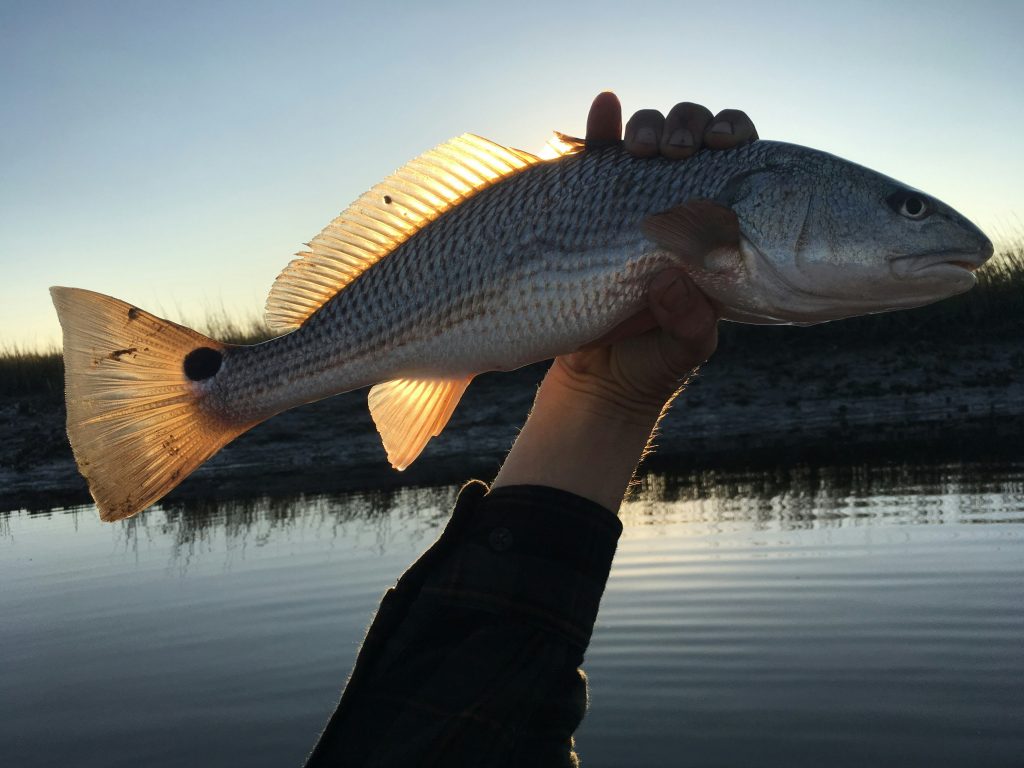
Redfish (Red Drum)
- Habitat: Grass flats, oyster bottom, bayous, dock lines, points, and channel edges
- Best times: Spring and fall for schooling fish; winter in deeper bayous and channels
- Kayak strategy: Look for wakes, tails, nervous bait, or backing fish on shallow flats, then cast ahead with paddle tails or shrimp imitations. In deeper water, fish jig-and-plastic combos along drop-offs.
Speckled Trout (Spotted Seatrout)
- Habitat: Grass flats, potholes, deeper troughs, bay points, and channel edges
- Best times: Spring and fall peak; winter in deeper holes; summer early and late
- Kayak strategy: Drift across 3–8 feet of grass and sand mix, fan-cast soft plastics, suspending plugs, topwaters, or popping cork rigs, and target grass-to-sand transitions.
Flounder
- Habitat: Sandy depressions, drop-offs, channels, dock lines, and edges where current moves bait
- Best times: Spring and fall are strong, with some winter concentration in deeper water
- Kayak strategy: Work soft plastics or jigs slowly along bottom. Focus on edges where sand meets grass or structure, and pause often because many bites feel like weight more than a sharp hit.
Jack Crevalle
- Habitat: Passes, channels, harbor edges, nearshore structure, and bait schools
- Best times: Warmer months, especially spring through early fall
- Kayak strategy: Watch for surface activity, blitzing bait, wakes, and birds. Cast fast-moving plugs, spoons, or paddle tails and be ready for long, powerful runs.
Mangrove Snapper, Red Snapper & Other Reef Fish
- Habitat: Reefs, wrecks, hard bottom, bridges, docks, and deeper structure
- Best times: Warm months and open seasons, with some inshore snapper around structure
- Kayak strategy: Use bottom rigs or heavier jigs with soft plastics, cut bait, or live bait over structure. Mark structure ahead of time and position upcurrent so your bait drifts naturally into the strike zone.
Regulation note: Florida saltwater seasons, size limits, bag limits, and reef-fish requirements can change. Before keeping fish, check the latest Florida Fish and Wildlife Conservation Commission rules. If you plan to fish for certain reef fish from a private vessel, FWC also requires anglers 16 and older to have the State Reef Fish Angler designation.
Useful official links: FWC Saltwater Licenses and Permits and FWC State Reef Fish Survey.
Recommended Lures and Techniques for Destin Kayak Fishing
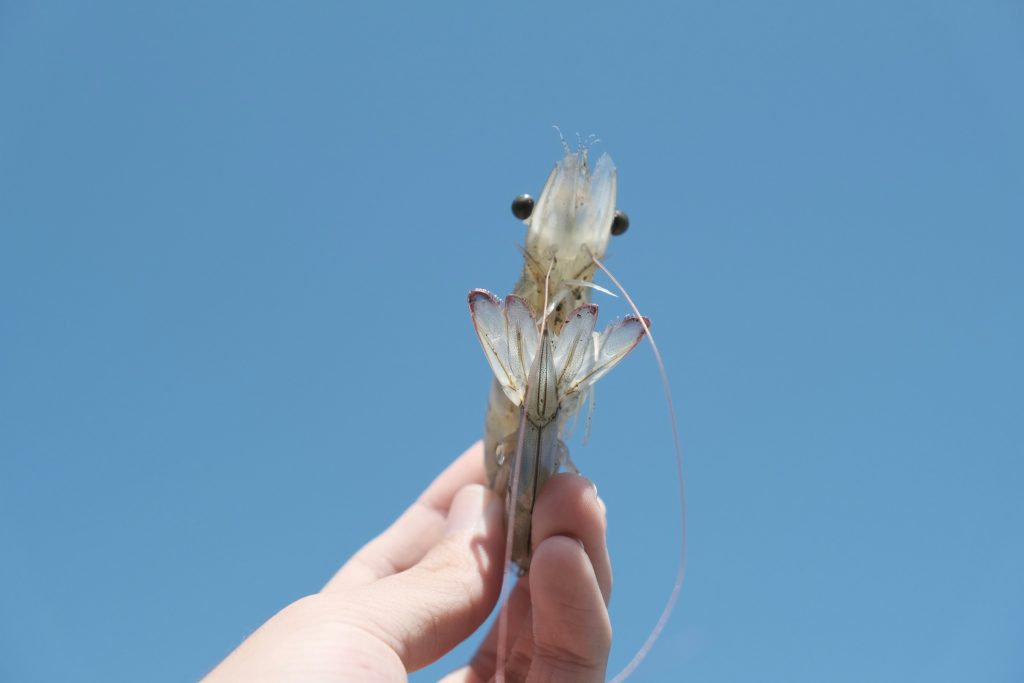
Core Lure Lineup
You do not need a huge tackle box for Destin. A small, clean lineup is better in a kayak, especially when wind, current, and boat wake are already giving you enough to manage.
Soft Plastics:
- 3–4 inch paddle-tail swimbaits in white, pearl, silver, new penny, or chartreuse-tail patterns
- 3–4 inch jerk shad or fluke-style plastics for subtle presentations over grass and potholes
- 1/8–1/4 oz jigheads for most inshore water; 3/8–1/2 oz for deeper water or faster current
- Shrimp-style plastics under popping corks for trout, redfish, and mixed inshore action
Hard Baits:
- Topwater walkers or poppers for dawn and dusk on flats
- Suspending twitch baits and jerkbaits for trout and redfish over grass and sand
- Metal spoons or fast plugs for jacks and mackerel around passes, beaches, and nearshore water
Live or Dead Bait:
- Live shrimp on a popping cork, light jighead, or Carolina rig
- Small baitfish such as pilchards, mullet, or pinfish where legal and available
- Cut bait strips for bottom species like flounder and snapper
Inshore Tactics
Drifting Grass Flats:
- Use wind and tide to drift across flats in 3–6 feet
- Fan-cast ahead with paddle tails, suspending plugs, or popping cork rigs
- Mark where you get bites and repeat the same drift line
- Pay attention to grass-to-sand transitions and potholes
Working Shorelines and Bayous:
- Move quietly and minimize hull slap, dropped pliers, and unnecessary paddling noise
- Cast to points, dock shadows, grass edges, seawalls, and visible structure
- Retrieve slowly along bottom or just above it to tempt redfish and flounder
Pass and Channel Edges:
- Position outside the busiest boat lanes
- Cast upcurrent and let lures swing along drop-offs
- Use slightly heavier jigheads when needed to maintain contact with bottom
- Leave if current, chop, or traffic builds beyond your comfort level
Nearshore Gulf Techniques (Advanced)
- Use GPS and charts to locate reefs, wrecks, and hard bottom within manageable paddling distance
- Drop vertical jigs or bottom rigs with soft plastics, cut bait, or live bait
- Keep a spoon or fast plug ready for mackerel, jacks, and surface-feeding fish
- Do not chase fish so far that the return paddle becomes risky
Nearshore Gulf fishing from a kayak is weather-dependent. If the surf, wind, lightning risk, or boat traffic does not look right, stay in the bay and fish protected water instead.
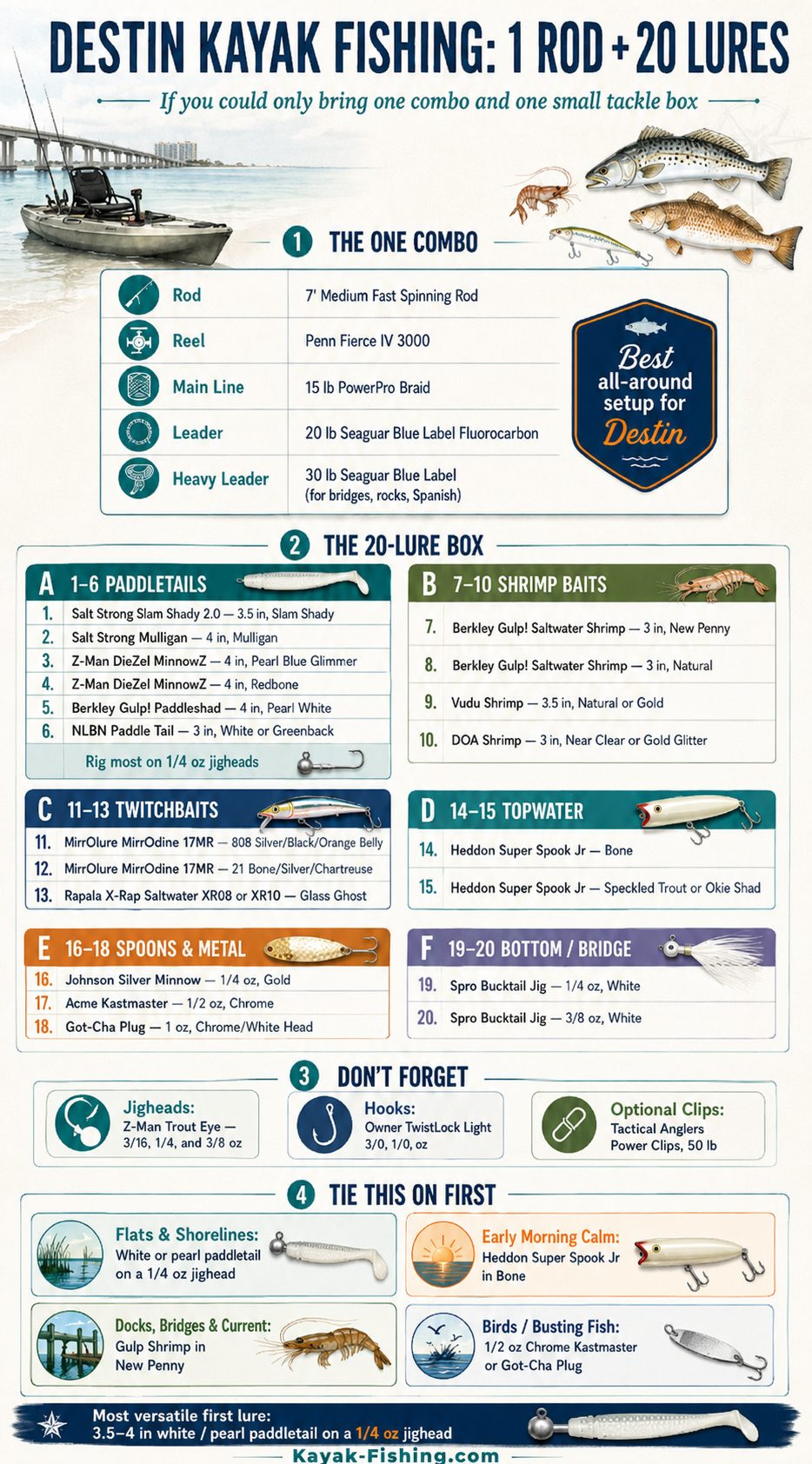
Destin Kayak Fishing Tackle Shortlist
For a Destin trip, I would rather carry one small box of proven tackle than a crate full of “maybe” lures. The goal is to cover grass flats, docks, sandbar edges, passes, and occasional nearshore structure without turning the kayak into a floating tackle shop.
Disclosure: Some product links on this page may be affiliate links. If you buy through them, Kayak-Fishing.com may earn a commission at no extra cost to you.
| Item | Why It Earns Space | Best Use |
|---|---|---|
| 3–4 inch paddle tails | Probably the most versatile lure for Destin inshore water | Redfish, trout, flounder, jacks, and searching grass flats |
| 1/8–1/4 oz jigheads | Matches most bay-side depths without overpowering the bait | Grass flats, bayous, potholes, and dock edges |
| Suspending twitch bait | Great over grass and sand when trout or redfish want a slower target | Spring/fall flats, potholes, and clearer water |
| Topwater walking bait | Covers water fast and draws explosive early bites | Dawn, dusk, calm flats, and schooling fish |
| Gold or silver spoon | Simple, durable, and easy to cast in wind | Jacks, mackerel, redfish, and pass edges |
| Popping cork rig | Keeps shrimp or soft plastics in the strike zone and adds sound | Trout, redfish, beginners, and stained water |
| Visibility flag | Helps boats see you in busy Destin water | Harbor, Crab Island, East Pass edges, and open bay crossings |
| Compact anchor or stakeout pole | Lets you hold position without fighting wind all day | Flats, bayous, grass edges, and light current |
For more setup help, see my guides to the best soft plastics for redfish, best kayak anchors, and best PFDs for kayak fishing.
Safety Tips for Kayak Fishing Destin
Destin offers excellent kayak fishing, but you have to manage current, tides, storms, heat, and heavy boat traffic. The highest-risk areas are East Pass, Crab Island, Destin Harbor, channel crossings, and any nearshore Gulf route.
Currents and Tides
- Tidal flow through East Pass can be strong; avoid the main throat with a kayak unless you are very experienced and conditions are calm
- Be especially cautious on a strong outgoing tide, when current can pull toward the Gulf
- Plan your route so you paddle into the wind and/or tide first, then have help on the return
- Be cautious around channel edges where wind-against-tide can create steep chop
Tracking tide charts before each trip is essential, especially when fishing passes, channels, and nearshore Gulf structure.
Boat Traffic
Destin is a busy boating area. Charters, pleasure boats, pontoons, jet skis, tour boats, and commercial traffic all converge, especially around the harbor, Crab Island, and East Pass.
To stay safer:
- Use a bright-colored kayak and PFD
- Attach a tall visibility flag to your kayak
- Avoid main navigation lanes as much as possible
- Cross channels quickly at 90 degrees and never assume captains can see you
- Fish early or on weekdays to reduce traffic exposure
Weather and Storms
- Gulf storms can form and move quickly, especially in summer
- Always check marine forecasts for wind, surf, lightning, and thunderstorms
- When in doubt, cancel nearshore Gulf trips and fish protected bay water instead
- On the Gulf, stick to low-wind mornings with small surf forecasts
- Give yourself enough energy and daylight for the return paddle, not just the outbound trip
Personal Safety Gear
Minimum recommended kit:
- Coast Guard–approved PFD, worn at all times
- Whistle or sound-producing device
- Waterproof phone case for bay-side trips
- VHF radio for nearshore Gulf trips, East Pass routes, or any longer open-water paddle
- Headlamp or 360° light if out at dawn, dusk, or low visibility
- Sun protection: hat, buff, polarized sunglasses, sunscreen, and proper kayak fishing clothing for sun, wind, and changing conditions
- Plenty of water and electrolytes
- Small anchor, stakeout pole, or positioning tool where appropriate; see my guide to the best kayak anchors
- A simple float plan shared with someone on shore
FAQs: Kayak Fishing Destin, Florida
Do I need a fishing license to kayak fish Destin?
Yes. In Florida, most anglers 16 and older need a saltwater fishing license, even when fishing from a kayak and even if they release all fish. Check the latest regulations and purchase licenses through the official Florida Fish and Wildlife system before your trip.
Where is the safest place to kayak fish in Destin as a beginner?
Beginner kayak anglers should start on the bay side, away from East Pass, heavy Crab Island traffic, and Gulf surf. Look for protected shoreline, short routes, grass flats, bayous, docks, and areas where you can stay close to shore. The safest beginner plan is a calm morning on protected bay water with a simple lure setup and a conservative paddle distance.
What is the best time of year to kayak fish Destin?
You can catch fish year-round, but spring and fall are often the most consistent for inshore kayak fishing. Redfish and trout feed aggressively, and the weather is usually more comfortable than the middle of summer. Summer offers strong early/late inshore action and nearshore potential, while winter can be good for deeper bay and channel patterns.
Is Destin good for beginner kayak anglers?
Yes, but beginners should be selective about where they launch and how far they paddle. Destin is beginner-friendly on protected bay-side routes, but not beginner-friendly in strong current, heavy boat traffic, surf, or nearshore Gulf conditions.
Newer paddlers should:
- Start on protected bay-side launches
- Avoid strong wind days and heavy boat-traffic areas
- Stick to short routes close to shore
- Use simple grass-flat and bayou patterns before trying East Pass or the Gulf
If you are new, start with my kayak fishing for beginners guide.
Is Crab Island safe to fish from a kayak?
Crab Island can be fishable from a kayak during quiet windows, but it is not a good place to linger when traffic builds. If you fish the area, go early, stay on the edges, avoid the main traffic flow, use a visibility flag, and leave before pontoons, jet skis, and tour boats crowd the area.
How many rods should I bring in my kayak?
Two to three rods are usually enough:
- Medium-light or medium spinning rod with 10–15 lb braid for trout and light inshore work
- Medium or medium-heavy spinning rod with 20–30 lb braid for redfish, jacks, and light snapper duty
- Optional heavier rod for dedicated nearshore snapper, mackerel, or jack trips
Keeping it simple reduces clutter and tangles when you are swinging around in wind, current, and boat wake.
Can I catch red snapper from a kayak in Destin?
Yes. Nearshore reefs and structure within paddling distance can hold red snapper, and some snapper species also use inshore structure. You will need:
- A calm Gulf weather window
- Heavier bottom rigs or jigs
- Stouter tackle to keep fish out of structure
- Current FWC regulations, seasons, size limits, bag limits, and any required reef-fish designation
Snapper trips from a kayak are best for experienced paddlers who are comfortable offshore of the beach and prepared for changing conditions.
Plan your Destin kayak fishing setup:
Final Thoughts
Kayak fishing Destin, Florida gives you a rare mix of protected inshore water and legitimate big-fish potential. You can drift grass flats for trout and redfish, pick apart bayous and dock lines, time quiet windows around Crab Island edges, or wait for a perfect Gulf morning to fish nearshore structure.
The key is matching the trip to the conditions. On a busy or windy day, the smartest move is usually protected bay water. On a calm, stable morning with the right experience and safety gear, East Pass edges or nearshore structure may be in play.
If you choose launch points carefully, keep your tackle simple, stay visible around boats, respect current, and check FWC rules before keeping fish, Destin can become one of your favorite repeat kayak fishing destinations. Start conservative, learn how wind and tide move bait, and build your own map of reliable spots one safe trip at a time.