Best Kayak Anchors for Lakes, Rivers & Inshore Fishing (Updated 2026)
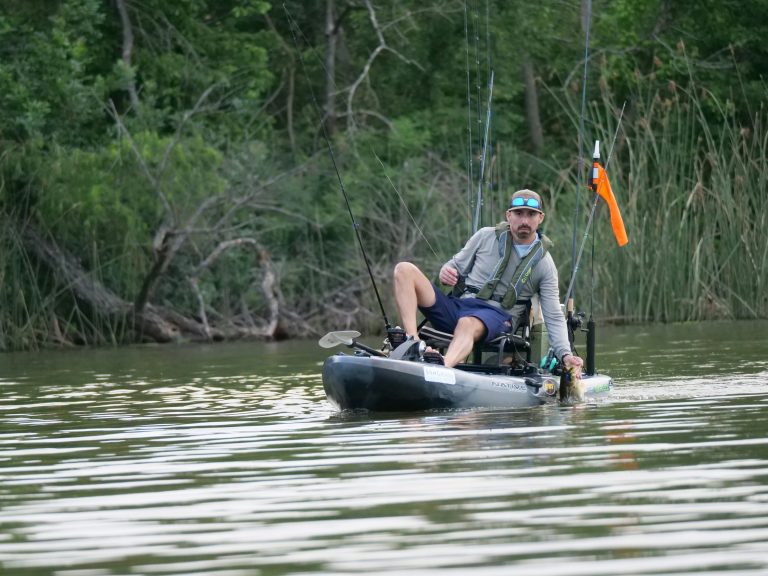
I still remember one early spring morning on a small reservoir. Wind howling across the lake, bait flickering on a rocky point, first cast and I stuck a solid spotted bass. By the time I unhooked that fish, my kayak had already blown 30 yards off the spot and I was casting into dead water. I spent the rest of that trip paddling more than fishing.
Once I got a proper anchor setup dialed in, that exact same point turned into a “park here and wear them out” spot. Same wind. Same kayak. Totally different day.
That is the difference the right anchor system makes. Not fancy electronics. Just staying where the bites are.
This page walks through real-world gear: specific kayak anchors, trolley kits, and shallow water tools that actually work on lakes, slow and moderate rivers, and inshore saltwater. I’ll show you what I’d buy, how I’d rig it, and when to use each piece.
Table of Contents
Quick picks: best kayak anchors by situation
If you want to see solid options first and then read the details, here is the short list I’d be happy to fish right now.
Overall anchor kits (grapnel style)
- Best all-around lake / general use kit:
Newport Vessels 3.5 lb Folding Grapnel Kayak Anchor Kit
Complete kayak anchor kit with a 3.5 lb folding grapnel, 30 ft of rope, buoy, and carry bag. Great first “everything included” setup for lakes and light inshore. - Best compact kayak-specific grapnel kit:
YakGear Grapnel Anchor Kit (1.5 lb)
Smaller grapnel kit with 30 ft of rope, storage bag, and YakGear’s “rock rig” friendly design. A nice choice for lighter anglers, smaller kayaks, or very calm lakes. - Best budget grapnel kit:
Retrospec Mainstay Folding Grapnel Anchor Kit
No-frills folding anchor kit that still covers the basics if you just want a cheap, functional first anchor.
Claw / Bruce anchors (sand, mud, inshore)
- Best claw anchor for inshore and lakes:
YakGear Bruce Anchor (2.2 lb)
Compact claw anchor that bites hard in sand, silt, and mud. My go-to recommendation for inshore channels and sandy or muddy lake flats. - Best stainless claw upgrade for heavy salt use:
Isure Marine Stainless Bruce Style Claw Anchor (small size)
Similar shape and holding power, but stainless for folks who live in the salt and want something that will look good and last.
Mushrooms and “dumb weight” anchors
- Best mud / pond mushroom anchor:
YakGear 5 lb Mushroom Anchor
Simple weight that settles into soft mud and grass. Good for sheltered ponds, coves, and small lakes. - Simple marine-brand alternative:
Attwood 5 lb Mushroom Anchor
Widely available option if you prefer a basic marine brand.
Shallow water stake-out poles
- Best overall shallow water pole:
YakAttack ParkNPole 7’8″ Stake-Out / Push Pole
Lightweight fiberglass pole that floats, pushes well, and anchors quietly in 1–3 ft of water. - Best value stake-out stick:
YakGear YakStick Floating Stake-Out Stick
Slightly more budget friendly, still purpose-built for kayak anglers who fish marsh edges and shallow lakes.
Anchor trolleys and management
- Best budget anchor trolley kit: YakGear Deluxe Anchor Trolley Kit
Simple hardware and pulleys that let you slide your anchor point from bow to stern without overthinking it. - Best premium anchor trolley: YakAttack LeverLoc Anchor Trolley
Nice locking cleat and reflective line. If you fish wind and current a lot, this one feels worth it. - Best crank-style anchor system: Anchor Wizard Low Profile Kayak Anchoring System
Low-profile hand crank that stores your line on a spool and lets you drop or retrieve an anchor from the seat.
You definitely do not need everything on this list. For most anglers, the core is one good anchor, a simple trolley, and maybe a shallow water pole. The rest are tools you add as your fishing gets more specific.
Why anchors matter more than most people think
From the bank or a big boat, it is easy to forget how much a ten to fourteen foot plastic hull wants to move. A little wind, a bit of current, and you are sliding, spinning, and drifting right off the fish.
Pedals help. A strong paddle stroke helps too. But every time you reach for the paddle or start pedaling, you are not working your lure.
The whole game comes down to three things:
- Which way your kayak points
- How fast it drifts
- Whether you can control both safely in wind or current
When people search for the best kayak anchors they are usually tired of getting blown off the fish, or they had one sketchy moment anchoring in current and want to “get it right” before it happens again.
Once you pair the right style of anchor with the water you actually fish, the kayak stops being a problem and starts feeling like a little sniper platform.
The main anchor styles that actually work on kayaks
There are a lot of random anchors and weights people strap to kayaks. Here are the ones I see consistently working on real fishing boats.
Folding grapnel anchors
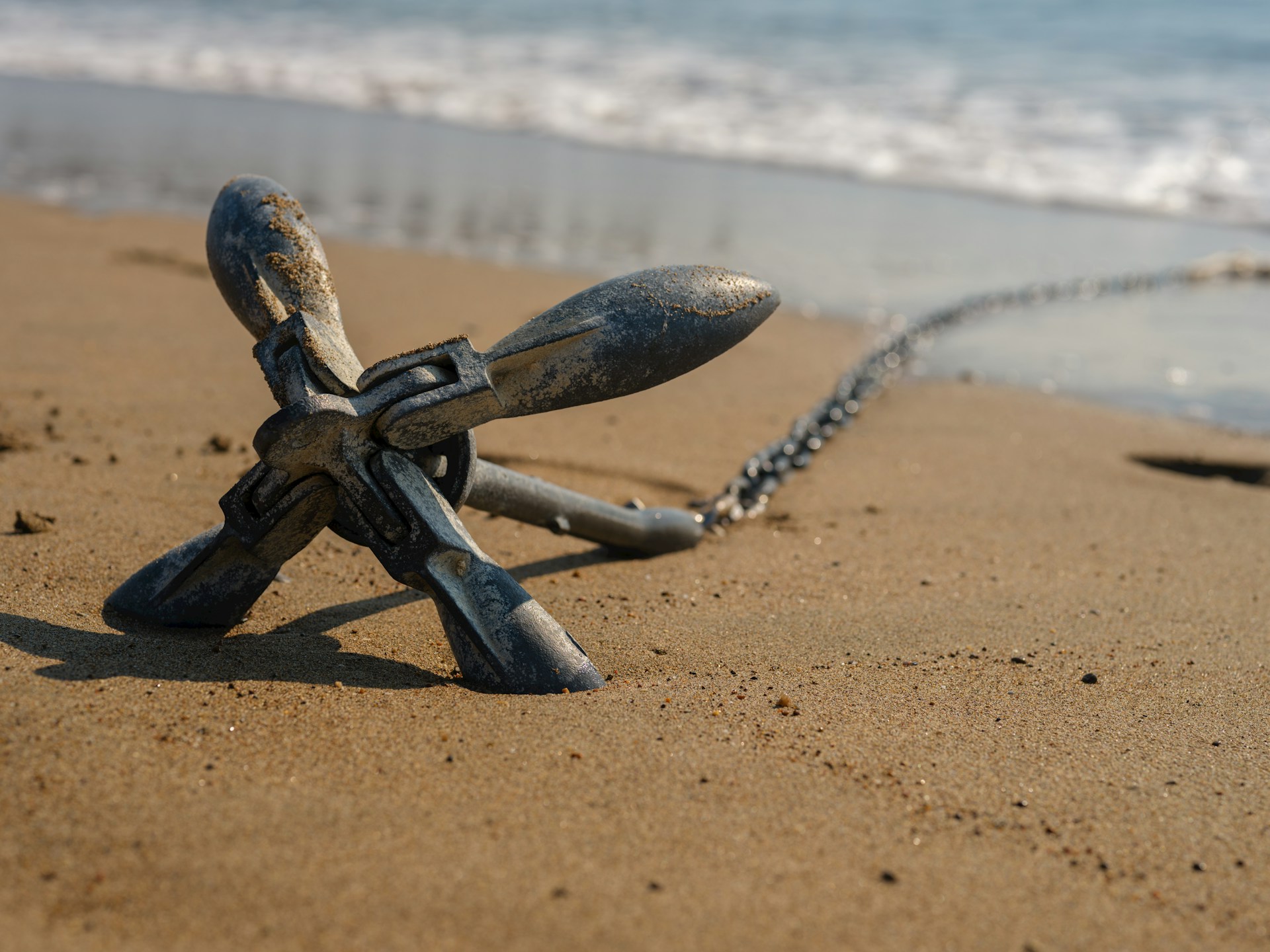
This is the little four-tine anchor in almost every kayak anchor kit. The arms fold up around the shank, and you can stuff it into a crate or hatch without draining half your storage space.
Good examples:
- Newport Vessels 3.5 lb Folding Grapnel Kayak Anchor Kit
- YakGear Grapnel Anchor Kit (1.5 lb)
- Retrospec Mainstay Folding Grapnel Anchor Kit
Where grapnels shine:
- Rocky points and riprap
- Brush piles or laydowns
- Mixed shell or rubble on inshore flats
The tines hook very well on anything they can wrap around. On pure soft mud they often drag for a bit until they find something to bite.
Pros:
- Compact and easy to store
- Affordable and widely available
- Works on a lot of lake and inshore structure
Cons:
- Loves to wedge in rock and not let go
- Not ideal on featureless soft mud
- Rope can twist if you do not use a swivel
For a typical fishing kayak, something in the 3# to 3.5# range is plenty. The Newport kit is a nice “buy this and go fishing” option. The YakGear kit is lighter and better suited for calm lakes, ponds, or smaller paddlers.
Bruce / claw anchors
A Bruce or claw anchor looks like a curved three-finger hook. The shape lets it roll and dig when you put tension on the line.
Good examples:
- YakGear Bruce Anchor (2.2 lb)
- Isure Marine Stainless Bruce Style Claw Anchor (small size)
Where claws shine:
- Sand and firm mud
- Tidal channels and open bays
- Sandbars and open flats on lakes
The big advantage is how they reset. If tide or wind shifts and your kayak swings, the claw tends to roll and grab again instead of letting go completely.
Pros:
- Bites hard in sand and mud
- Handles shifting wind and current well
- Less likely than a grapnel to get hopelessly wedged
Cons:
- Bulkier to store than a folding grapnel
- Slightly heavier for the same holding power
- Not as tidy in a small front hatch
If you asked me for a single go-to kayak anchor for fishing channels and open inshore water, I would point you straight at the YakGear Bruce.
Mushroom anchors and simple weights
Mushroom anchors are basically heavy rounded weights with a stem on top. They do not dig much, they just sit on the bottom and rely on weight and a wide footprint.
Good examples:
- YakGear 5 lb Mushroom Anchor
- Attwood 5 lb Mushroom Anchor
Where they are fine:
- Small protected ponds
- Very shallow coves
- Extremely soft mud and weeds
Pros:
- Simple and hard to mess up
- Tough to snag
- Easy to store
Cons:
- Limited holding power in real wind or current
- Not great on hard, smooth bottoms
If you mostly fish small, sheltered ponds, it is totally reasonable to start with one of these. Just understand its limits. As you start fishing bigger water and more wind, you will want something that actually hooks the bottom.
Drag chains for rivers
For river fishing, a drag chain often beats a traditional anchor.
It is exactly what it sounds like. A short length of chain, sometimes sleeved in hose, tied to a short rope. Instead of stopping you dead, it drags along the bottom and just slows your drift.
Where drag chains shine:
- Slow and moderate rivers
- Rocky or gravel bottoms
- Long stretches where you want to work every seam
Pros:
- Smoother and usually safer than a hard stop
- Less likely to pull you sideways suddenly
- Easy to free if it only hangs lightly
Cons:
- Almost useless on deep soft mud
- Needs tweaking to get the length just right
Most folks build their own from hardware store parts. When you are dialing in a river kayak anchor system, I would rather see you invest time in a drag chain and a good trolley than in a giant traditional anchor.
Stake-out poles and push poles
If you fish inshore flats, marsh edges, or very shallow lakes, a stake-out pole is one of the most satisfying tools you can add.
Good examples:
- YakAttack ParkNPole 7’8″ Stake-Out / Push Pole
- YakGear YakStick Floating Stake-Out Stick
Where they shine:
- One to three feet of water
- Grass flats and sand bars
- Marsh drains and shorelines
Pros:
- Silent, which really matters for spooky shallow fish
- No long rope to tangle in grass or around your legs
- Doubles as a push pole in skinny water
Cons:
- Limited to fairly shallow, soft bottoms
- Another long item to store on the deck
On my inshore trips, there is a point in the tide cycle where the anchor rope goes away and the pole comes out. Pinning quietly in two feet of water and watching redfish cruise past never gets old.
Matching your anchor to lakes, rivers, and inshore water
The gear above starts to make a lot more sense once you plug it into specific water.
Lakes and reservoirs
On lakes, wind is the main thing pushing your kayak around. The bottom might be mud, grass, rock, or a mix of all three.
Good anchor choices:
- Newport Vessels 3.5 lb Folding Grapnel Kit as a good all-rounder
- YakGear Grapnel Anchor Kit for smaller kayaks and calmer lakes
- YakGear Bruce Anchor if you fish a lot of sand and mud flats
- YakGear or Attwood 5 lb Mushroom Anchor for small ponds and protected coves
The real trick is not usually the anchor, it is the line. If you are in ten feet of water and only let out twelve feet of rope, the anchor is almost straight up and down and does not dig. If you let out thirty feet, it lies over and bites.
One of my favorite lake moves is to pull up upwind of a rocky point, drop the grapnel, feed line as I drift back, then lock it down when the kayak settles where I can cast across the face of the structure. Before I figured that out, I would hook a fish, get blown off, paddle back, overshoot, and generally look ridiculous.
Slow and moderate rivers
Rivers are all about current. Wind still matters, but the main force on you is moving water.
Good components for rivers:
- Drag chain off the stern for controlled drifts
- Small grapnel, like the YakGear Grapnel Anchor, rigged with a breakaway for when you really need to stop
- Optionally, an Anchor Wizard Low Profile Kayak Anchoring System to drop and retrieve from the seat
Two simple rules:
- Anchor from the bow or stern, never from the side in current.
- Have a quick-release plan. Ideally your anchor line is clipped to a ring with a float so you can ditch it and come back.
I like starting with the drag chain. For long stretches of ledges and boulders, you just drop it until you feel it tick bottom, then fine tune your speed by letting out or taking in a bit of rope. When I find a seam or eddy that is too good to drift past, I will sometimes switch to a fixed anchor, but I keep the line short and the attachment at the stern so the boat stays pointed cleanly into the flow.
Inshore saltwater
Inshore feels like lakes and rivers had a kid. You have wind. You have tidal current. The bottom can change from hard sand to sticky mud to shell in a hurry.
Good tools here:
- YakGear Bruce Anchor for channels, edges, and deeper potholes
- YakAttack ParkNPole or YakGear YakStick for flats and marsh edges
- A reliable anchor trolley such as the YakGear Deluxe or YakAttack LeverLoc
I like to think in two modes:
- Deeper mode
Claw anchor down in a channel or on an edge, using the trolley so the kayak points where I want to cast. - Skinny mode
Stake-out pole in two feet of water or less. Push it in quietly, clip the trolley ring to it, and tweak the angle until the bow sits just right.
There is something very relaxing about pinning near a marsh drain on a dropping tide(check your local tides here) and knowing you are not going to swing out of position every time the wind gusts.
What makes a good kayak anchor kit
The anchor itself is only part of the system. A reliable setup also has the right rope, a smart way to attach it, a trolley, and somewhere for all that line to live.
Rope and scope
For most fishing kayaks, I like anchor line in the 3/16 to 1/4 inch range. Thin enough to store easily but thick enough not to cut into your hands.
On still water, a simple rule is at least three times the depth in line. On lakes where I anchor in 8 to 15 feet a lot, fifty to seventy five feet of rope covers most situations. On inshore channels, I am happier when I have closer to 100 feet available.
I learned the hard way that super skinny paracord is not your friend. One cold winter morning I grabbed a loaded line and felt it bite right into my fingers. After that I bumped up the diameter and started keeping a little pair of gloves tucked under my seat for the cold months.
Hardware, clips, and floats
You do not need a pile of stainless jewelry, just a few smart pieces:
- Stainless carabiner at the kayak end so you can clip in and out
- Swivel between the anchor and rope
- Small float on the line so you can ditch it and come back
The float is your “oh no” rope. If a boat wake or big fish does something weird to your line, you can unclip, stabilize the kayak, then paddle back to retrieve the anchor using the float as a marker.
Anchor trolleys
An anchor trolley is simply a line that runs from near your bow to near your stern with a ring on it. You clip your anchor line to the ring and then slide that ring forward or backward to change where the pull hits the kayak.
Good options:
- YakGear Deluxe Anchor Trolley Kit
- YakAttack LeverLoc Anchor Trolley
The YakGear kit is simple and budget friendly. The LeverLoc kit costs a bit more but the line clamp is very nice, and the reflective cord is a bonus for low light trips.
Why a trolley matters:
- You can point the bow or stern into wind or current
- You can fine tune casting angles without re-anchoring
- You reduce how much the kayak swings around
On small ponds, you can survive without one. On big lakes, rivers, and inshore water, it starts feeling like standard equipment.
Storage and line management
Loose rope under your feet is a great way to trip, tangle rods, and lose fish. I like at least one of these:
- A small line reel such as a YakAttack SideWinder
- A mesh anchor bag
- A simple flat spool to wrap the rope around
The goal is to feed rope out smoothly and put it away fast. I usually stash the anchor itself in my rear crate or tankwell so it can drip without soaking my dry stuff. A rag in the crate helps keep mud from decorating everything you own.
Simple product-based setups you can copy
Here are some realistic combos you can mostly buy off the shelf and be ready to fish.
Starter lake setup
For a beginner or casual lake angler:
- Newport Vessels 3.5 lb Folding Grapnel Kayak Anchor Kit
- Optional: upgrade to YakAttack LeverLoc Anchor Trolley or start with YakGear Deluxe Trolley
Rigging tips:
- If your grapnel is not pre-rigged, run the line to the base of the anchor, then up the shank and attach with a zip tie at the top. If it wedges in rocks, a hard pull pops the zip tie and pulls it out backwards.
- Clip to the trolley ring or a stern eye, not the middle of the kayak.
Use it by approaching from upwind, dropping the anchor slightly up from where you want to fish, then letting line out until the kayak settles right where you want to make your casts.
River setup with drag chain and small anchor
For someone who fishes slow to moderate rivers:
- YakGear Grapnel Anchor Kit as your light fixed anchor
- DIY drag chain for your “everyday” river control
- Optional: Anchor Wizard Low Profile Kayak Anchoring System if you want crank-style control and line storage
I like to drift long stretches with the drag chain first. It just slows things down. When I find a seam or eddy worth parking on, I switch to the grapnel, hook up off the stern with fairly short line, and keep a float on the rope so I can let it go if it jams.
Inshore flats and marsh setup
For the weekend inshore angler:
- YakGear Bruce Anchor (2.2 lb) with 75 to 100 ft of anchor line
- YakAttack ParkNPole 7’8″ or YakGear YakStick for shallow water
- YakAttack LeverLoc or YakGear Deluxe Anchor Trolley
Use the Bruce anchor for channels, reefs, and deeper edges. Use the ParkNPole or YakStick whenever you are in about three feet of water or less on flats or in marshes. The trolley lets you put your bow or stern into wind or current so your casts land naturally.
Safety rules you cannot ignore
Anchoring is simple, but it can go wrong fast if you skip the basics.
- Wear your PFD, especially in wind or current
- Do not anchor from the side of the kayak in moving water
- Keep a quick-release option on your anchor line, ideally with a float
- Be willing to sacrifice an anchor if it is truly stuck and putting you in danger
- Stay clear of navigation channels and busy boat lanes when anchored
- Use lights and reflective gear if you are out at dawn, dusk, or in low visibility
If you are new to anchoring, practice in safe, shallow water with light wind or gentle current before you rely on your setup in stronger conditions.
Common anchoring mistakes (I have made most of these)
Too little line
If your anchor is dragging, try letting out more rope before blaming the anchor. Scope matters more than most people think.
Wrong side of the structure
Think about wind and current like conveyor belts. If the water is moving left to right and you anchor downstream of a point, your lure might never pass through the sweet spot. Get upwind or up current instead.
Over-anchoring in nasty conditions
There are days when a controlled drift is safer and more effective than trying to glue yourself in one place. On fast rivers or big winds, sometimes picking protected water is the smart move.
Anchor too heavy
I have seen people hang big boat anchors off a kayak “just to be safe.” They hold well, but you pay for it every stroke of the paddle. A properly sized anchor with smart rigging beats a cinder block.
Most of us start with a cheap kit and upgrade as we learn. The trick is to let your real conditions decide your next purchase, not just what looks cool online.
Recommended setups by angler type
Here is where I would point different anglers.
Mostly lakes
- Newport Vessels 3.5 lb Grapnel Kit
- YakGear Deluxe or YakAttack LeverLoc trolley as you get more serious
That gives you a solid anchor, enough line, and control over angle. You can always add a small mushroom later if you fish tiny ponds a lot.
River focused
- DIY drag chain off the stern
- YakGear Grapnel Anchor Kit as a light fixed anchor
- Optional Anchor Wizard Low Profile System once you find yourself anchoring a lot
Focus on boat angle and quick release first, fancy hardware second.
Inshore weekend warrior
- YakGear Bruce Anchor
- YakAttack ParkNPole or YakGear YakStick
- YakAttack LeverLoc trolley if you can swing it, YakGear Deluxe if you want to save a few bucks
That combo lets you handle channels, edges, and skinny marsh water without constantly fighting your boat.
Fish a bit of everything
If you bounce between lakes, rivers, and inshore, no single anchor will cover it all. I would personally carry:
- One grapnel or Bruce-style anchor (Newport kit or YakGear Bruce)
- One “specialist” tool based on where you lean: drag chain for more rivers, ParkNPole/YakStick for more shallow flats
On my own boats I tend to run a claw anchor plus a drag chain. It is not perfect everywhere, but it covers almost all of my water without filling the deck with hardware.
Quick FAQ
Can I get away with just one kayak anchor?
If you only fish lakes or only fish inshore, yes, as long as it is sized and rigged right. Once you fish rivers or very shallow flats, a second tool like a drag chain or stake-out pole is worth adding.
How heavy should my anchor be for a fishing kayak?
For a 10 to 13 ft kayak, a 2 to 4 lb grapnel or claw is usually plenty when you use enough line. Mushrooms tend to be a little heavier because they do not dig.
Do I really need an anchor trolley when kayak fishing?
On tiny ponds, not really. On windy lakes, rivers, or inshore, it is one of the biggest single upgrades you can make. Being able to slide your anchor point forward or back is a game changer.
Should I anchor from the bow or stern of a kayak?
In current, always bow or stern, never the side. In still water you have more freedom, but I still prefer bow or stern because it keeps the kayak more predictable.
What is the best way to practice anchoring a kayak?
Pick a calm day and a shallow area where you can stand up if you have to. Practice dropping the anchor, letting out line, using the trolley, and releasing the line quickly. Get comfortable there before you push into stronger wind or current.
Dialing in your anchor setup is not glamorous, but it might be the biggest fish-catching upgrade you can make for the money. Start with one good anchor and a simple trolley, then add a drag chain or stake-out pole as your water demands. A month from now, you will wonder how you ever put up with drifting off every good spot.