Best PFDs for Kayak Fishing: Comfortable, Safe Life Jackets You’ll Actually Wear
Picture this: you’re half-standing to make a long cast, glancing at your fishfinder, a boat wake sneaks in from the side, and suddenly your “stable” fishing kayak doesn’t feel so stable. That moment is exactly why your PFD choice matters.
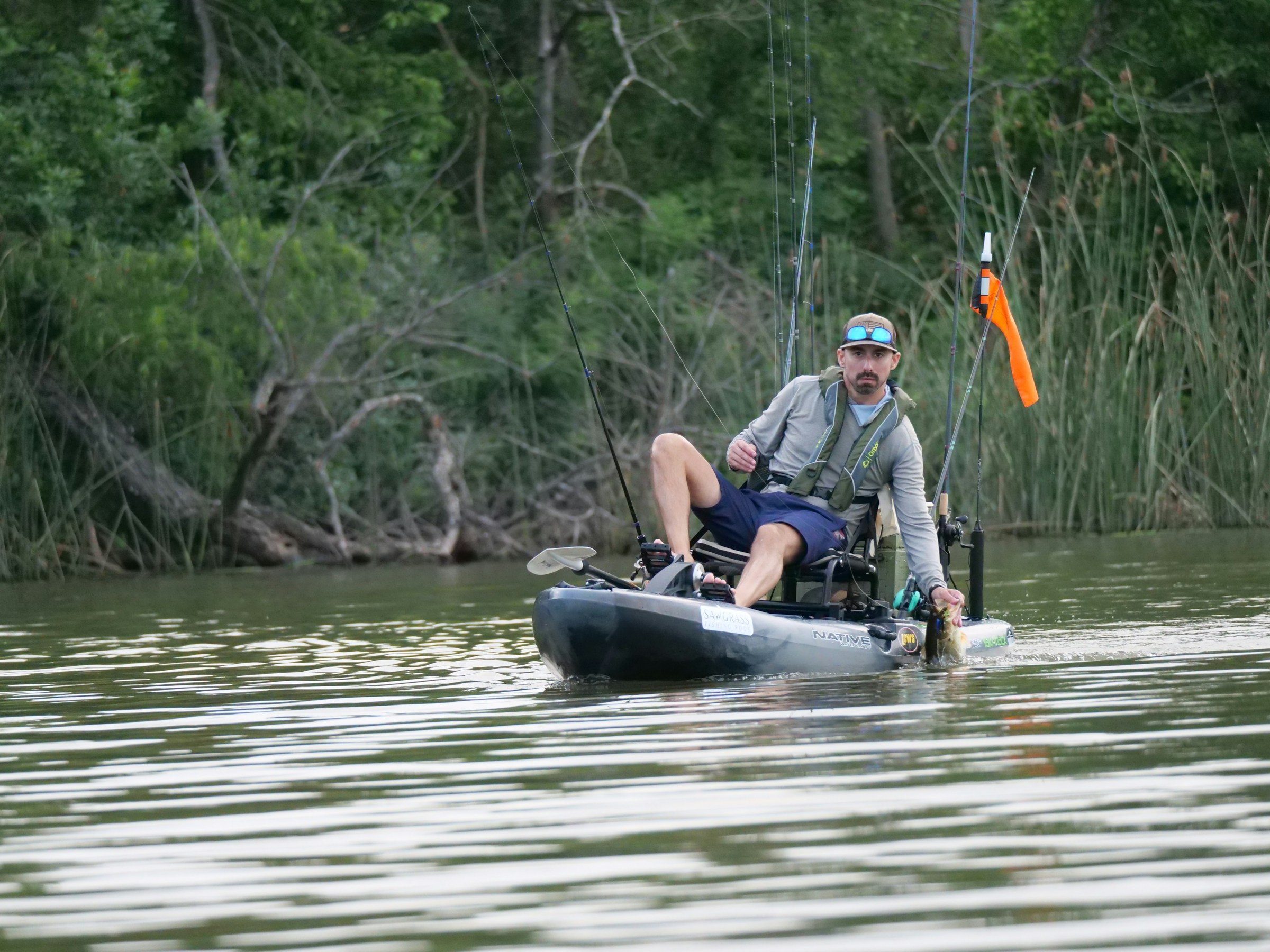
In a sit-on-top fishing kayak you’re low to the water, surrounded by rods, leashes, and gear that can tangle you up if you swim. A good kayak fishing life jacket doesn’t just float you—it keeps your face up, gives rescuers something bright to see, and lets you move well enough to climb back onto the kayak instead of fighting your vest.
The twist is that the best PFDs for kayak fishing are the ones you actually wear every minute you’re on the water. Comfort, a high-back cut that works with your seat, and smart pockets are safety features, not luxuries. When a vest is hot, bulky, or digs into your seat, it tends to “accidentally” stay in the crate.
Table of Contents
Why your life jacket matters more in a fishing kayak
In a fishing kayak, you’re:
- Sitting low and often side-saddle.
- Reaching behind you for gear.
- Standing up to cast or stretch.
- Surrounded by leashes, rods, and anchor lines.
Any of that can go wrong in half a second.
A good PFD:
- Keeps your airway out of the water even if you’re stunned.
- Gives you extra time if you’re tangled in line or anchor rope.
- Makes you easier to see for other boats and rescuers.
- Still lets you swim, kick, and climb back onto your kayak.
The key mindset shift: comfort is safety. If you hate wearing your PFD, you’ll “forget” it. If it fits well and disappears on your body, you’ll leave it on without thinking.
Foam, inflatable, or hybrid: what makes sense for kayak fishing?
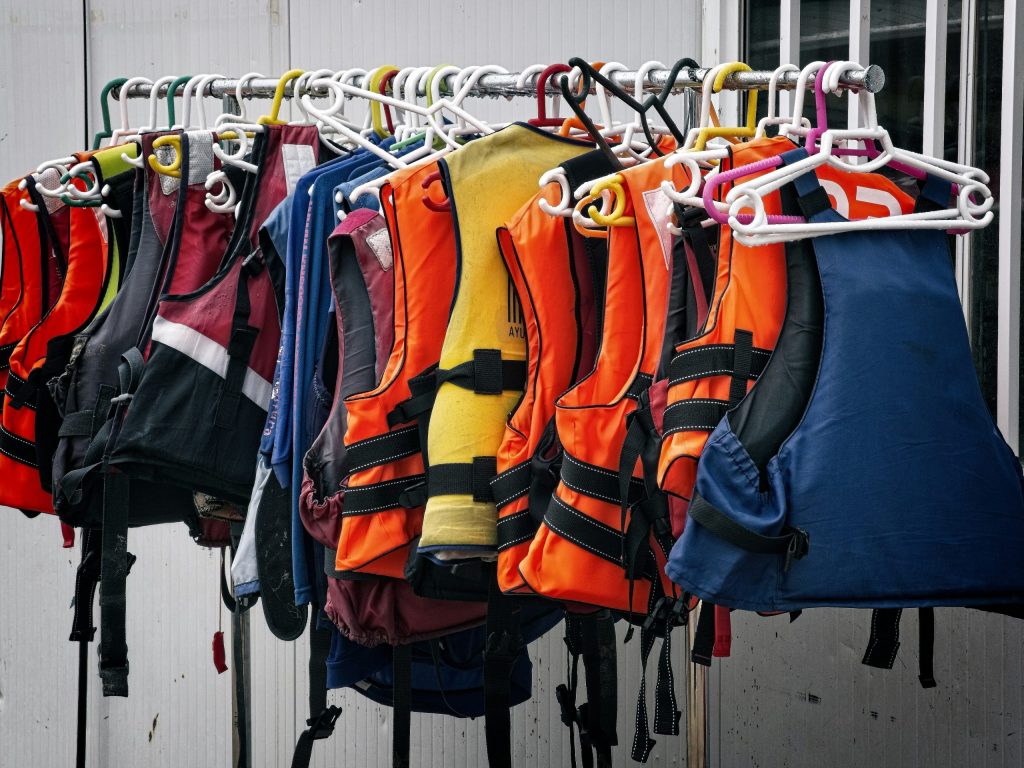
Foam PFDs (what most kayak anglers should use)
For most freshwater and inshore saltwater kayak anglers, a foam fishing PFD is the right call.
- It floats you the second you hit the water—no ripcord, no CO₂ cartridge, nothing to remember.
- Foam vests add a bit of core warmth on cold mornings but modern models vent well enough for summer.
- They’re built with pockets, tool attachment points, and high-back designs tailored to fishing kayaks.
If you’re a beginner to intermediate angler, paddling or pedaling in typical U.S. freshwater and inshore saltwater, foam is almost always the best choice.
Inflatable PFDs (for specific, more experienced anglers)
Inflatable vests and belts are appealing because they’re low-bulk and cool. The better ones provide significantly more buoyancy when inflated than a typical foam vest and can often be set to automatic or manual inflation.
But they come with trade-offs:
- They need regular inspection and re-arming.
- You have to be conscious and able to pull a cord if you’re in manual mode.
- They’re not ideal for surf launches, rough inshore days, or situations where you might be in the water a lot.
I treat inflatables as an option for experienced anglers who:
- Mostly fish warm, relatively protected water.
- Are strong swimmers who have practiced re-entry.
- Are disciplined about inspecting and re-arming their PFD.
If that doesn’t sound like you, stick to foam for now.
Hybrid PFDs
Hybrid foam-plus-inflation vests sit between the two worlds. A good hybrid gives you a small amount of “always-on” foam buoyancy, with the option to add more by inflating it.
They’re interesting, but for kayak fishing most people are still best served by a good foam fishing PFD unless you have very specific reasons and experience.
High-back designs, fit, and comfort: where most people go wrong
Fishing kayaks usually have tall, lawn-chair-style seats. A regular boating vest tends to shove your shoulders forward or bunch up under your shoulder blades until you’re miserable.
Modern “kayak fishing” PFDs fix that with:
- High-back or thin-back foam panels that sit above or sink into your seatback instead of fighting it.
- Mesh lower backs to keep air moving where you’re pressed into the seat.
Fit issues to watch for:
- If you can grab the shoulders and pull the vest up to your ears, it’s too loose.
- If the bottom edge sits on the seat and shoves the vest up into your chin, it’s the wrong cut for your kayak.
- If you need every strap maxed out to make it snug, you probably need another size.
For women and plus-size paddlers, a unisex brick of foam is often miserable. Women’s-specific PFDs use sculpted foam, “princess seams,” and articulated panels so the vest wraps around curves instead of squashing them, while still matching high-back seats.
The very best PFDs for kayak fishing (by category)
Below is a short list of fishing vests that consistently show up at the top of paddling gear tests, angler reviews, and shop recommendations. I focused on:
- Coast-Guard-approved designs
- High-back or seat-friendly cuts
- Strong real-world ratings and reviews
- Features that matter on an actual fishing kayak, not just marketing buzz
1. NRS Chinook Fishing PFD – best all-around fishing PFD for most people
If you just want one vest that works for almost any kayak fishing you’re likely to do, this is the one I’d point you to first.
The Chinook is a medium-profile fishing PFD with a high-back design and mesh lower back that lines up nicely with tall seats, so you’re not constantly fighting the foam when you lean back to pedal or relax.
Why anglers like it so much:
- Pockets sized for small tackle boxes and extras like leaders and snacks, plus smaller accessory pockets.
- Dedicated lash tab for a knife and a rod-holder loop for quick hands-free moments.
- Graded sizing so different sizes get the right amount of foam, making it easier to get a close, comfortable fit.
It’s routinely picked as a top fishing-style PFD in independent tests because it balances storage, comfort, and safety without being a giant brick. When I switched to a Chinook from a basic boating vest, the biggest surprise was how it stopped shoving my shoulders forward every time I leaned back into a tall seat—it just felt like part of the kayak rather than something fighting it.
Best for: almost any beginner–intermediate kayak angler fishing lakes, rivers, and inshore salt.
2. Astral V-Eight Fisher – best fishing PFD for hot climates
If you fish in steamy summers—Gulf Coast marshes, inland reservoirs in July, humid rivers—the Astral V-Eight Fisher is built for you.
Astral took their breathable V-Eight and added fishing-specific pockets and attachment points. The key is their venting system: ports and internal channels that dump heat out of the front and back so air can move even while you’re leaning into a seatback.
Details that matter from the seat:
- High mesh back that clears tall seats in fishing kayaks.
- Enough flotation with a reasonably low-profile front so it doesn’t feel like a chest of drawers when you’re casting.
- Pliers holster, knife pocket, and clipping points for small tools and line nippers.
If you’ve ever felt like your vest is a sauna, this is a very strong “life vest for kayak fishing in hot weather” candidate.
Best for: warm/hot climates, long summer days, anglers who run hot.
3. Astral E-Ronny – super-comfortable rec / fishing crossover
The E-Ronny isn’t as tackle-centric as the Chinook, but if you like a cleaner front and fish with a small amount of gear on your chest, it’s a fantastic rec/fishing crossover.
It uses a thin-vent back: a slim rear panel that pairs well with high-back seats and keeps pressure off your spine, along with mesh for airflow. Paddling and casting feel very natural thanks to big armholes and shaped front panels.
There are enough pockets and attachment points for a phone, keys, a small box, and pliers, but not the giant fold-down workstations of some fishing-only vests.
Best for: anglers who want a very comfortable paddling PFD that can still handle light to moderate tackle storage.
4. Stohlquist Fisherman – gear-centric “workbench” vest
If you like having a mini tackle shop on your chest, the Stohlquist Fisherman is hard to beat.
Two large EVA-stiffened pockets fold down into work surfaces—great for swapping jigs or re-tying without using your lap as a parts tray. The pockets drain, so it’s not a disaster if you take a wave over the bow. There are multiple mounting points for tippet spools, nippers, hemostats, and other tools you want front and center.
It uses a high-back design so the flotation sits above a tall seatback, plus a cross-chest cinch harness that helps keep the vest from riding up when you’re in the water.
The only catch: some shorter-torso paddlers find that all that foam up high can feel bulky with very tall seats, so if you’re on the shorter side, sit in your actual kayak seat before cutting tags.
Best for: tackle-heavy anglers who want fold-down work pockets and fish mostly seated.
5. Stohlquist Keeper – tall-seat specialist with big storage
The Keeper is Stohlquist’s newer, more seat-friendly fishing PFD.
Instead of a thick foam block high on your back, it uses a softer, thinner back panel specifically meant to pair with the tall, framed seats common on fishing kayaks. Up front you still get multiple expandable pockets sized for full-size fly or tackle boxes, plus hand-warmer pockets tucked behind them.
Reflective accents boost visibility when you’re heading in at dusk, and the overall layout is designed so you can get to tools without digging.
Best for: anglers in tall lawn-chair seats who want a serious fishing PFD with big pockets but a more seat-compatible back than the Fisherman.
6. Kokatat Leviathan – the “bring everything” kayak fishing vest
The Leviathan is widely described as an “ultimate kayak fishing” vest, and it’s easy to see why: it has a ton of pockets plus multiple attachment points for tools and accessories.
It uses body-mapped foam panels that wrap around your torso more naturally than a single slab of foam, with a high-back/mesh combo to work with modern kayak seats. Fleece-lined handwarmer pockets are a huge plus on cold mornings, especially if you’re fishing shoulder seasons.
Some retailers are phasing it out, but it continues to earn strong ratings from anglers who want one vest that carries nearly everything.
Best for: big-water and cold-season anglers who carry lots of gear on their person and want maximum storage.
7. Onyx Kayak Fishing Vest – best value fishing PFD
If you’re watching your budget but don’t want a miserable “orange block” vest, the Onyx Kayak Fishing Vest is a strong value pick.
It’s built specifically as a fishing PFD with:
- High foam back to match high-back seats, plus breathable mesh in the lower back.
- Six adjustment straps so you can snug it up without weird pressure points.
- A large cargo pocket for a VHF or long-nose pliers, a drop-down tray pocket for a small tackle box, fleece-lined pockets, and a chest pocket.
It shows up often as an entry-level or budget “kayak fishing life jacket” that actually fits and has the right features instead of just being cheap.
Best for: beginners and budget-minded anglers who still want a real fishing PFD with a high-back design.
8. Astral Layla – women’s favorite that actually fits
A lot of women end up in boxy “unisex” vests that either crush the chest or ride up the moment they sit down. The Astral Layla is one of the few women’s PFDs that keeps showing up at the top of independent tests.
It uses hinged princess seams and sculpted chest cups with soft foam, so it wraps around curves instead of fighting them. There’s a large front pocket with internal organization for small essentials, and the armholes are cut wide enough that paddling and casting aren’t restricted.
It’s not a full “tackle vest” like the Leviathan or Fisherman, but paired with a crate or seat-back storage, it’s a very comfortable fishing PFD option for women who prioritize fit and freedom of movement.
Best for: women who want a high-comfort, women’s-specific vest and don’t need huge chest-mounted tackle storage.
9. Kokatat Naiad – women’s high-back PFD with fishing-friendly touches
The Naiad is another women’s-specific vest worth a close look if you paddle a high-back seat.
It uses articulated, body-mapped foam panels to let the vest hug a woman’s natural curves, with a soft stretch shell that feels less stiff than many unisex vests. The high-back design and quick-dry mesh work nicely with tall recreational and fishing kayak seats.
You get several pockets (including fleece-lined handwarmers) plus multiple attachment points for fishing gear, making it surprisingly useful as a life vest for kayak fishing rather than just casual paddling.
Best for: women in high-back fishing seats who want a very comfortable vest with a bit more storage than many “touring” women’s PFDs.
10. Mustang MIT 100 Convertible – inflatable pick for experienced anglers
For anglers who truly understand the pros and cons of inflatables and still want one, the Mustang MIT 100 Convertible is one of the most respected options.
Key traits:
- Significantly more buoyancy when inflated than a typical foam vest.
- Convertible between automatic and manual inflation modes so you can match conditions.
- Slim, lightweight build that works well over outer layers and keeps bulk off your shoulders—nice in inshore/coastal settings and on boat-assist trips.
It’s a strong choice for boat and kayak anglers who fish relatively open water, rarely expect to be in the water on purpose, and are committed to maintaining their gear. If you like wading a lot, practice rolls, or surf launches, stick to foam.
Best for: experienced anglers in warm, open inshore or lake conditions who want minimum bulk and are willing to maintain an inflatable.
Quick at-home fit check (before you cut the tags)
Once you pick a vest, do a 5-minute “living room fit test” before you hit the water:
- Dress like you fish. Put on the base layers you’d actually wear—hoodie, rain shell, whatever.
- Tighten from the bottom up.
- Snug the waist first.
- Then side straps.
- Then shoulder straps.
- Do the lift test.
Grab the shoulder straps and pull straight up. If the vest slides up toward your ears or chin, tighten again or try a different size/model.
Then sit in a chair that’s about the height of your kayak seat:
- Lean back like you’re pedaling or relaxed between spots. Does the back panel ride comfortably, or does it shove you forward?
- Make a few big paddle strokes and exaggerated hooksets. Any rubbing under the arms or across the chest?
- Bend forward like you’re netting a fish at your feet. If the vest jams into your throat, the torso is probably too long for you.
A kayak fishing life jacket that passes this test is far more likely to disappear on your body once you’re actually out there.
Features that really matter once you’re fishing
Once you’ve picked one of the best PFDs for kayak fishing for your body type and kayak seat, the little design choices make a big difference in how pleasant (or annoying) it is to fish in.
Pockets that don’t snag line
Front pockets are awesome until a loop of braid grabs every zipper pull and D-ring. Look for:
- Lower-profile zipper garages and rounded corners.
- Fold-down pockets you can close when you’re throwing wind-blown jerkbaits around them.
- One or two “emergency only” pockets you don’t open as often, for things like a signal mirror or backup light.
Smart tool placement
The best PFDs have obvious, reinforced spots for:
- Pliers (usually near the lower ribs so they don’t jab when you bend).
- A small, blunt-tip knife on a lash tab for quick line cutting.
- Nippers or line cutters on retractors you can operate one-handed.
Play with placement in the yard. Anything that catches your forearm when you cast will drive you nuts.
Electronics and “don’t lose this” gear
I like to keep critical electronics on my body, not in the crate:
- Many vests above have phone-sized or radio-sized pockets.
- Use a slim waterproof case or small dry pouch inside the pocket.
- Clip important items to an internal loop so they’re still tethered if a zipper gets left open.
Color and visibility
Camo looks cool in photos, but bright colors and reflective strips are your friends around boat traffic. If a vest you like comes in mango, lime, or bright orange, I’d pick that over “subtle” colors almost every time.
Safety habits to pair with your new fishing PFD
Even the best vest won’t help much if it’s behind your seat. A few habits are worth locking in.
1. Wear it 100% of the time
The dangerous moment isn’t when you’re carefully crossing the channel; it’s when you stand to stretch, reach for a rod, or spin around to grab something and a surprise wake hits.
Make it a rule: vest on before you step onto the ramp or bank, off only when you’re fully back on dry land.
2. Practice re-entry with your actual setup
Find a warm, shallow spot and:
- Take a controlled swim wearing your fully loaded vest.
- Practice getting back into your kayak the same way you’d fish it (crate, rods, everything).
You’ll instantly feel how the PFD’s bulk and pocket layout help or hinder you—and you’ll trust it more the day you really need it.
3. Respect cold water and low light
- If the water’s cold, assume you’ll have limited time and coordination if you swim. Keep the vest snug and avoid overloading pockets that might trap water.
- For dawn, dusk, or night sessions, add small lights or reflective tape to your PFD to complement your 360° stern light. It makes it a lot easier for other boats to pick you out at a glance.
Taking care of your PFD so it keeps doing its job
A few minutes of care after each trip keeps even an expensive vest working for years.
Foam vests
- Rinse off salt and grime with fresh water, especially around zippers and buckles.
- Hang it to dry in the shade—car trunks and direct sun are hard on foam and fabrics.
- Every so often, check for:
- Deeply compressed or permanently creased foam.
- Frayed webbing or cracked buckles.
- Stiff, corroded zippers on pockets.
If the foam feels like a stale couch cushion or the straps are badly worn, it’s time to start shopping again.
Inflatable and hybrid vests
With inflatables, maintenance is non-negotiable:
- Inspect the CO₂ cartridge and inflator regularly; replace if corroded, expired, or used.
- Manually inflate the bladder now and then (by mouth) and let it sit overnight to check for leaks.
- Follow the brand’s re-arming and repacking instructions carefully so it will actually fire when you need it.
Wrapping it up
If you’ve made it this far, you already care more about your PFD than half the people on the ramp, and that’s a good thing.
To keep it simple:
- Start with a good foam fishing PFD—something like the NRS Chinook, Stohlquist Keeper, Astral V-Eight Fisher, or one of the women’s-specific models if that fits you better.
- Make sure the back works with your seat and the vest passes the living-room fit test.
- Load it with only what you truly need on your chest; let your crate or seat carry the rest.
- Wear it every minute you’re on the water, and practice a re-entry in safe conditions before you need it for real.
Get those pieces right, and your PFD stops feeling like a chore and starts feeling like just another part of your kayak fishing kit—like your favorite rod or that one lure you never leave at home.