What to Wear Kayak Fishing: Seasonal Clothing & Safety Guide for Every Condition
Knowing what to wear kayak fishing is just as important as choosing the right kayak or lure. The wrong clothing can turn a good bite into a short, miserable trip—or even a dangerous one if you’re not prepared for cold water or strong sun.
This guide breaks down kayak fishing clothing by temperature and conditions so you can dress smart, stay comfortable, and focus on catching fish instead of fighting the elements.
Quick answer: For most kayak fishing trips, wear a properly fitted PFD, quick-dry clothing, sun protection, secure footwear, and layers based on the water temperature—not just the air temperature. In warm weather, think UPF coverage and breathability. In cold water, think immersion protection and how long you could safely handle an unexpected swim.
What to Wear Kayak Fishing at a Glance
Want the quick answer? Start with clothing that protects you from sun, wind, water, and changing temperatures without getting in the way while you paddle or fish.
Disclosure: This page contains affiliate links. As an Amazon Associate I earn from qualifying purchases. We may also earn commissions from other retailers at no additional cost to you.
| Item | Best For | Why It Matters | Where to Start |
|---|---|---|---|
|
Must-Have High-Back Fishing PFD Life jacket made for kayak seats |
Every kayak fishing trip | Your PFD is the one piece of gear you should wear every time, not just carry. | See Best PFDs |
|
Hot Weather UPF Long-Sleeve Shirt Lightweight sun hoodie or fishing shirt |
Summer, saltwater, and long sunny days | Long sleeves protect your arms and can keep you cooler than a cotton T-shirt. | Check Price |
|
Sun Protection Polarized Fishing Sunglasses Glare-cutting fishing glasses |
Clear water, flats, lakes, and bright conditions | They reduce glare, protect your eyes, and help you see structure and fish. | Check Price |
|
Footwear Water Shoes or Kayak Booties Closed-toe, non-slip footwear |
Ramps, rocks, shells, mud, and wet kayak decks | Good footwear protects your feet and grips better than flip-flops. | Check Price |
|
Wind & Rain Light Rain or Wind Shell Packable outer layer |
Cool mornings, pop-up showers, and breezy paddles | Wind plus wet clothing can chill you quickly, even when the air temperature seems mild. | Check Price |
|
Cold Water Base Layers + Dry Protection Synthetic/merino layers, waders, dry pants, or dry suit |
Cold water, winter trips, and shoulder seasons | Cold-water clothing is about survival time, not just comfort. | Read Cold-Weather Tips |
Table of Contents
Warm-Weather Kayak Fishing Clothing
Hot days are about staying cool, avoiding sunburn, and managing sweat without getting fried or dehydrated.
Lightweight, Quick-Dry Base Layers
Skip cotton. It holds sweat, stays wet, and can chafe.
Better options:
- Synthetic or merino shirts: Long-sleeve, breathable, quick-drying.
- Lightweight fishing shirts: Vented shirts with roll-up sleeves work well.
- Quick-dry shorts or pants: Nylon/poly blends are usually better than cotton.
Long sleeves and pants might feel counterintuitive in heat, but they:
- Block sun better than T-shirts.
- Keep you cooler when there’s breeze and light sweat.
- Reduce sunscreen use on arms and legs.
Breathable Pants vs Shorts
Shorts are fine in many warm situations, but consider pants when:
- You’re launching through shells, rocks, or brush.
- You’re in extreme sun and want full coverage.
Look for:
- Stretchy, quick-dry materials.
- Built-in UPF rating if possible.
- Options with zip-off legs for flexibility.
What Not to Wear Kayak Fishing
A few clothing choices cause more problems than they solve from a kayak:
- Cotton jeans: Heavy, slow to dry, and miserable if you get wet.
- Bulky hoodies: Warm on land, but they hold water and can restrict movement.
- Flip-flops: Poor grip, little foot protection, and easy to lose at the ramp.
- Dark heavy shirts in summer: Hot, sweaty, and not ideal for long sun exposure.
- Waders without a snug wading belt: If you wear waders from a kayak, use a properly fitted PFD and secure the belt to help limit water entry. Waders should not be treated as a substitute for cold-water immersion protection.
Cold-Weather Kayak Fishing Clothing
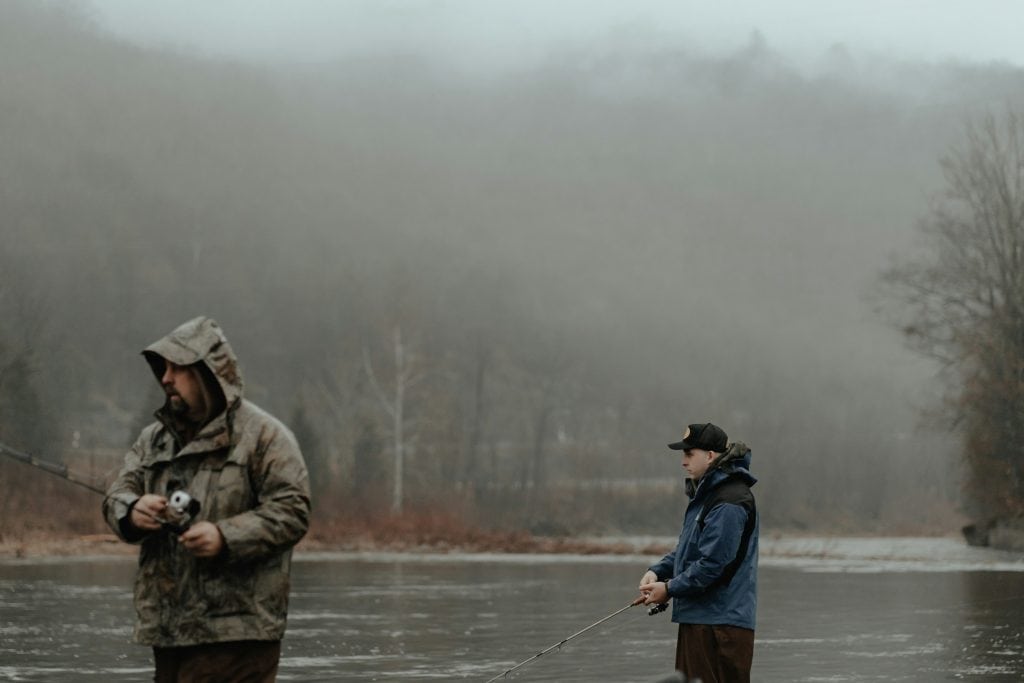
Cold weather, and especially cold water, requires more planning. On a kayak, you are close to the water, more exposed to wind, and more likely to get wet from paddle drip, waves, or a bad launch. Here, comfort and safety are tightly linked.
Layering Basics
Think in three layers:
- Base layer: Synthetic or merino wool top and bottom to wick moisture away and keep you from feeling clammy.
- Mid layer: Fleece or a light synthetic puff jacket for warmth without too much bulk.
- Outer layer: A windproof and water-resistant or waterproof shell to block spray, wind, and light rain.
Waders, Dry Pants, and Dry Suits
If water is cold enough that falling in can cause cold shock and hypothermia, clothing choices become a safety issue, not just a comfort issue.
Common options:
- Insulated or breathable fishing waders with a snug wading belt and proper layers underneath.
- Dry pants with socks, paired with layered tops.
- Full dry suit for truly cold water or big water where rescue may be slow.
Keep in mind:
- If you use waders, wear a snug wading belt and a properly fitted PFD, and practice kayak re-entry in controlled conditions before depending on that setup.
- For colder water or situations where rescue could take longer, a properly fitted dry suit can provide more complete immersion protection than ordinary rain gear or waders alone.
- Choose cold-water clothing based on the water temperature, conditions, distance from shore, and likely recovery time—not just the air temperature.
Footwear Options for Kayak Fishing
Your feet will deal with water, mud, rocks, and changing temperatures. Pick footwear based on season and launch conditions.
Warm-Weather Footwear
Good choices:
- Neoprene booties with thin soles.
- Water shoes or sandals with toe protection.
Look for:
- Closed toes or a solid front if you launch around rocks or oysters.
- Non-slip soles that grip wet plastic and ramps.
Avoid flip-flops. They slide, catch, and offer very little protection.
Cold-Weather Footwear
Cold feet can end a trip fast.
Options:
- Wading boots over stockingfoot waders or dry pants.
- Insulated neoprene boots with good grip.
Tips:
- Use wool or synthetic socks, not cotton.
- Make sure boots aren’t tight. Cramped feet lose circulation and get cold faster.
Sun Protection Essentials
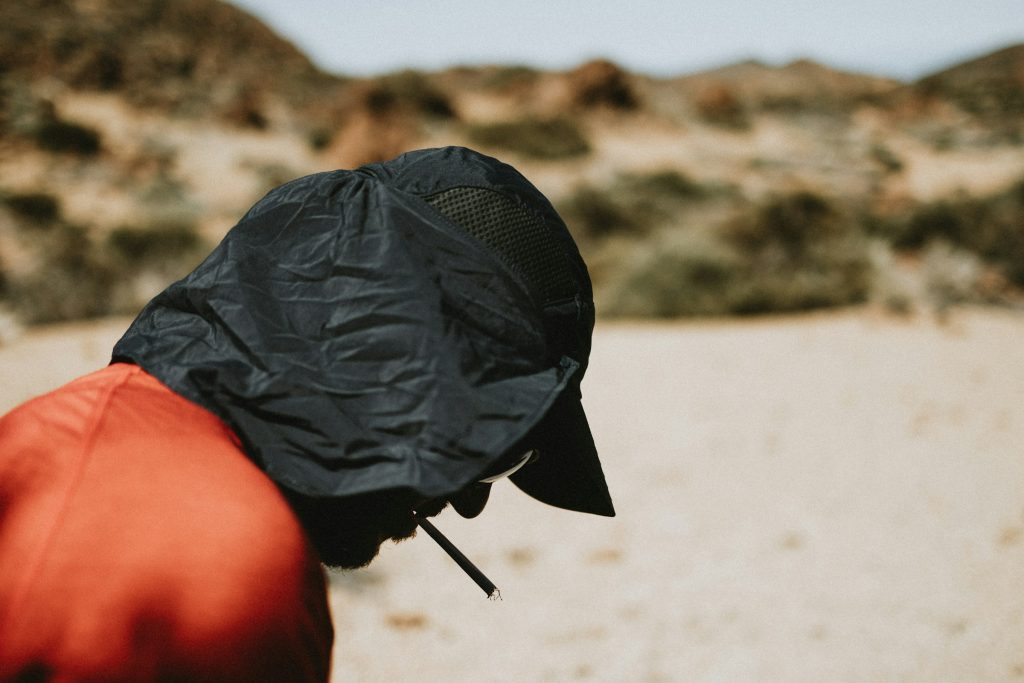
Sun will wear you down and damage skin faster than you think, especially on reflective water.
Key pieces:
- Hat: Wide-brim hat or cap with neck flap.
- Buff or neck gaiter: Protects neck, ears, and lower face.
- Sunglasses: Polarized shades to cut glare and help you see structure and fish.
- UPF clothing: Shirts, pants, and gloves with built-in UV protection.
Sunscreen:
- Use broad-spectrum SPF 30+ on exposed skin, especially your face, hands, and tops of feet.
- Reapply every couple of hours, especially if sweating or getting splashed.
Remember: sun exposure is cumulative. Good habits now pay off later.
Rain and Wind Layers
You don’t need heavy gear for a quick shower, but you do need something to cut wind and rain before you get chilled.
A calm launch can become a much colder return once wind increases, clothing gets wet, or paddle spray and boat wakes add moisture. A lightweight shell takes little room in a crate or dry bag and can provide useful protection when conditions change.
Wind Shell
A light windbreaker or paddling jacket:
- Blocks wind while remaining breathable.
- Packs small into a dry bag or crate.
- Is perfect for cool mornings or long paddles.
Rain Jacket and Pants
For wet forecasts or big-water trips:
- Use a waterproof or highly water-resistant jacket with a hood.
- Pack lightweight waterproof pants if rain is likely or waves are expected.
Features to look for:
- Adjustable cuffs and hem to keep water out.
- Room to move and paddle without binding.
- Enough length to overlap with your pants or waders.
Even in warm temperatures, wind plus wet clothing can chill you quickly, especially if you’re not paddling hard.
PFD (Life Jacket) Selection
Your PFD is part of your clothing system, not an accessory.
Types of PFDs for Kayak Fishing
There are two main categories:
- Foam PFDs: Also called inherently buoyant PFDs. They provide flotation without requiring inflation, and many fishing models use high-back designs that work well with elevated kayak seats.
- Inflatable PFDs: These can provide a slimmer, less bulky fit but require inspection and maintenance. Intended uses and restrictions vary by model, so check the U.S. Coast Guard approval label and manufacturer instructions before choosing one for kayak fishing.
For many kayak anglers, a properly fitted foam fishing PFD is a practical choice because it provides flotation without requiring activation and is available in designs made to work with kayak seats.
Fit and Comfort
Make sure your PFD:
- Fits snug but not restrictive.
- Doesn’t ride up when you sit or paddle.
- Works with your seat back. High-back PFDs usually pair better with high kayak seats.
If it’s comfortable, you’ll actually wear it, which is the whole point.
Seasonal Dressing Tips
Spring
- Water can still be cold even if the air feels mild.
- Dress for immersion with a base layer, insulation, and splash protection.
- Use windproof layers for early mornings and evening runs.
Summer
- Prioritize sun protection and breathability.
- Use lightweight, long-sleeve UPF tops and pants instead of relying only on T-shirts and shorts.
- Pack a thin windbreaker for sudden storms or long runs in open water.
Fall
- Conditions can change fast: cool mornings, warm middays, and cold evenings.
- Layer up with a base layer, light mid-layer, and wind or rain shell.
- Add headwear and gloves as temperatures drop.
Winter
- Treat immersion as a serious risk.
- Consider a full dry suit or wader/dry-pant system with proper layering.
- Keep extremities warm with socks, gloves, and a beanie or hood.
When in doubt, slightly overdress, especially for cold water. You can always remove a layer, but it is much harder to add one you did not bring.
Safety Considerations: Cold Shock and Sun Exposure
Cold Shock and Hypothermia
Cold water can be dangerous even if the air is comfortable.
Risks include:
- Involuntary gasping and breathing difficulty when you first fall in.
- Loss of muscle function and coordination over minutes.
- Hypothermia if you can’t get out or change into dry clothes.
Protection:
- Dress for the water temperature, not just the air temperature.
- Always wear your PFD.
- Keep a dry bag with spare base layers and a towel in colder seasons.
- Know your re-entry technique and practice it in safe conditions.
For cooler conditions, consider carrying a small dry bag with a towel and spare dry layers such as socks, a base layer, and warm headwear. Dry clothing can become important if you get soaked far from the launch.
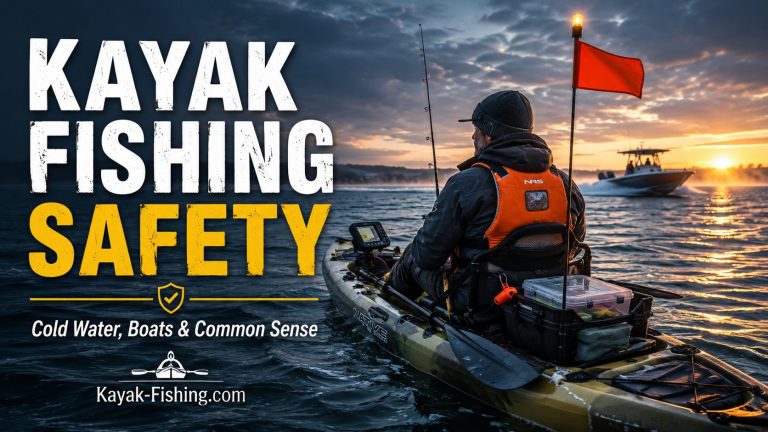
For a broader look at cold water, boat traffic, weather, visibility, and trip planning, see our kayak fishing safety guide.
Sun Exposure and Heat
On hot days, dehydration and heat exhaustion can creep up quickly. Sunburn can also sneak in even under light cloud cover.
Protection:
- Wear UPF clothing, a hat, buff, and sunglasses.
- Drink water regularly. Don’t wait until you feel thirsty.
- Take short breaks in shade when possible, whether that is under a bridge, near a tall bank, or back at your vehicle between sessions.
Dizziness, nausea, unusual weakness, confusion, fainting, or other signs of heat illness are reasons to stop exertion and get to a cooler place. Confusion, loss of consciousness, or seizures can indicate a medical emergency and require immediate help.
FAQs: What to Wear Kayak Fishing
Do I really need long sleeves in summer?
For most kayak anglers, yes. A lightweight UPF long-sleeve shirt is usually better than a cotton T-shirt because it protects your skin without needing as much sunscreen on your arms.
Long sleeves can also feel cooler in direct sun when the fabric is breathable, loose enough to move in, and able to dry quickly after paddle splash or sweat.
Look for breathable UPF fishing shirts, sun hoodies, or button-up fishing shirts made for hot weather. Avoid heavy cotton if you’ll be on the water for several hours.
Can I kayak fish in jeans and a hoodie?
You can, but it is not a great setup for most kayak fishing trips. Cotton jeans and hoodies get heavy when wet, dry slowly, and can make you cold fast when the wind picks up.
A better setup is synthetic or wool layers with a light windproof or rain shell. That gives you more warmth, dries faster, and is much safer if you get splashed or have to climb back into the kayak.
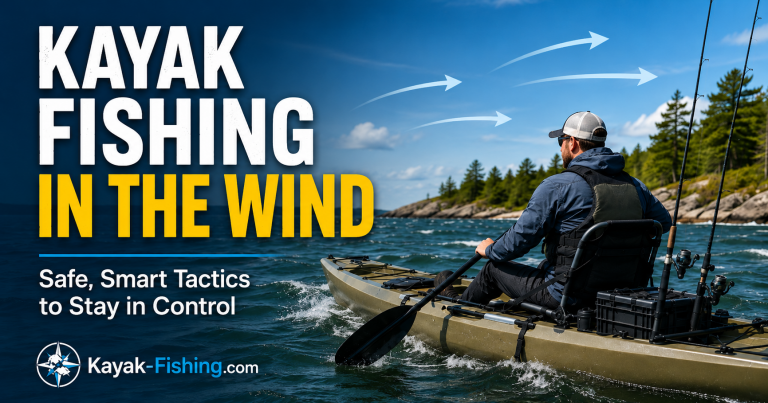
For more on handling wind and cooler conditions, read our guide to kayak fishing in the wind.
Are waders safe to wear in a kayak?
Waders can be used from a kayak, but they need to be worn carefully. The most important rule is to always wear a properly fitted PFD and a snug wading belt.
- Wear a PFD the entire time you are on the water.
- Use a snug wading belt to help limit water entry.
- Choose breathable waders with proper layers underneath.
- Practice getting back into your kayak in safe, shallow water before relying on that setup in real conditions.
In very cold water, rough water, or remote areas, a dry suit is usually the safer choice than waders alone. Your clothing should be based on water temperature and recovery time, not just the air temperature.
Also make sure your life jacket fits your seat and fishing style. See our full guide to the best PFDs for kayak fishing.
Do I need different clothes for pedal vs paddle kayaks?
The basics are the same: wear a PFD, protect yourself from sun and wind, avoid cotton in cool conditions, and choose clothes that dry quickly.
The difference is mostly comfort. Pedal kayaks may splash your legs and feet more, so footwear and quick-dry pants matter. Paddle kayaks can create more shoulder and torso movement, so avoid bulky seams, stiff jackets, or tight sleeves that rub during a long paddle.
Either way, the goal is the same: stay protected, stay mobile, and avoid clothing that becomes heavy, cold, or restrictive when wet.
How many clothing kits do I really need?
You can cover most kayak fishing conditions with three basic clothing kits:
- Warm-weather kit: UPF long-sleeve shirt, lightweight pants or shorts, water shoes, hat, buff, sunglasses, and PFD.
- Cool shoulder-season kit: Base layer, light mid-layer, wind or rain shell, quick-dry pants, warmer footwear, and PFD.
- Cold-water kit: Dry suit or carefully worn waders, full base and mid-layers, insulated footwear, gloves, beanie or hood, and PFD.
Most anglers can mix and match these pieces as the seasons overlap. Start simple, then upgrade based on the conditions you actually fish most often.
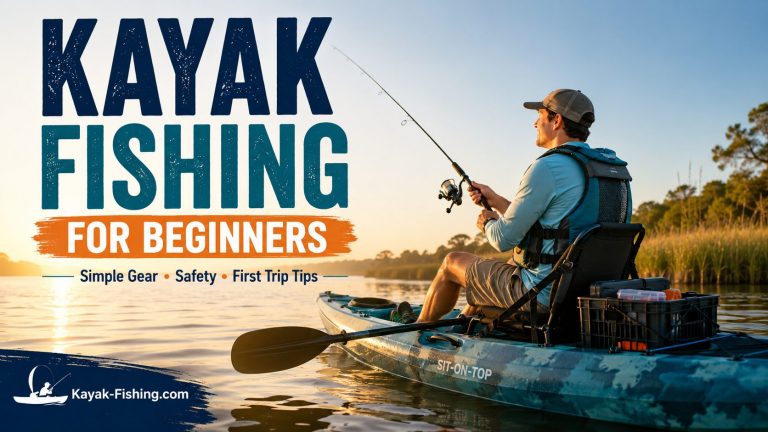
For a broader starting point, see our full kayak fishing for beginners guide.
Keep building your kayak fishing setup:
Final Thoughts
Figuring out what to wear kayak fishing isn’t about fashion. It’s about comfort, performance, and safety. Good kayak fishing clothing should:
- Keep you warm or cool enough for the day.
- Protect you from sun, wind, and water.
- Let you paddle, pedal, and fish without restriction.
- Buy you time and safety if you end up in the water.
Build your wardrobe slowly. Start with a few high-quality, versatile pieces, then add specialized items like waders or dry suits as your season and conditions demand.
When your clothing is dialed in, you stop thinking about being hot, cold, or wet—and you can put all your attention on reading water, finding fish, and enjoying the time on your kayak.