Lifetime Tamarack Pro 103 Review: Is This Budget Fishing Kayak Worth It?
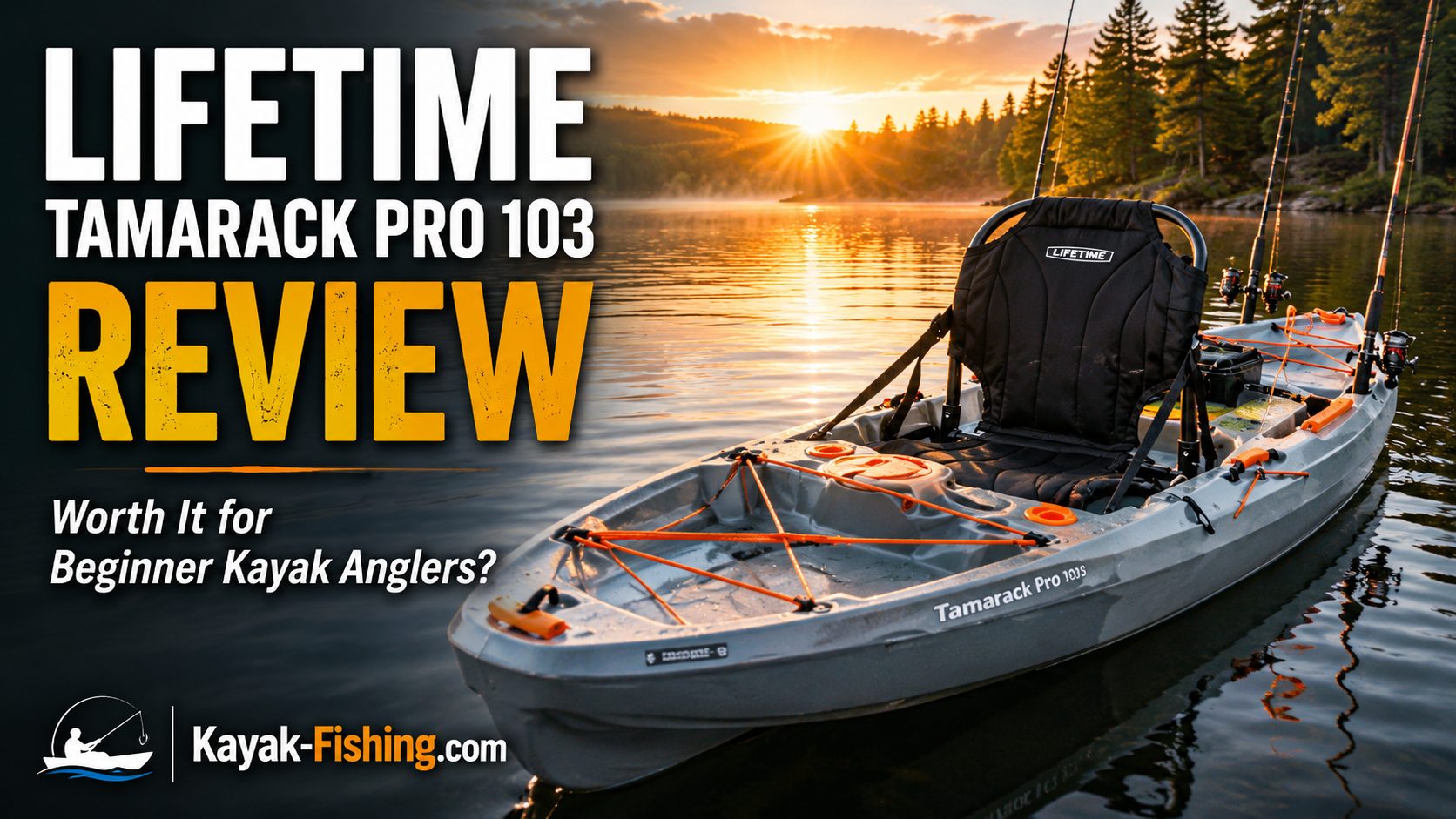
The Lifetime Tamarack Pro 103 is a 10-foot-3-inch sit-on-top fishing kayak built around one major upgrade over cheaper Tamarack models: an adjustable framed seat. At 57.5 pounds with a 300-pound capacity, it makes the most sense for anglers who want an affordable, comfortable kayak for ponds, small lakes, calm coves, and slow rivers—not a stand-up platform or big-water fishing kayak.
This Lifetime Tamarack Pro 103 review is not based on a personal hands-on test of this specific kayak. It is based on current manufacturer specifications, major retailer documentation, recurring owner-feedback themes, and Kayak-Fishing.com analysis of what those details mean for buyers.
It is still a budget sit-on-top kayak, though. That matters.
Affiliate disclosure: As an Amazon Associate I earn from qualifying purchases. This page contains affiliate links, which means Kayak-Fishing.com may earn a small commission if you buy through a link at no extra cost to you.
Quick Verdict
Best for: Beginner to intermediate anglers fishing ponds, small lakes, calm coves, and slow rivers who want more comfort than a bare-bones kayak.
Not ideal for: Big water, frequent standing, heavy gear loads, rough inshore conditions, or anglers who already know they want pedal drive.
Biggest upgrade: The adjustable framed seat. This is the main reason to look at the Pro instead of a cheaper Tamarack model.
Biggest concern: It is still a 10-foot-3-inch, 31-inch-wide budget kayak with a 300-pound capacity. Pack it light and respect wind.
Better than the Angler 100 for: Longer seated fishing sessions, more comfortable posture, and a cleaner fishing layout.
Final recommendation: Buy it if you want an affordable kayak that feels more fishable than the cheapest beginner boats. Skip it if you need premium stability, higher capacity, or stand-and-fish confidence.
If you are choosing your first fishing kayak rather than evaluating only the Pro 103, our Best Fishing Kayaks for Beginners guide compares it with the Tamarack Angler 100, Pelican Catch models, Perception Outlaw 11.5, and Old Town Sportsman 106.
Table of Contents
- Quick Verdict
- Lifetime Tamarack Pro 103 Specs
- What Makes the Tamarack Pro 103 Different?
- What It Does Well
- What Owners Commonly Say
- Where It Still Feels Like a Budget Kayak
- Stability: Good Seated Confidence, Limited Standing Confidence
- Seat Comfort Is the Main Reason to Upgrade
- Fishing Layout and Gear Storage
- Paddling and Tracking
- Transport and Handling
- Best Upgrades for the Tamarack Pro 103
- Tamarack Pro 103 vs Tamarack Angler 100
- Is the Tamarack Pro 103 Worth the Money?
- Who Should Buy It?
- Who Should Skip It?
- Final Verdict
- FAQs
Lifetime Tamarack Pro 103 Specs
| Spec | Lifetime Tamarack Pro 103 |
|---|---|
| Length | 10 ft. 3 in. / 123 in. |
| Width | 31 in. |
| Height | 12.7 in. |
| Weight | 57.5 lb. Some retailer listings round this to about 60 lb. |
| Capacity | 300 lb. |
| Material | UV-protected high-density polyethylene |
| Seat type | Adjustable framed seat |
| Rod holders | Two flush-mounted rod holders plus an adjustable/top-mount rod holder, depending on how the retailer labels the included holder. |
| Storage | Center hatch with bucket, rear tank well with bungee, under-seat tackle-box space, front and rear shock cord storage. |
| Accessory features | Universal accessory tracks, paddle keeper, fish ruler, adjustable footrests, front and rear carry handles. |
| Paddle included? | Model and retailer dependent. Some listings include a paddle, while others specifically say paddle not included. |
| Warranty | 5-year limited warranty. |
Buyer note: Before you order, check the exact model number, color, and listing photos. The Tamarack Pro 103 is sold through several retailers, and paddle inclusion can vary.
You can also review the official Lifetime Tamarack Pro 103 product page for current manufacturer specs, features, and warranty details.
What Makes the Tamarack Pro 103 Different?
The main difference is not mysterious: it is the framed seat.
That difference matters more as trip length increases. A low padded seat can be adequate for short outings, but a framed seat generally provides a more supportive posture for longer periods of seated casting, reaching for tackle, and controlling the kayak in light wind.
The Lifetime Tamarack Pro kayak also has a more fishing-focused layout than the basic Tamarack-style boats. You get rod storage, accessory tracks, a rear tank well, a center hatch, a paddle keeper, and enough room behind the seat to run a simple crate setup. None of that turns it into a high-end fishing kayak, but it does make it feel less like a recreational kayak with rod holders slapped on.
That makes the Pro 103 the more serious beginner option in the Tamarack lineup. It adds meaningful comfort and organization without pushing the buyer into premium-kayak pricing.
What It Does Well
It makes longer seated trips more realistic
The seat is the big win here. A framed seat raises the paddler off the deck, supports a more natural seated position, and can reduce contact with water collecting around the seating area. The practical benefit is greater comfort during longer fishing sessions.
This matters most for fishing styles that involve long periods in one position, including bass, panfish, and crappie fishing. A better seat does not improve fishing performance by itself, but it can make extended seated sessions more tolerable.
It is stable enough for normal seated fishing
At 31 inches wide with a flat-bottom design, the Tamarack Pro 103 should feel friendly for seated casting, reaching for gear, and handling average fish. It is the kind of kayak that makes sense for small lakes, subdivision ponds, electric-only reservoirs, protected coves, and slow-moving creeks.
For a beginner, that is the right type of water anyway. Calm water teaches boat position, paddle strokes, lure control, and landing fish without adding whitecaps or boat wakes to the lesson.
The layout is simple but useful
The rear tank well is the natural home for a milk crate or kayak crate. Add two rod tubes, a small tackle tray, pliers, a line cutter, and maybe a flag, and you have a basic fishing system that works without turning the kayak into a hardware project.
The accessory tracks are another plus. They let you add small items like a rod holder, camera mount, light pole, or fish finder display without immediately drilling holes. Keeping the first setup simple reduces cockpit clutter, snag points, and accessories that can interfere with the paddle stroke.
It hits a useful value point
The Tamarack Pro 103 is not always the cheapest kayak in the aisle, and it should not be judged like it is. Its value comes from being more comfortable and more fishable than the lowest-priced options while staying well below the cost of many premium fishing kayaks.
That is why it belongs in the conversation for beginner anglers who want a best budget fishing kayak candidate without immediately jumping into premium pricing.
What Owners Commonly Say About the Tamarack Pro 103
Owner feedback broadly supports the Pro 103’s main selling points. Across review pools for model 90995 at Walmart and Tractor Supply, seated stability, the adjustable framed seat, value, and tracking are recurring positives.
The feedback also reinforces the limits of the design. This is a compact, stability-focused fishing kayak rather than a boat built around speed or long-distance efficiency. Some owners describe it as slower than more performance-oriented kayaks, which fits the tradeoff suggested by its short, fishing-focused hull.
Buyer implication: The Tamarack Pro 103 makes the strongest case on comfort, seated stability, useful fishing features, and value. Buyers prioritizing speed, stand-up fishing, heavy loads, or rough-water capability should look at a different class of kayak.
Where It Still Feels Like a Budget Kayak
The Tamarack Pro 103 is a better beginner kayak, not a magic one.
The 300-pound capacity is enough for many anglers, but capacity disappears faster than people expect. Body weight, paddle, PFD, crate, tackle, rods, anchor, water bottle, dry bag, fish gripper, net, and lunch all count. A kayak does not have to be at its listed max to start feeling sluggish, wetter, or less responsive.
Wind is another reality check. Shorter budget kayaks can get pushed around, especially when you sit higher in a framed seat. That higher seat is more comfortable, but it also gives the wind a little more of you to grab. On a small lake with a 6 mph breeze, that may just mean correcting your angle more often. On open water with gusts, it can get old fast.
It also is not a stand-up fishing platform. Lifetime specifically advises that the Tamarack Pro 103 is not designed to be stood on. If standing is a major part of how you want to fish, shop for a wider fishing kayak specifically designed for standing and casting.
Stability: Good Seated Confidence, Limited Standing Confidence
The Tamarack Pro 103 should give most beginners enough seated stability to cast spinnerbaits along grass, skip a soft plastic under a dock, or drop a jig beside a laydown without feeling twitchy. The hull is designed around a flat bottom and stability rails, which is exactly what you want in an entry-level fishing kayak.
The main caution is standing.
Standing in a kayak is not just about whether you can rise up for five seconds beside the launch ramp. Fishing while standing means your weight shifts during a cast, again during the hookset, and again when a fish runs under the boat. Add a little chop or a wake from a passing jon boat and a kayak that felt fine at the dock may suddenly feel busy under your feet.
Lifetime specifically advises that this kayak is not designed to be stood on. If standing and casting are important parts of the buying decision, choose a wider, stand-focused fishing platform instead.
Seat Comfort Is the Main Reason to Upgrade
This deserves its own section because it is the part beginners underestimate most.
Seat comfort can be easy to underestimate during a quick in-store comparison. The difference between a low padded seat and a framed seat becomes more meaningful as the amount of time spent seated increases.
The Tamarack Pro 103’s framed seat solves a lot of that. It raises your hips, improves posture, and creates a cleaner seated position for casting. It also gives you a better angle for reaching a crate behind you or grabbing a rod from a flush holder.
For short evening trips, the difference may feel nice. For 3 to 5 hour trips, it can be the reason you actually stay out and fish the pattern you came to fish.
For many beginners, a simpler kayak with a good factory seat is a better buy than a slightly cheaper kayak that immediately needs a seat modification. Stadium-seat conversions can work on some budget kayaks, but added pads, brackets, risers, and straps reduce the original savings.
Fishing Layout and Gear Storage
The Tamarack Pro 103 has the basic pieces a beginner needs without creating a cluttered deck.
The rear tank well is the natural place to build a simple fishing setup. A crate can add vertical rod storage and space for tackle boxes without crowding the cockpit. For most beginners, a couple of rods, a compact tackle selection, pliers, leader material, and a small dry bag are enough to start.
The flush rod holders are useful for transport and trolling, but expensive rods are still worth securing with leashes around brush, docks, current, or rougher water. A flush holder reduces clutter; it does not guarantee that a rod cannot be lost overboard.
The accessory tracks are handy for a forward rod holder or small electronics mount. The best early track accessory is often a rod holder placed where you can reach it without twisting. Fish finder mounts, camera arms, and cup holders can come later.
An anchor trolley is another worthwhile upgrade if you fish wind-blown banks, bridges, or slow rivers. Being able to control your boat angle matters more than beginners think. A light anchor dropped off the wrong side can swing you sideways to the wind, put your casting shoulder in a bad position, or make the kayak feel less stable than it really is.
For crate ideas, start with a simple kayak crate setup that keeps gear behind you but still reachable. The goal is not to carry the whole garage. The goal is to spend less time digging and more time casting.

Paddling and Tracking
This kayak is best matched with calm water, small lakes, coves, ponds, and slow rivers. That does not mean glass-calm only. It means places where wind and current are manageable and you are not forced to paddle long distances across exposed water.
The hull includes tracking channels, and at 10 feet 3 inches it should paddle reasonably well for a compact fishing kayak. Still, do not expect touring-kayak glide. A fishing kayak with a stable hull, framed seat, tank well, rod holders, and gear is always a compromise.
Light wind is where newer anglers are most likely to notice that compromise. A compact fishing kayak can rotate or drift enough between casts to change the casting angle. Short correction strokes, shoreline positioning, a stakeout pole in shallow water, or an anchor trolley can help control that movement.
On breezy days, plan your route so the hard paddle happens first. Work into the wind early, then let the wind help you back toward the launch. That one habit makes a small budget kayak feel much less frustrating. For more on this, read this guide to kayak fishing in wind.
Transport and Handling
At 57.5 pounds, the Tamarack Pro 103 is manageable for many anglers, but it is not weightless. The framed seat, fishing layout, and longer hull make it more boat-like than the lightest recreational kayaks.
A truck bed is the easiest transport option. Use proper tie-downs, support the stern if needed, and add a bright flag when the kayak extends past the bed. A small trailer is even easier if you have storage space.
Car-topping is possible for many people, but this is where you need to be honest with yourself. Lifting nearly 60 pounds overhead at the end of a hot fishing day is different from lifting it once in your driveway. If you fish alone, practice loading before your first trip. A bath mat, load-assist bar, or roller can save your roof paint and your back.
Garage storage also matters. Store it supported, out of harsh sun when possible, and avoid leaving it strapped too tightly on narrow bars for long periods. Budget polyethylene kayaks are tough, but they can still deform if stored carelessly.
Best Upgrades for the Tamarack Pro 103
You do not need to upgrade everything right away. In fact, you should not. Fish it a few times with a simple setup, then spend money where the kayak actually annoys you.
Better paddle
If your package includes a paddle, it may be adequate for casual use. A lighter, properly sized paddle is still one of the most useful early upgrades because every correction stroke and longer paddle becomes easier.
Kayak crate
A crate turns the rear tank well into an organized fishing station. Keep it low and tidy. Too many vertical rods can become a problem around trees, docks, and back casts.
Anchor trolley
This is a very useful upgrade for wind control and current positioning. It lets you set your anchor point from bow to stern instead of being stuck with one awkward angle.
Rod leash
Cheap insurance. Use one for your favorite combo, especially when fishing around current, laydowns, or cold water where recovering gear is harder.
Visibility flag
Small kayaks sit low. A bright flag helps other boaters see you, especially around coves, marinas, and low-light launches.
PFD
This is not optional gear. Get a comfortable fishing PFD with pockets you will actually wear all day. If you are sorting that out, this PFD guide is a good place to start.
Small dry bag
Use it for keys, wallet, phone, spare clothes, and basic first-aid items. Hatch storage is useful, but “inside the kayak” does not always mean perfectly dry.
Fish gripper or landing net
Handling fish beside a kayak is different than handling fish from a bank. A small net or gripper keeps things calmer when a fish is green at the boat.
Track accessories
Add these slowly. A forward rod holder is useful. A compact fish finder can be useful. Five gadgets crowding the cockpit usually are not.
For safety basics before you start rigging more gear, read these kayak fishing safety reminders and make sure your clothing matches the season with a practical on-the-water clothing setup.
Tamarack Pro 103 vs Tamarack Angler 100
The Tamarack Angler 100 is the cheaper, simpler route. For short trips on calm ponds, that may be enough. The Tamarack Pro 103 is the stronger choice for a beginner who already expects to fish regularly and values the framed seat and more usable layout.
The reason is not just that the Pro has more features. It is that the features are the ones you feel all day: the framed seat, the higher comfort level, the more usable storage layout, and the accessory tracks.
The Angler 100 makes sense if price is the deciding factor and you mostly fish quick sessions close to the launch. The Pro 103 makes more sense if you want to grow into the kayak instead of immediately planning seat fixes and layout changes.
For the full head-to-head breakdown, use this side-by-side Tamarack comparison. If you are leaning cheaper, it is also worth reading our full look at the older Tamarack option.
Is the Tamarack Pro 103 Worth the Money?
Yes, for the right buyer.
The Tamarack Pro 103 is worth the money if you are choosing between the cheapest possible fishing kayak and something you can comfortably fish for longer sessions. Comfort and layout usually matter more than beginners expect. A kayak that keeps you organized and seated comfortably will get used more often.
It is not worth stretching for if you really need a higher-capacity kayak, a pedal drive, a stand-up deck, or rough-water capability. In that case, save longer and buy the right platform instead of trying to make a budget kayak do premium-kayak jobs.
For most new kayak anglers fishing calm freshwater, though, the Pro 103 lands in a smart middle ground. It is affordable enough to make sense as a first serious fishing kayak, but not so bare-bones that you are immediately fighting the seat and layout.
Who Should Buy It?
Buy the Tamarack Pro 103 if you are a beginner who wants to fish longer. The framed seat is the biggest reason. If you already know you want 3-hour morning trips instead of 45-minute paddles, start with the better seat.
Buy it if you want a beginner fishing kayak with framed seat comfort. That phrase sounds oddly specific, but it is exactly what many new anglers should be looking for.
Buy it if you fish ponds, small lakes, and protected coves. This is the kind of water where the kayak’s stability, storage, and compact size make sense.
Buy it if you want more than the cheapest option without jumping into premium pricing. The Pro 103 gives you useful fishing features without forcing you into a much larger, heavier, more expensive kayak.
Who Should Skip It?
Skip it if you fish big water often. Larger lakes, heavy boat traffic, strong wind, and exposed crossings call for more kayak than this.
Skip it if you carry a lot of gear. The 300-pound capacity is workable, but not huge. Bigger anglers and heavy gear anglers should look closely at usable capacity, not just the printed number.
Skip it if you want pedal drive. This is a paddle kayak. If your fishing style depends on hands-free boat control, save for a pedal platform.
Skip it if standing is important to you. Lifetime does not design the Tamarack Pro 103 as a stand-up fishing kayak. Buyers who want to stand and cast regularly should choose a wider fishing platform specifically designed for that use.
Skip it for rougher inshore conditions. Protected saltwater creeks on calm days are one thing, but wind, chop, tide rips, and long open crossings call for a more capable platform.
Final Verdict: Lifetime Tamarack Pro 103 Review
The Tamarack Pro 103 is a strong buy for beginners who want an affordable fishing kayak that feels more comfortable and more usable than the cheapest entry-level boats. The framed seat is the star of the show, and the fishing layout gives you enough room to run a crate, carry a couple rods, and keep tackle within reach without overcomplicating things.
Just keep the expectations honest. This is not a premium big-water kayak, not a pedal-drive platform, and not the best choice for anglers who want to stand and fish all day. It is a practical, budget-minded sit-on-top kayak for calm water and realistic beginner fishing.
If that matches how and where you fish, the Lifetime Tamarack Pro 103 review verdict is simple: it is probably the better long-term buy over the cheapest Tamarack models, mainly because comfort keeps you on the water longer.
Lifetime Tamarack Pro 103 FAQs
Is the Lifetime Tamarack Pro 103 good for fishing?
Yes, it is a good budget fishing kayak for calm freshwater use. The framed seat, rod holders, rear tank well, accessory tracks, and center hatch make it more fishable than many basic recreational kayaks.
Is the Tamarack Pro 103 worth it over the Angler 100?
For most anglers who can afford the upgrade, yes. The framed seat and improved layout are the main reasons. The Angler 100 can work for shorter trips, but the Pro 103 is the better choice if you plan to fish regularly or stay out for several hours.
Can you stand in the Tamarack Pro 103?
No. Lifetime specifically advises that its Tamarack Pro 103 is not designed to be stood on. If standing and casting are major priorities, look for a wider fishing kayak designed and marketed for that use.
Is the Tamarack Pro 103 good for beginners?
Yes. It is beginner-friendly because it is stable for seated fishing, has a simple layout, and does not require complicated rigging to get started. The framed seat also makes it more comfortable for new anglers who may spend more time sitting than they expect.
Is it good for rivers?
It can work on slow rivers and gentle creeks, especially where launches are easy and current is mild. It is not the right choice for technical whitewater, heavy current, or situations where you need quick maneuvering around hazards.
What is the Lifetime Tamarack Pro 103 weight limit?
Lifetime lists the Tamarack Pro 103 at a 300-pound maximum weight capacity. That includes the paddler plus the PFD, paddle, crate, rods, tackle, water, anchor, electronics, cooler, and any other gear carried aboard. If your complete loaded setup will be close to 300 pounds, a higher-capacity fishing kayak is a better choice than treating the published maximum as an ideal everyday load.
What should you upgrade first?
Start with a comfortable PFD if you do not already have one. After that, the best upgrades are usually a better paddle, a simple crate, rod leash, visibility flag, small dry bag, and eventually an anchor trolley if wind or current control becomes an issue.
Can you put a trolling motor on the Lifetime Tamarack Pro 103?
Lifetime does not list the Tamarack Pro 103 as compatible with its trolling-motor mount. In Lifetime’s Pro 103 product Q&A, the company states that its trolling-motor setup is intended for its Manta and Sport Fisher kayaks. Aftermarket or DIY mounts may exist, but they are not the same as a manufacturer-supported motor setup. If motor power is an important part of your plans, a purpose-built motor-ready fishing kayak is the better starting point.