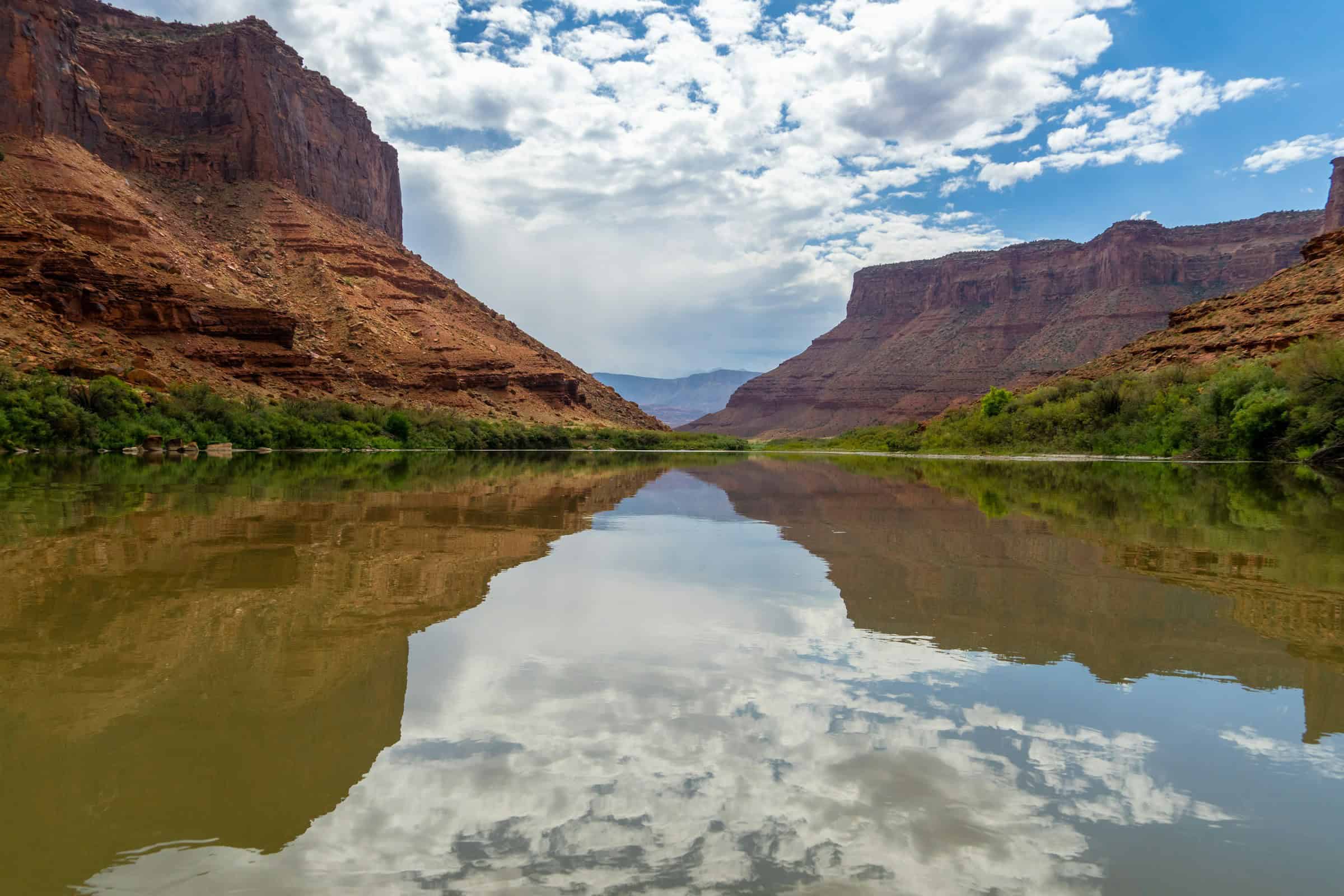
Kayak Fishing the Colorado River: Best Lower River Spots, Launches & Safety Tips
Kayak fishing the Colorado River can be incredible, but it is not the kind of river you should treat casually. The Lower Colorado has clear desert water, current, dams, long hot stretches, heavy boat traffic in places, and some excellent fishing for striped bass, largemouth bass, smallmouth bass, catfish, panfish, and backwater species.
The trick is choosing the right section for your kayak. A protected backwater near Yuma fishes very differently from the Parker Strip, and Lake Havasu feels nothing like the faster water below a dam. This guide breaks down the best Lower Colorado River kayak fishing areas, launch considerations, seasonal patterns, lures, and safety issues so you can plan a trip that matches your skill level instead of just picking a random blue line on the map.
If you are new to moving water, start conservative. The Colorado can be beautiful and productive, but current, dam releases, wind, desert heat, and powerboats can turn a simple float into a long day if you do not plan your route.
Quick Answer: For most kayak anglers, the best Colorado River fishing areas are Lake Havasu and Topock Gorge for bass and stripers, the Parker Strip for current breaks and shoreline structure, Bullhead and Laughlin for tailwater fishing below Davis Dam, and Yuma-area backwaters for protected bass, catfish, carp, and panfish water. Spring and fall are the easiest seasons to fish, while summer can be productive early, late, or at night if you plan carefully for heat, boat traffic, and changing flows.
This guide is focused specifically on kayak fishing the Colorado River, not just general bank or boat fishing, so the launch choices, route planning, lure selection, and safety advice are written with paddlers in mind.
Table of Contents
Best Ways to Fish the Colorado River
The best way to fish the Colorado River depends on the stretch you choose. Some areas fish like a moving river with current seams and eddies. Others fish more like reservoirs, with rocky points, coves, marinas, submerged structure, and open-water bait schools. For kayak anglers, the key is picking sections where you can launch safely, stay out of heavy current when needed, and work productive water without fighting wind or dam-generated flows all day.
Colorado River kayak fishing rewards anglers who think in small zones: one current seam, one shaded dock line, one backwater mouth, one rocky point, or one protected cove at a time.
| Area | Best For | Kayak Strategy |
|---|---|---|
| Bullhead / Laughlin | Stripers, smallmouth, trout in cooler months, catfish | Fish current seams, eddies, rocks, and deeper runs below Davis Dam. Plan around changing releases. |
| Lake Havasu / Topock Gorge | Smallmouth, largemouth, stripers, panfish, catfish | Work coves, rocky points, channel edges, backwaters, and protected launch areas. |
| Parker Strip | Smallmouth, largemouth, catfish, stripers | Target docks, riprap, current breaks, shade lines, and slower inside edges. |
| Yuma Backwaters | Largemouth, catfish, carp, panfish, tilapia | Use the kayak advantage in sloughs, lagoons, weeds, cattails, and protected side channels. |
Best Kayak Fishing Areas on the Colorado River
Bullhead / Laughlin Below Davis Dam
This section runs from Davis Dam downstream past Bullhead City and Laughlin into the upper end of Lake Mohave. It is regulated tailwater with cold, clear releases that can change quickly through the day. For kayak anglers, this is a good stretch when you want current seams, deeper runs, and rocky structure, but it is also a place where you need to plan around flow changes before launching.
Why it’s good:
- Strong mix of striped bass, smallmouth bass, largemouth bass, catfish, panfish, and stocked trout in cooler months.
- Defined current seams, rock piles, and eddies that make it easier to position a kayak and fish specific targets.
- Clear water where you can sight-fish bass and carp when flows and visibility allow.
What to target:
- Stripers in deeper runs, current edges, and bait-rich areas.
- Smallmouth bass on rocky banks, ledges, and boulder fields.
- Channel catfish in slower holes and along soft-bottom inside bends.
Lake Havasu & Topock Gorge
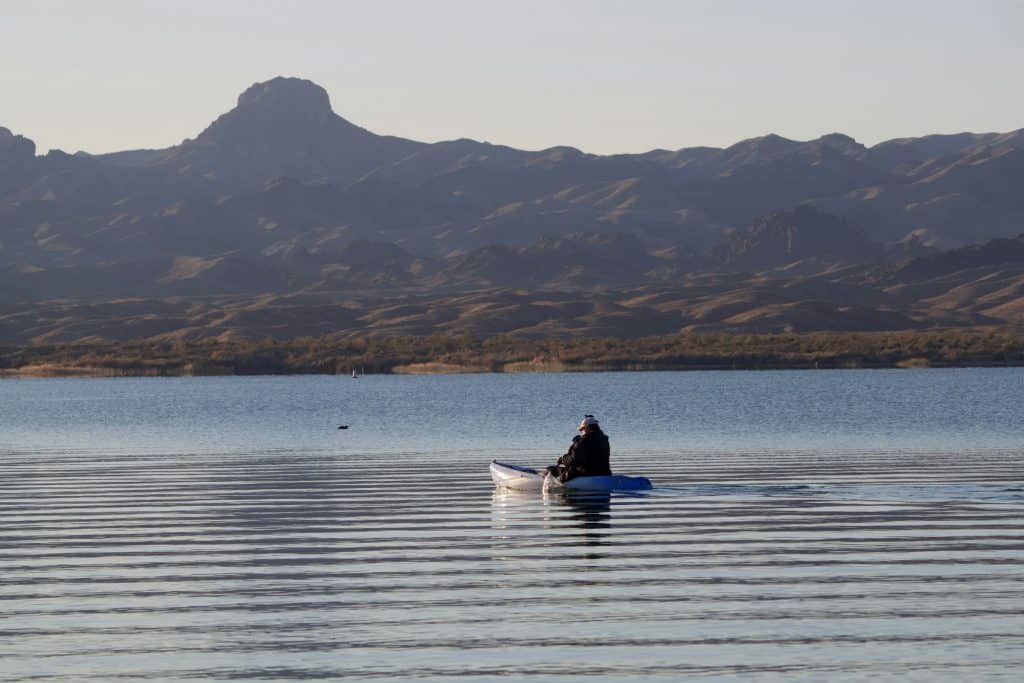
Lake Havasu is a wide reservoir with a mix of open basin, coves, marinas, rocky points, and river-like upper reaches. The Topock Gorge area gives kayak anglers a more scenic canyon-style experience with current seams, backwaters, and protected pockets. This is one of the best all-around places to start if you want a mix of bass, stripers, and classic desert river scenery.
If your main goal is Havasu kayak striped bass fishing, pay close attention to bait movement around points, coves, channel edges, marinas, and low-light feeding windows.
Why it’s good:
- Strong populations of stripers, largemouth bass, smallmouth bass, catfish, panfish, and carp.
- A mix of rocky points, flooded structure, coves, channel edges, and backwater areas.
- The upper river and Topock area give kayaks access to water that feels more remote than the busy main lake.
What to target:
- Stripers around channel edges, points, bait schools, coves, and deeper water.
- Smallmouth around rock, bluffs, current edges, and canyon walls.
- Largemouth around coves, docks, backwaters, shade, and vegetation.
- Catfish in deeper holes, ledges, marinas, and low-light feeding areas.
- Carp cruising coves and flats, especially when the water is clear enough to sight-fish.
Topock Marsh access note: If you are planning a quiet backwater-style kayak trip, Havasu National Wildlife Refuge lists North Dike, Five Mile Landing, and Catfish Paradise as canoe and kayak launch areas. These are good options for marsh fishing, birdy water, and a slower-paced day, but they do not provide direct kayak access to the Colorado River main channel. Check the Havasu National Wildlife Refuge kayak launch rules before you go, especially around seasonal closures and access restrictions.
Parker Strip
The Parker Strip is the river reach between Parker Dam and Headgate Rock Dam. It is narrower than Lake Havasu and often easier to read because the structure is concentrated along docks, riprap, rock ledges, current breaks, and shoreline cover. For kayak fishing, it can be productive, but you need to respect current, boat traffic, and limited safe places to pull off in some areas.
Parker Strip kayak fishing is usually best when you keep the trip short, fish early, and focus on docks, riprap, current breaks, shaded banks, and slower inside edges instead of fighting the main flow all day.
Why it’s good:
- Concentrated bass water with docks, riprap, ledges, shade lines, and current seams.
- Good mix of largemouth bass, smallmouth bass, catfish, carp, panfish, and occasional striper opportunities.
- Several campground, resort, and day-use access points can work well for short kayak trips.
What to target:
- Smallmouth along rocky shorelines, current seams, and eddies.
- Largemouth around docks, backwaters, vegetation, and shaded banks.
- Catfish in deeper slots, bends, and marina edges, especially at night.
- Stripers where deeper water, marinas, current, or baitfish come together.
Yuma & Lower River Backwaters
Near Yuma, the Colorado River spreads into a network of channels, marshes, lakes, and backwaters, including areas around Martinez Lake, Mittry Lake, Imperial, and Laguna. This is a strong option for kayak anglers because you can often find protected water away from the main current and recreational boat traffic.
Why it’s good:
- Extensive kayak-friendly sloughs, lagoons, canals, and backwater pockets.
- Diverse warm-water fish community with largemouth bass, smallmouth bass, stripers, catfish, panfish, carp, and tilapia.
- Plenty of sheltered water to fish when the main river is running hard or the wind picks up.
What to target:
- Bass around inlets, cattails, weed edges, shade, and backwater structure.
- Catfish in deeper pockets, old channels, and around submerged cover.
- Carp cruising flats, coves, and weed lines.
- Stripers near current-fed channels and connection points to the main river.
Best Colorado River Sections for Newer Kayak Anglers
If you are newer to kayak fishing the Colorado River, start with protected water instead of the strongest current you can find.
- Best easy pace: Topock Marsh and protected backwaters.
- Best mix of fishing and scenery: Lake Havasu coves, points, and protected shoreline areas.
- Best striped bass potential: Lake Havasu and current-influenced areas near bait movement.
- Best caution area: Parker Strip and other current-heavy sections where dam releases, boat wakes, and return paddles matter more.
The safest first trip is usually short, early, close to the launch, and planned around a protected shoreline or backwater where you are not forced to fight current at the end of the day.
Launch Points
Launch options change over time, but the basic categories stay the same. Before any trip, confirm current access rules, parking, fees, hours, and water conditions. On a river system like the Colorado, the best launch is not always the closest one. The best launch is the one that lets you fish productive water and get back safely.
Bullhead / Laughlin
- City parks and day-use areas: Multiple riverside parks in Bullhead City and Laughlin offer access for kayaks, although exact rules and launch conditions may vary.
- Davis Camp Park: A useful access point for anglers planning to fish below Davis Dam. For some trips, it may make sense to launch upstream and float or fish down to a planned take-out instead of fighting current all day.
Lake Havasu
- Lake Havasu State Park and Cattail Cove: Developed access with ramps, parking, day-use areas, and good starting points for fishing coves, open-lake structure, and nearby shoreline cover.
- Topock and Havasu National Wildlife Refuge area: Good access to scenic river water, backwaters, and protected pockets, but always check refuge rules, closed areas, wake restrictions, and launch-specific limitations before fishing.
Parker Strip
- Riverside campgrounds and resorts: Many private campgrounds and resorts along the Strip have beaches, ramps, or kayak-friendly access points. Expect day-use fees or guest-only rules in some places.
- Public day-use sites: Scattered public access points can work well for shorter kayak trips. Check current maps and local rules before assuming a site is open for launching.
Yuma / Lower River
- Martinez Lake and Mittry Lake access: Marinas, resorts, and designated launches give kayak anglers access to backwaters, coves, and sloughs.
- Imperial and Laguna areas: Limited but useful access may exist near dam access roads, canals, and backwater edges. Double-check where launching is permitted and where navigation is restricted.
Wherever you launch, confirm parking rules, identify your take-out options, and know how far you are from shade, drinking water, and your vehicle. In desert heat, a launch that looks easy on a map can feel much farther away after several hours of paddling.
Seasonal Patterns on the Colorado River
The Lower Colorado can fish well year-round, but the best approach changes with water temperature, weather, fishing pressure, boat traffic, and dam releases. Spring and fall are usually the most comfortable windows for kayak anglers, but summer and winter can still produce if you adjust your timing and expectations.
Winter: December Through February
- Water: Coldest overall conditions, with some tailwater sections staying cold below dams.
- Stripers: Often relate to deeper channels, marinas, drop-offs, and current-influenced water.
- Smallmouth: Can still be caught, but they often hold deeper on rocks, ledges, and slower current breaks.
- Catfish: Still possible in deeper holes, especially during stable weather.
Kayak strategy: Pick calm days with light wind, fish slower, and focus on deeper structure, marina edges, rock transitions, and protected areas. Winter can be peaceful, but cold water and wind still deserve respect.
Spring: March Through May
- Warming water: Bass, stripers, carp, and catfish become more active.
- Smallmouth and largemouth: Move shallower around rock, coves, backwaters, and spawning areas.
- Stripers: Chase bait along points, channel edges, current seams, and coves.
- Carp: Begin cruising flats, making them good sight-fishing targets.
Kayak strategy: Spring is one of the best seasons to fish the Colorado River from a kayak. Start with rocky banks, coves, shallow flats, current edges, and protected backwaters. Keep a mix of finesse baits and moving baits ready.
Summer: June Through August
- Heat: Desert temperatures can become dangerous quickly, especially on exposed water.
- Bass: Often feed best early and late, then tuck into shade, vegetation, deeper water, or current breaks.
- Stripers: Key on moving water and bait. Low-light and night fishing can be productive.
- Catfish and carp: Remain strong targets, especially at night or in lower light.
Kayak strategy: Plan dawn, dusk, or short evening sessions. Avoid long midday trips unless you are fully prepared for extreme heat. Carry more water than you think you need, wear sun protection, and build shade or quick exit points into your route.
Fall: September Through November
- Cooling water: Fish often feed more aggressively as temperatures become more comfortable.
- Smallmouth and largemouth: Good reaction-bait bite around rock, points, docks, and backwater edges.
- Stripers: May school around bait and push forage into coves, points, and current seams.
- Catfish and carp: Remain reliable, especially during stable weather stretches.
Kayak strategy: Fall is another excellent all-species window. Cover water with swimbaits, crankbaits, jerkbaits, and spinnerbaits, then slow down with finesse plastics or bait rigs when you find fish.
Species Overview
Striped Bass
- Where: Deeper channels, dam tailwaters, points dropping into current, marinas, and bait-rich coves.
- Behavior: Schooling predators that relate to current, bait schools, light changes, and structure transitions.
- Kayak edge: A kayak lets you quietly position near eddies, seams, marinas, and bait-holding pockets without making as much noise as a larger boat.
Smallmouth Bass
- Where: Rocks, ledges, canyon walls, gravel points, riprap, and current breaks.
- Behavior: Hard-fighting river bass that love clean rock, current, and baitfish or crawfish presentations.
- Season: Strong from spring through fall, with slower but still possible fishing during stable winter conditions.
Largemouth Bass
- Where: Backwaters, docks, cattails, weed edges, shaded banks, coves, and slower shoreline pockets.
- Behavior: More likely than smallmouth to use vegetation, shade, and slower water.
- Kayak edge: Kayaks shine in shallow backwaters and tight cover where larger boats may not be able to move quietly.
Catfish
- Where: Deep holes, outside bends, undercut banks, marina edges, soft-bottom pockets, and structure.
- Behavior: Often most active at night, during low light, or around current that brings food past holding areas.
- Kayak angle: Slow-drifting or anchoring near holes can be effective, but anchoring in current requires caution and a quick-release setup.
Carp
- Where: Flats, coves, backwaters, weedy shorelines, and quiet pockets throughout the lower river and lakes.
- Behavior: Often seen cruising or tailing in shallow water. They are underrated sport fish on light tackle or fly gear.
- Kayak edge: You can quietly paddle or drift into shallow water and present baits ahead of feeding fish.
Colorado River Fishing Tips That Matter Most
The biggest mistake anglers make on the Colorado River is treating every stretch the same. The river changes quickly from cold tailwater to reservoir, from fast current to quiet backwater, and from rocky canyon walls to shallow vegetation. Instead of fishing randomly, break the water into small targets and match your setup to the section you are fishing.
Fish Current Breaks, Not Just the Main Channel
In moving sections, the best fish are often not sitting in the hardest current. Look for seams, eddies, bridge shade, riprap corners, marina openings, rock points, and slow water behind structure. From a kayak, you can quietly hold along the edge and make repeated casts without blowing through the spot.
Use Smaller Lures in Clear Water
The Lower Colorado can be very clear, especially around Havasu, Topock, and tailwater stretches. If fish are following but not eating, downsize your swimbaits, jigs, grubs, jerkbaits, or finesse plastics. Natural shad, craw, green pumpkin, smoke, and baitfish colors are good starting points.
Start Early and Watch the Wind
Morning is usually the safest and most comfortable window for kayak fishing. Afternoon wind, recreational boat traffic, and desert heat can make a short paddle feel much longer. If you are fishing a one-way drift or a section with current, know your take-out before you launch.
Check Dam Releases Before You Launch
One of the biggest differences between kayak fishing the Colorado River and fishing a small lake is that river conditions can change because of dam operations. Before launching near Davis Dam, Parker Dam, Headgate Rock Dam, or any moving-water section below a dam, check the Lower Colorado River Operations Schedule.
Do not treat the schedule like a guarantee. Use it as one planning tool, then make the final call at the ramp. If the current looks stronger than expected, the wind is building, or your return paddle would be upstream, choose a shorter route, fish protected water, or move to a backwater or lake-style section instead.
Be especially careful with anchors in moving water. A small kayak can get sideways fast if the anchor point is wrong or the current loads the rope. If you plan to hold position in wind, current, or near structure, read my guide to the best kayak anchors for lakes, rivers, and inshore fishing before rigging your setup.
Recommended Lures and Techniques
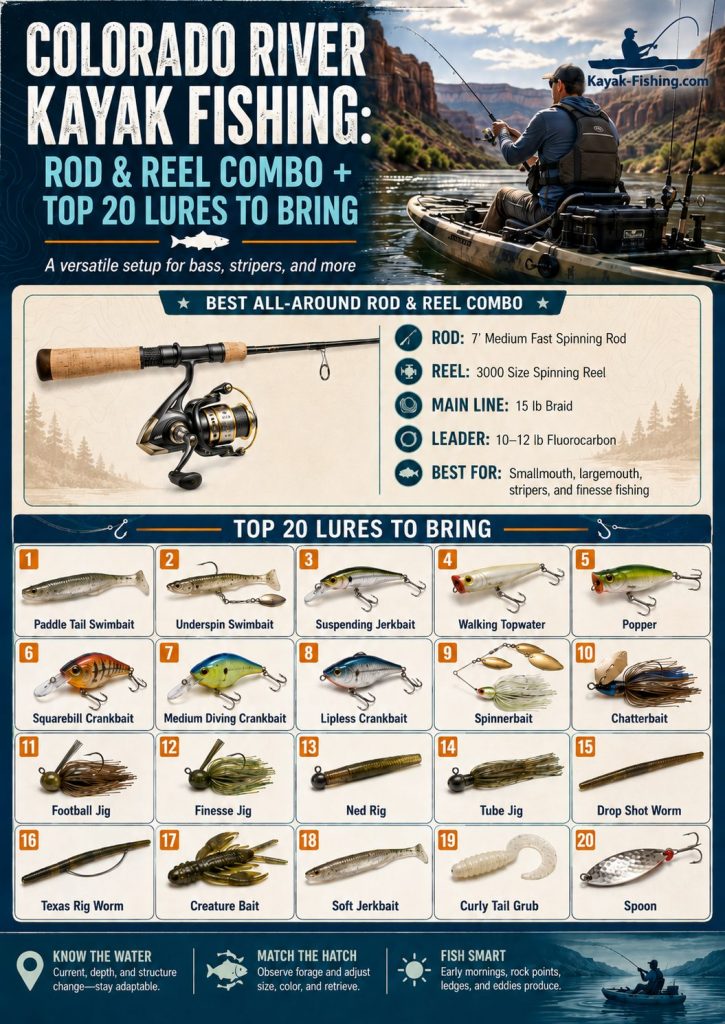
Best Baits and Lures for Colorado River Fishing
| Target Species | Best Starting Lures/Baits | Where to Fish Them |
|---|---|---|
| Striped Bass | Paddle-tail swimbaits, jerkbaits, topwater walking baits, spoons, cut bait | Current seams, marinas, deeper channels, bait schools, points, and dam-influenced water |
| Smallmouth Bass | Ned rigs, tubes, grubs, small crankbaits, drop shots, finesse swimbaits | Rock banks, ledges, riprap, gravel points, current breaks, and canyon walls |
| Largemouth Bass | Texas-rigged worms, jigs, spinnerbaits, chatterbaits, frogs, soft jerkbaits | Backwaters, docks, cattails, shaded banks, vegetation, and slower coves |
| Catfish | Cut bait, nightcrawlers, prepared bait, live bait where legal | Deep holes, outside bends, marina edges, soft-bottom pockets, and night spots |
| Carp | Corn, dough bait, bread, small flies, light spinning presentations | Shallow flats, backwaters, weed edges, coves, and quiet shoreline pockets |
Striped Bass Setup
Gear: A medium or medium-heavy spinning or baitcasting rod with 20–30 lb braid and a 12–20 lb fluorocarbon leader is a good starting point.
Lures: Paddle-tail swimbaits, jerkbaits, crankbaits, spoons, and topwater walking baits are all useful. In deeper or faster water, increase jighead weight so your lure stays in the strike zone.
Technique: Drift with the current along channel edges while fan-casting swimbaits. Around seams, position slightly upstream and cast across the transition so your lure swings through the feeding lane.
Smallmouth Bass Setup
Gear: A medium spinning rod with 10–20 lb braid and an 8–12 lb fluorocarbon leader is a versatile setup for most smallmouth situations.
Lures: Tubes, Ned rigs, small swimbaits, finesse worms, grubs, drop shots, jerkbaits, and small crankbaits all have a place on the river.
Technique: Work parallel to rocky banks, cast slightly upstream when there is current, and let your bait move naturally along rocks, ledges, seams, and eddies.
Largemouth Bass Setup
Gear: A medium or medium-heavy rod with braid or fluorocarbon works well, depending on vegetation, cover, and water clarity.
Lures: Texas-rigged worms, jigs, spinnerbaits, chatterbaits, soft jerkbaits, frogs, and shallow crankbaits are good choices around backwaters, docks, and vegetation.
Technique: Focus on shade, cover, current-fed backwaters, cattail edges, docks, and isolated pieces of structure. A kayak lets you fish these tight areas quietly and thoroughly.
Catfish Setup
Gear: Use a medium-heavy to heavy rod with 30–50 lb braid and a 20–40 lb leader if you are targeting larger catfish around structure or current.
Rigs: Sliding sinker rigs, Carolina-style bait rigs, and three-way rigs are all useful depending on current speed and bottom conditions.
Baits: Cut bait, nightcrawlers, shrimp, prepared bait, and live bait where legal can all produce. Always check bait rules for the exact state and water you are fishing.
Technique: Fish deeper holes, outside bends, marina edges, and soft-bottom pockets. At night, target shallow feeding routes near deeper holding water.
Carp Setup
Gear: A medium-light to medium spinning rod with 10–15 lb line is enough for most carp fishing. Fly tackle can also be excellent when sight-fishing clear flats.
Baits: Dough bait, canned corn, bread, small nymphs, and carp flies are good starting options.
Technique: Paddle quietly, spot fish before they see you, and present your bait ahead of their path. Avoid dropping baits directly on top of fish in clear, shallow water.
Kayak Safety on the Colorado River
The Lower Colorado is manageable in a kayak if you respect three main factors: current and dam releases, desert heat, and regulations. A short trip can turn into a difficult paddle if flows increase, afternoon wind picks up, or you underestimate the heat.
Current & Dam Releases
Tailwater sections below Davis Dam and Parker Dam can experience meaningful flow changes through the day. Water can rise, current can strengthen, and eddies or shoreline conditions can change after you launch. Check the Lower Colorado River Operations Schedule before launching near dam-influenced water, then make your final decision based on what you see at the ramp.
- Check river conditions and dam release information before launching.
- Assume conditions can still change once you are on the water.
- Avoid anchoring in strong current unless you have a proper quick-release setup.
- When possible, start upstream and fish down to a planned take-out instead of fighting upstream current at the end of the trip.
Dams, Diversions & Restricted Areas
- Never approach dam intakes, spillways, restricted buoy lines, or diversion structures.
- Be careful around canals, irrigation structures, and side channels near the lower river.
- Obey posted signs, buoys, no-wake zones, closed areas, and refuge-specific restrictions.
Treat every dam and diversion as a no-go zone unless you are clearly outside the marked restricted area and conditions are safe.
Desert Heat & Sun Exposure
The Lower Colorado corridor can become extremely hot. On a kayak, you are exposed to direct sun, reflected glare, and limited shade. Heat management is not just a comfort issue. It is a safety issue.
- Fish early morning, evening, or short low-light windows during hot months.
- Wear sun-protective clothing, a hat, sunglasses, and sunscreen.
- Carry more water than you think you need.
- Plan shade stops, short routes, and easy exits.
- Turn around early if wind, current, or heat starts building.
If you feel dizzy, confused, weak, chilled despite the heat, or develop a pounding headache, get off the water, cool down, and rehydrate. Do not try to “push through” heat stress on the river.
Regulations, Licenses, and Refuge Rules
The Lower Colorado River crosses or borders Arizona, California, Nevada, tribal lands, federal refuge areas, and local jurisdictions. That means license requirements, possession limits, access rules, and boating restrictions can vary by section. Before fishing, check the latest information from Arizona Game & Fish, California Department of Fish and Wildlife, and Nevada Department of Wildlife for the exact water you plan to fish.
If you are fishing around Havasu National Wildlife Refuge, Topock Marsh, Topock Gorge, or nearby backwaters, pay close attention to posted signs, buoys, no-wake areas, access restrictions, and refuge-specific rules. Some areas are excellent for kayaks, but they are also managed for wildlife and may have special boating or access limitations.
Carry your license with you, not just in your vehicle, and know which side of the river or which managed area you are fishing.
Plan your Colorado River kayak fishing setup:
FAQs: Colorado River Fishing and Kayak Fishing
Where is the best fishing on the Colorado River?
For kayak anglers, some of the best Lower Colorado River fishing areas are Lake Havasu, Topock Gorge, the Parker Strip, Bullhead/Laughlin below Davis Dam, and the Yuma-area backwaters. Lake Havasu and Topock are good for bass, stripers, and scenery. The Parker Strip is good for docks, riprap, current breaks, and shoreline structure. Yuma-area backwaters are better when you want protected water with bass, catfish, carp, and panfish.
What fish can you catch in the Colorado River?
The Lower Colorado River has striped bass, largemouth bass, smallmouth bass, catfish, carp, panfish, tilapia in some areas, and stocked trout in certain cooler-water sections. The exact mix depends on where you fish. Tailwater sections, reservoirs, rocky river stretches, and backwaters all fish differently.
What is the best time to fish the Colorado River?
Spring and fall are usually the most comfortable seasons for kayak fishing the Lower Colorado River. Summer can still fish well, especially early, late, or at night, but heat and boat traffic become major planning factors. Winter can produce fish too, but you may need to slow down and focus on deeper structure, tailwater sections, marinas, and stable weather windows.
What lures work best on the Colorado River?
Good starting lures include paddle-tail swimbaits, underspins, jerkbaits, crankbaits, topwater baits, Ned rigs, tubes, jigs, drop shots, and soft plastics. For stripers, focus on baitfish profiles. For smallmouth, fish rock and current with crawfish or baitfish presentations. For largemouth, target backwaters, docks, vegetation, and shade with worms, jigs, spinnerbaits, chatterbaits, and soft plastics.
Can you kayak fish the Colorado River?
Yes, but choose your section carefully. Protected backwaters, coves, marinas, and slower shoreline edges are usually better for beginners than fast tailwater runs or busy main channels. Always wear a PFD, check weather and flows, plan your launch and take-out, and avoid anchoring in strong current unless you have a proper quick-release setup.
Is the Colorado River safe for beginner kayak anglers?
It can be safe in the right areas and conditions. Beginners should start with calmer reservoirs, coves, marinas, and backwaters rather than fast tailwater runs or narrow current-heavy sections. Keep trips short, stay close to your launch, avoid peak current and heavy boat traffic, and turn around early if wind, heat, or current starts building.
Do I need multiple fishing licenses for the Colorado River?
Possibly. The Lower Colorado River borders or crosses Arizona, California, Nevada, tribal lands, federal refuge areas, and local jurisdictions. Some boundary-water rules or reciprocal agreements may apply, but they can vary by section. Check the current regulations for the exact stretch you plan to fish before launching.
Do I need to check dam releases before kayak fishing the Colorado River?
Yes. Dam releases can affect current, water level, shoreline conditions, and how difficult it is to paddle back to your launch. This matters most near Davis Dam, Parker Dam, Headgate Rock Dam, and other moving-water sections. Check the Lower Colorado River operations schedule before launching, then stay conservative if the water looks faster than expected.
What is the biggest mistake anglers make on the Colorado River?
The biggest mistake is underestimating current, wind, heat, and distance. It is easy to paddle downstream comfortably, then struggle to get back when current, afternoon wind, boat wakes, and desert heat build. Plan conservative routes, fish early when possible, carry extra water, and always leave yourself an easy exit.
Final Thoughts
The Lower Colorado River is one of the most versatile kayak fisheries in the Southwest. Tailwater runs near Bullhead, reservoir structure around Havasu, canyon current near Topock and Parker, and sprawling backwaters near Yuma all fish differently, but they share the same basic lesson: pick the right section for the conditions and fish it with a plan.
For most kayak anglers, the Colorado River rewards patience more than distance. You do not need to cover miles of water to have a good trip. Pick one manageable section, launch early, watch the wind and current, and spend more time fishing good edges, points, shade lines, backwater mouths, and current seams instead of fighting the river all day.
If you break the river into zones, launch from protected access points, plan around current and heat, and carry a simple tackle box built around swimbaits, finesse rigs, bait rigs, and a few confidence lures, you can fish the Colorado River much more effectively from a kayak.
For more kayak fishing preparation, read our guides on what to wear kayak fishing, kayak fishing in wind, anchoring in current, and beginner kayak fishing setup before planning a longer river trip.