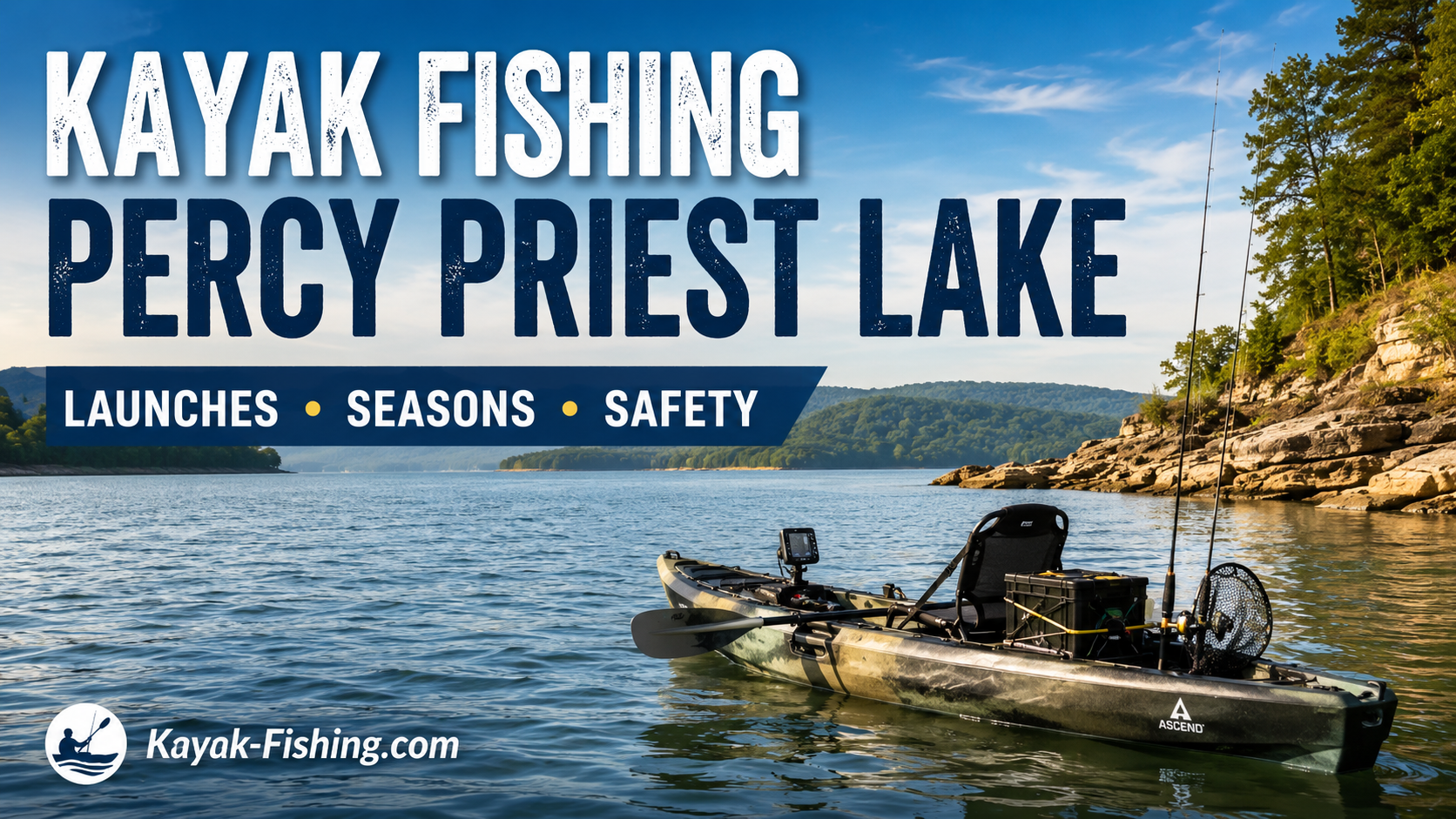
Kayak Fishing Percy Priest Lake: Launches, Seasons & Safety
Kayak fishing Percy Priest Lake works best when the trip is planned around the reservoir section, launch access, wind, boat traffic, and the species you want to target. J. Percy Priest is a large 14,200-acre reservoir near Nashville, and a productive bass or crappie pattern does not automatically make every part of the lake a good kayak destination on every day.
The practical approach is to choose one manageable section of the reservoir, keep crossings short, and build the fishing plan around nearby structure rather than trying to cover miles of open water. Upper riverine access can suit spring white and yellow bass; mid-lake embayments can provide bass and crappie options; and the lower lake holds strong summer hybrid opportunities but often requires more open-water exposure.
This guide uses current information from the Tennessee Wildlife Resources Agency (TWRA), U.S. Army Corps of Engineers (USACE), Tennessee State Parks, and Kayak-Fishing.com analysis to help you choose a launch area, match seasonal patterns, and decide when conditions make Percy Priest a poor choice for a kayak trip.
Quick Answer: Is Percy Priest Good for Kayak Fishing?
Yes, but the reservoir should be treated as a collection of smaller fishing zones rather than one body of water to cross and explore in a single trip. TWRA lists strong opportunities for largemouth bass, crappie, hybrid striped bass, white bass, yellow bass, and channel catfish, with different sections of the reservoir becoming more useful at different times of year.
- Best fit for many kayak trips: protected embayments, creek arms, upper river access, and shoreline-oriented bass or crappie patterns.
- More demanding: lower-lake offshore hybrid fishing, long crossings, and routes exposed to sustained wind or heavy recreational traffic.
- Simple planning rule: choose the launch after checking wind and conditions, then fish nearby structure instead of forcing a preplanned crossing.
Before launching, verify current weather, lake level, access status, and Tennessee fishing and boating rules.
Table of Contents
Understanding Percy Priest from a Kayak
J. Percy Priest Lake stretches roughly 42 miles and covers 14,200 surface acres at summer pool. TWRA describes the downstream portion as predominantly Davidson County and the upstream portion as Rutherford County. That scale matters because kayak conditions and fishing patterns can be very different from one end of the reservoir to the other.
For trip planning, it is useful to think in three broad zones.
Lower Lake: Bigger Water and Offshore Opportunities
The lower reservoir includes the dam-side portion of the lake and the water downstream of Hobson Pike Bridge. TWRA specifically identifies this lower section as the key summer zone for hybrid striped bass, which concentrate around submerged humps, points, and ledges near the main river channel.
That fishing opportunity comes with a kayak tradeoff: productive hybrid water can be deeper and farther from protected shoreline than a typical bass or crappie route. The lower lake is therefore better treated as a conditions-dependent option rather than the default place for a first Percy Priest kayak trip.
Mid-Lake: Embayments, Parks, and Mixed Structure
The middle portion provides access to embayments, points, rock, shoreline cover, and public recreation areas. TWRA identifies Stewart Creek as a productive bass and crappie embayment, while Long Hunter State Park and Bryant Grove are listed as useful access areas for late-spring channel catfish around large rock habitat.
For kayak anglers, the appeal is the ability to build a trip around an embayment or shoreline instead of automatically committing to the main reservoir. That does not make every mid-lake route protected, but it gives you more options to design a shorter trip around nearby structure.
Upper Reservoir and Riverine Headwaters
The upper reservoir transitions toward the East and West Forks of the Stones River and other tributary water. TWRA specifically recommends the riverine headwaters for white and yellow bass during their March and April spawning runs.
This section can be especially relevant to kayaks because TWRA identifies the Mona Boat Access site as a place to launch and motor or paddle upstream toward riffles, current, and eddies. The agency also identifies West Fork Boat Access and the Stewart Creek access site as spring white- and yellow-bass access points.
Riverine water introduces its own hazards, including current, changing water levels, debris after rainfall, and narrower channels. A smaller-looking section of water is not automatically an easier paddle.
Launch Areas Worth Researching
TWRA currently reports 15 public boat access sites on J. Percy Priest Reservoir that are available without access fees, in addition to marina access. Rather than choosing a ramp because it is famous or closest to Nashville, choose one that puts the day’s target water within a reasonable route for your kayak.
| Access Area | Why It May Fit a Kayak Trip | Fishing Connection |
|---|---|---|
| Mona Boat Access | TWRA specifically notes that anglers can paddle upstream from this East Fork Stones River access. | Spring white and yellow bass around riffles, current, and eddies. |
| West Fork Boat Access | Provides access to riverine water without starting on the widest lower-lake section. | Spring white and yellow bass in the West Fork Stones River. |
| Stewart Creek Access | Access to an embayment with several documented seasonal fisheries. | Bass, crappie, spring white/yellow bass, and summertime catfish. |
| Long Hunter / Bryant Grove area | Provides access to Percy Priest shoreline in the state-park area; trip length can be built around nearby structure. | TWRA identifies these accesses for late-spring channel catfish around rock habitat. |
| Seven Points | Established Corps access on the lower/mid portion of the reservoir. | TWRA lists Seven Points as a strategic summer access for hybrid striped bass. |
| Cook Recreation Area | Established Corps recreation and boat-launch area. | TWRA lists Cook as a summer hybrid access area; USACE also maintains enhanced bank fishing there. |
This table is not a ranking of the “best” kayak launches. Conditions can turn a normally useful access point into a poor choice. Use the access area to reduce unnecessary travel, then verify the route against the current wind forecast, lake level, and expected boat traffic.
Long Hunter State Park also provides access to Couchville Lake, a much smaller body of water where gas motors and personal watercraft are not permitted. That can make Couchville worth researching when the main reservoir is not appealing, but check the park’s current alerts and facility status before relying on it as a backup.
Seasonal Fishing Patterns
Seasonal planning is more useful than carrying a long list of generic lure recommendations. TWRA publishes species-specific patterns for Percy Priest that provide a defensible starting point for deciding where a kayak trip should focus.
Spring: Shallow Bass, Crappie, and Headwater Runs
TWRA identifies early spring—particularly April—as a strong period for both black bass and crappie.
- Black bass: Largemouth move shallow to spawn. TWRA specifically mentions gently sloping banks with lipless and square-billed crankbaits.
- Crappie: Crappie also move shallow in early April and can be caught around submerged stumps, treetops, rocks, and other structure with jigs, soft plastics, or minnows.
- White and yellow bass: March and April bring fish into the East and West Forks of the Stones River and Stewart Creek for spawning runs.
For a kayak, spring gives you several shoreline- and river-oriented options that do not require spending the day chasing offshore structure. The tradeoff is that spring weather and water temperature can change quickly, so clothing and route length deserve as much attention as lure selection.
Summer: Bluff Bass, Deeper Crappie, and Lower-Lake Hybrids
TWRA describes three different summer opportunities that have very different implications for a kayak:
- Bass: Ned rigs, shaky heads, and wacky-rigged stickbaits can be productive along steep bluff walls.
- Crappie: Summer crappie may school over flats with submerged structure, with trolling in roughly 10 to 15 feet listed as a productive approach.
- Hybrid striped bass: Hybrids concentrate in the lower reservoir, often around humps, points, and ledges near the river channel at deeper summer depths.
The bass and crappie patterns can often be adapted to compact shoreline or structure-focused routes. The offshore hybrid pattern may require more exposure to open water and moving boat traffic, so it is not automatically the best summer target for a kayak even when the fishing itself is strong.
Fall: Structure, Bait, and Fish Attractors
TWRA’s Percy Priest guidance emphasizes structure throughout the year. Crappie use underwater structure in every seasonal period, and TWRA fish attractors become especially relevant from fall through spring. Bass also use fish attractors year-round, with TWRA noting particularly strong use from late November through April.
For kayak trip planning, this makes fall a good time to use GPS-marked attractor data and nearby shoreline structure to build a compact route instead of wandering across large areas looking for fish.
Winter: Good Structure, Higher Consequences
Fish attractors, bluff structure, and deeper presentations can still produce in cold weather, but winter changes the risk calculation. A short capsize or delayed re-entry is more consequential when the water is cold.
If you fish Percy Priest during cold-water periods, prioritize a short protected route, appropriate immersion clothing, a practiced re-entry plan, and conservative weather limits. Our what to wear kayak fishing guide covers clothing systems for cold water and changing conditions.
Best Species to Target from a Kayak
Black Bass
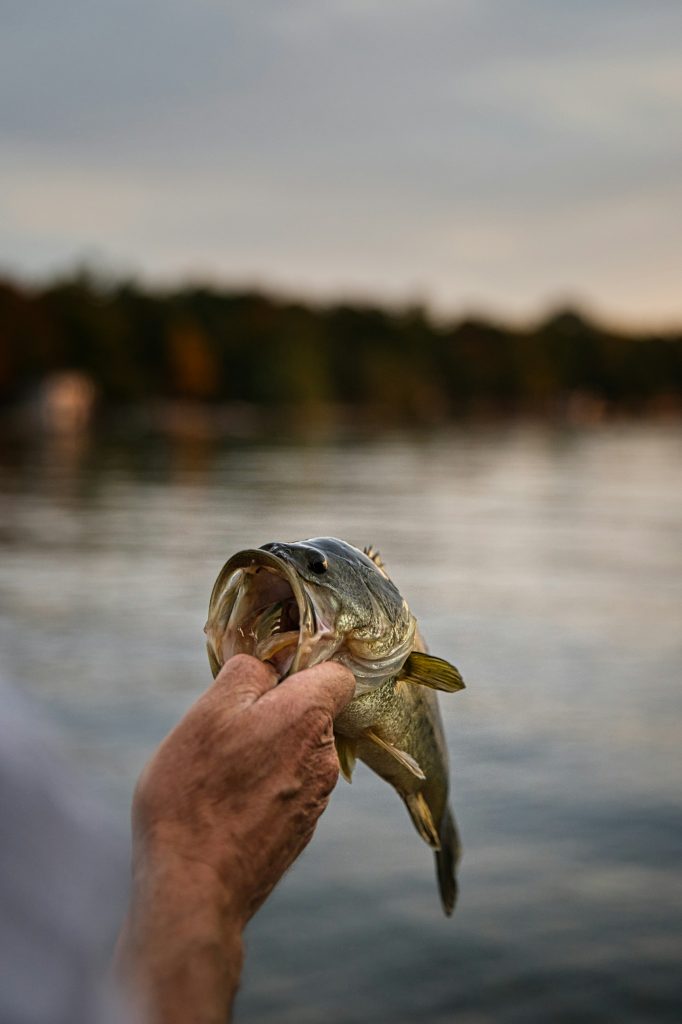
Percy Priest supports largemouth, spotted, and smallmouth bass, with largemouth the most abundant of the three according to TWRA. Bass are a natural kayak target because many productive patterns involve banks, bluffs, embayments, rock, and fish attractors rather than requiring a long open-water troll.
Crappie
White and black crappie are both present, and TWRA maintains numerous fish-attractor sites around the reservoir. Crappie can be especially attractive to kayak anglers who prefer to spend more time working specific structure and less time covering long stretches of shoreline.
White and Yellow Bass
The spring spawning runs in the East and West Forks and Stewart Creek create one of the clearest kayak-specific opportunities in TWRA’s guidance. Mona Boat Access is explicitly described by TWRA as a place where anglers can paddle upstream toward current, eddies, and riffle areas.
Hybrid Striped Bass
Hybrid striped bass are a major Percy Priest fishery, especially in the lower reservoir during summer. They are also the species where fishing opportunity and kayak practicality can diverge most sharply. Deep schools near the main river channel can put you farther from shore in water shared with larger powered boats.
Only pursue that pattern when your kayak, skills, weather window, visibility, and route make the open-water exposure reasonable. Strong fishing is not a reason to override an unsafe route.
Channel Catfish
TWRA highlights mid-May through mid-June for channel catfish on large rock banks in the middle and lower reservoir, with Long Hunter State Park, Bryant Grove, and Pooles Knob identified as useful access areas. This can create a more shoreline-oriented alternative to chasing deep summer hybrids.
Wind, Wakes, and Boat Traffic
USACE describes Percy Priest as a major recreation reservoir and notes that the number of boaters has increased over time. For kayak anglers, wind and powered-boat traffic should be treated as route-selection factors, not inconveniences to ignore after launching.
Plan the Route Around Wind Direction
A forecast wind speed does not tell the whole story. The direction of the wind relative to the shoreline, length of open-water fetch, and the route back to the launch all affect how difficult the trip can become.
- Prefer routes with nearby shorelines, coves, points, or islands that give you options if conditions worsen.
- Avoid building the trip around a long open crossing that becomes unavoidable on the return.
- Consider how the wind will affect kayak drift while you are fishing, not only while traveling.
For a deeper breakdown of boat control and route decisions, see our kayak fishing in the wind guide.
Treat Wakes as Part of the Traffic Environment
Stay alert around channels, marinas, and other areas where powered boats may change speed or direction. Do not assume another operator sees a low-profile kayak. Give traffic room, maintain visibility, and avoid positioning the kayak where a wake can push you into rock, docks, or other hazards.
If traffic makes the planned fishing area uncomfortable, relocate rather than trying to prove the route is manageable. Percy Priest has enough access points that changing the launch can be the better fishing decision as well as the safer one.
Percy Priest Kayak Safety
Tennessee requires boats, including canoes and kayaks, to carry an appropriately sized wearable U.S. Coast Guard-approved personal flotation device for each person aboard. A PFD that is stored behind the seat is much less useful during an unexpected capsize, so wearing it is the practical standard for kayak fishing.
If you are choosing one for a fishing kayak, see our guide to the best PFDs for kayak fishing.
Visibility and Low-Light Operation
Tennessee boating rules require appropriate lighting between sunset and sunrise and during restricted visibility. For paddle-powered vessels where the standard navigation-light configuration is not practicable, state guidance requires a white electric light or lantern to be ready and displayed in time to prevent a collision.
Bright clothing, reflective material, and a visible flag can also make a kayak easier for other boaters to notice during daylight, but they do not replace required lighting.
Cold Water Changes the Margin for Error
Cold water makes long crossings, remote routes, and marginal weather more consequential. Dress for the water temperature, keep dry layers protected, and know how you would get back into the kayak after a capsize.
Our broader kayak fishing safety guide covers cold water, boat traffic, visibility, and practical trip planning in more detail.
Be Conservative With Anchoring in Current
Anchoring can help control the kayak around coves, protected shorelines, and some fishing structure, but moving water changes the risk. Avoid anchoring where current can load the kayak broadside, where boat traffic may force a sudden move, or where the anchor could snag and prevent a quick release.
If you are comparing systems for lake and river use, see our guide to the best kayak anchors.
Keep the First Trip Small
If Percy Priest is your first large-reservoir kayak trip, do not use the lake’s size as a reason to plan a long route. Pick one embayment or river section, stay close enough to shorten the trip if conditions change, and use the outing to learn how the kayak behaves around wind and powered-boat wakes.
For setup, launch, and first-trip fundamentals, start with our kayak fishing for beginners guide.
Simple Tackle and Electronics
Percy Priest supports several species and seasonal patterns, but that does not mean a kayak needs a tournament-sized rod rack. A compact setup is easier to manage and leaves more room for safety equipment.
A Two-Rod Starting System
- Medium spinning setup: Useful for Ned rigs, shaky heads, wacky-rigged plastics, crappie jigs, small swimbaits, and other lighter presentations.
- Medium-heavy casting setup: Useful for squarebills, lipless crankbaits, spinnerbaits, jigs, Texas rigs, and other heavier bass presentations.
The exact line, hook, and lure sizes should match the cover, target species, and tackle rather than one universal Percy Priest formula.
A Small Lure Selection
- Shallow bass: squarebill or lipless crankbait, plus a soft-plastic option.
- Bluff or deeper bass: Ned rig, shaky head, finesse jig, or wacky-rigged stickbait.
- Crappie and spring white/yellow bass: small jigs, grubs, or soft-plastic minnows.
- Hybrid option: swimbait or jigging spoon if conditions and your route make the offshore pattern reasonable.
- Catfish: appropriate live or cut bait where legal and consistent with current Tennessee bait regulations.
A Fish Finder Can Add Real Value
Electronics are not required, but Percy Priest is a reservoir where GPS and sonar can solve useful problems. TWRA maintains approximately 132 fish-attractor sites and makes attractor data available for mapping and GPS use.
A basic unit can help you relocate attractors, channel edges, depth changes, and submerged structure without adding a complicated electronics system. The goal is not to turn the kayak into a bass boat; it is to make the limited water you can reasonably reach more efficient to fish.
Three Practical Trip Plans
These are planning frameworks, not promises about current access, weather, or fish location. Check conditions before using any of them.
1. Spring River Plan: White and Yellow Bass
Starting area: Research Mona Boat Access or another upper-river access identified by TWRA.
- Check recent rain, current, water level, and debris before launching.
- Use the riverine section rather than automatically paddling toward broad reservoir water.
- Look for the riffles, eddies, and current seams TWRA associates with the March-April white- and yellow-bass run.
- Keep the route conservative enough that increasing current or wind does not create a difficult return.
2. Mid-Lake Plan: Bass and Crappie
Starting area: Research access around Stewart Creek or another embayment that keeps the day’s target structure relatively close to the launch.
- In spring, start with shallow banks, points, and submerged structure for bass and crappie.
- Use TWRA fish-attractor data to add specific offshore targets without wandering across the reservoir.
- In summer, shift bass attention toward bluff structure and crappie attention toward deeper submerged structure.
- If main-lake conditions worsen, shorten the trip inside the embayment rather than forcing the original route.
3. Lower-Lake Plan: Conditions First
Starting area: Seven Points, Cook Recreation, or another lower-lake access may put you closer to summer hybrid water, but this is the plan that deserves the strictest weather and traffic filter.
- Check wind direction and expected open-water conditions before committing to an offshore target.
- Do not make a long river-channel crossing mandatory just because hybrids are showing on sonar.
- Use points, ledges, or structure that can be reached without exceeding your paddling, pedaling, visibility, or re-entry comfort level.
- If the route does not make sense, switch species or move to a more protected section of Percy Priest.
When to Skip Percy Priest
Percy Priest is not the right kayak destination every day. A backup lake or river is useful when the reservoir conditions do not match your experience or equipment.
- Sustained wind creates an exposed return: Especially when the route requires crossing open reservoir water.
- Cold water and marginal weather overlap: The consequence of a capsize is higher, so reduce exposure rather than relying on the fishing forecast.
- Boat traffic overwhelms the area you intended to fish: Changing launches is usually better than spending the trip managing wakes and visibility.
- Recent rain creates strong current or debris in the headwaters: A riverine route that looked protected on a map can become a poor kayak choice.
- The only productive pattern requires more open-water exposure than you want: Choose a different species, area, or waterbody.
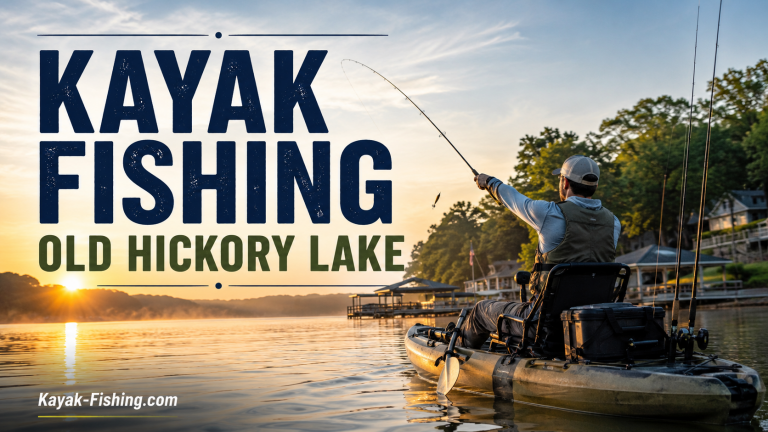
One nearby alternative is Old Hickory Lake. It is also a large reservoir, so it still requires a conditions-based plan, but having more than one Nashville-area option makes it easier to choose the water that fits the day rather than forcing Percy Priest.
Fishing Rules and Access Checks
Fishing regulations, access conditions, facility closures, lake levels, and boating requirements can change. Verify them before every trip rather than relying on a destination guide indefinitely.
- Fishing license and species rules: Check the current TWRA Percy Priest reservoir page and Tennessee fishing regulations.
- Lake level: TWRA and USACE direct anglers to current lake-level information rather than assuming normal pool.
- Public access: Confirm the specific ramp or recreation area is open before driving there.
- PFD and lighting requirements: Review current Tennessee boating rules, particularly if you will launch before sunrise or return after sunset.
- Long Hunter and Couchville: Check current Tennessee State Parks alerts and facility status before relying on these areas.
A destination guide should help you plan the trip, but official agencies remain the source of truth for current regulations, closures, water information, and safety requirements.
Sources and Method
This guide does not claim firsthand fishing, launch, or boating experience on J. Percy Priest Reservoir. Fishing patterns and access references were checked against official agency information, with Kayak-Fishing.com analysis used to explain how reservoir size, open-water exposure, current, structure, and boat traffic affect kayak trip planning.
- Tennessee Wildlife Resources Agency — J. Percy Priest Reservoir
- U.S. Army Corps of Engineers — J. Percy Priest Lake
- Tennessee Wildlife Resources Agency — Boating Regulations and Safety
- Tennessee State Parks — Long Hunter State Park
Final Thoughts
The most useful way to approach kayak fishing Percy Priest Lake is to make the reservoir smaller. Choose one section, one nearby seasonal pattern, and a route that still works if wind or traffic increases.
Spring offers strong shallow-water and headwater options. Bass and crappie provide structure-oriented fishing across much of the reservoir. Summer hybrids can be excellent but often demand a more conservative open-water decision from a kayak. Throughout the year, TWRA fish-attractor data can help reduce wasted travel and focus the trip on reachable structure.
Percy Priest does not need to be crossed or “covered” to be worth fishing. A short route built around the right launch, current conditions, and a documented seasonal pattern is usually the better kayak plan.