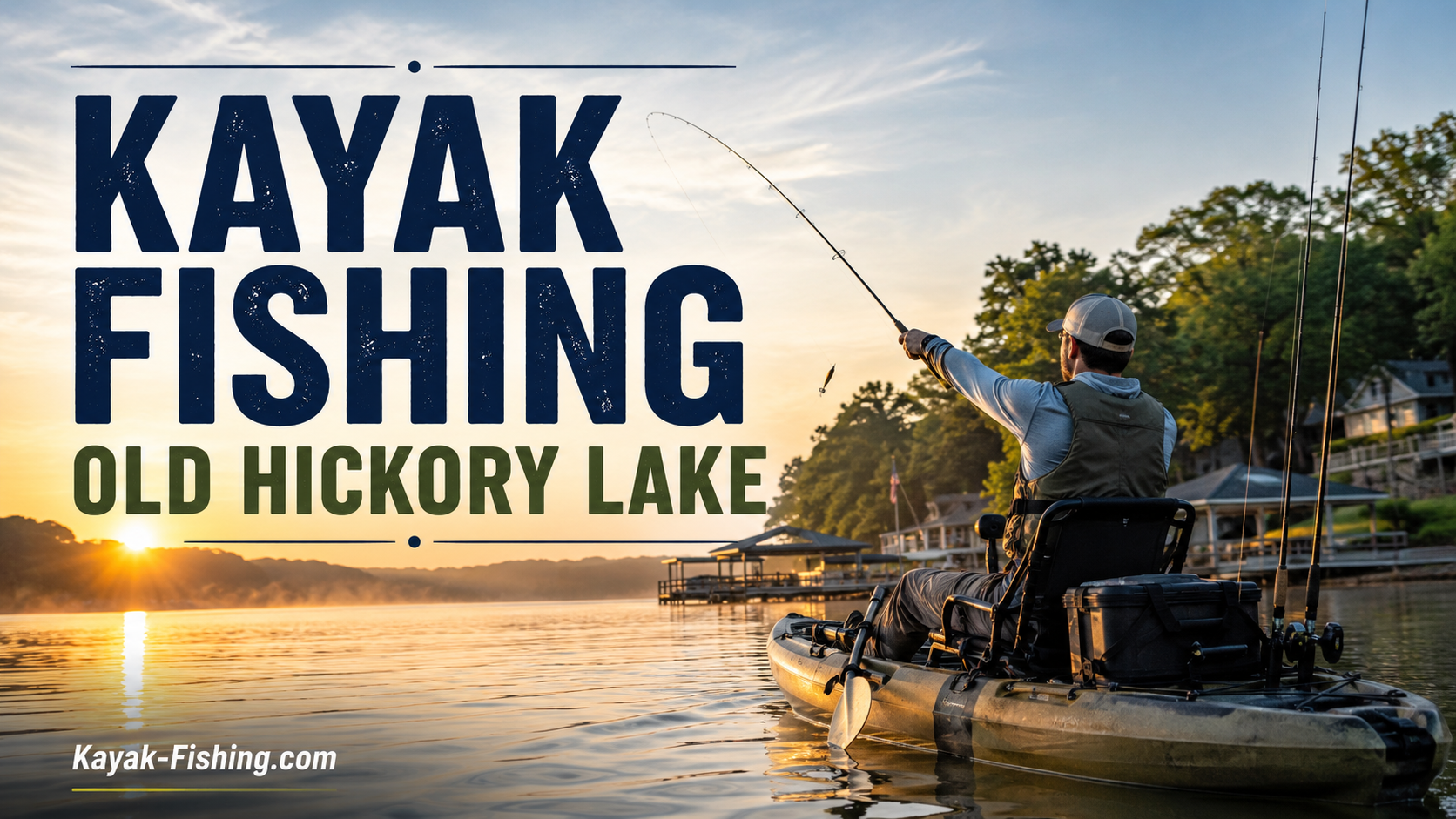
Kayak Fishing Old Hickory Lake: Best Spots, Launches & Tips
Kayak fishing Old Hickory Lake gives Middle Tennessee anglers access to shallow creeks, grass lines, docks, ledges, rocky banks, fish attractors, marinas, and protected coves without needing a big boat. The lake can work well from a kayak when the launch, route, wind, and boat traffic match your experience level.
This guide focuses on the most practical kayak fishing areas on Old Hickory Lake, including Shutes Branch, Station Camp Creek, Drakes Creek, Bledsoe Creek, Sanders Ferry, the Highway 109 area, and the lower-lake zones near Rockland. You’ll also find seasonal patterns, launch tips, target species, safety advice, and simple gear recommendations for fishing Old Hickory from a kayak.
Quick Answer: Old Hickory Lake is a strong kayak fishing lake because it has protected creeks, shallow grass, docks, ledges, fish attractors, and plenty of access. For beginners, Shutes Branch, Station Camp Creek, Sanders Ferry, and Bledsoe Creek are good starting points. More experienced kayak anglers can expand toward main-lake ledges, channel swings, deep structure, and open-water striper areas when wind and boat traffic allow.
Table of Contents
Old Hickory Lake at a Glance
Old Hickory Lake is a 22,500-acre reservoir on the Cumberland River in northern Middle Tennessee. The lake is owned and operated by the U.S. Army Corps of Engineers, and TWRA lists dozens of public access sites, marinas, fishing piers, and fish attractor sites across the reservoir.
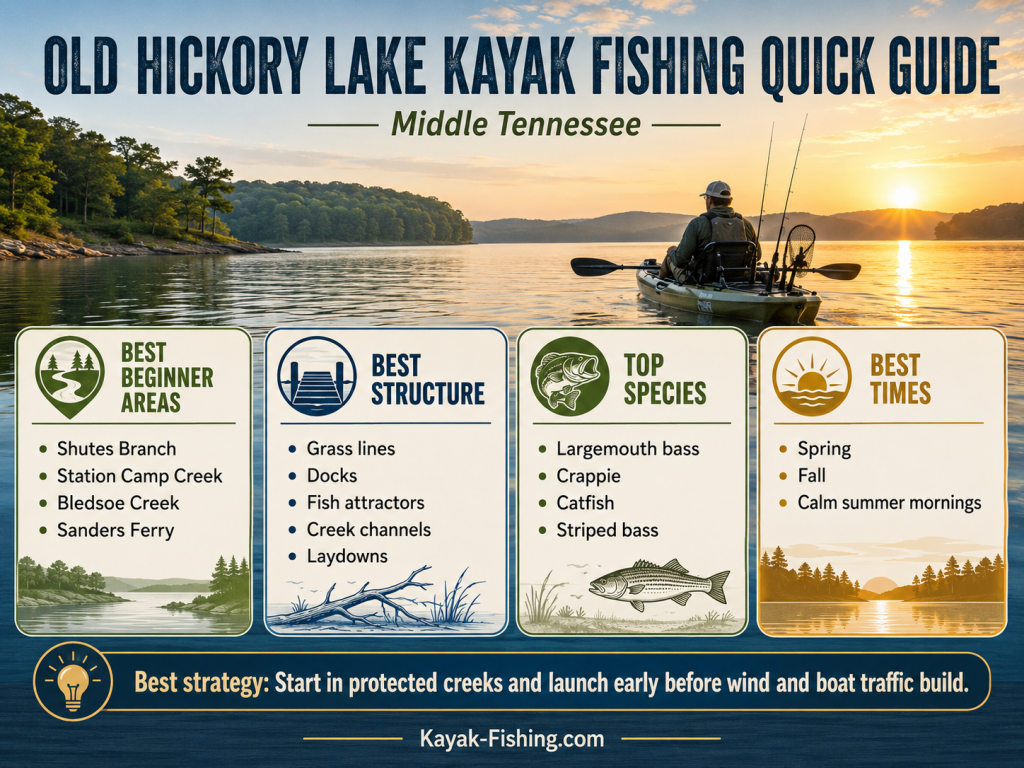
| Category | Best Starting Point |
|---|---|
| Best beginner kayak areas | Shutes Branch, Station Camp Creek, Sanders Ferry, Bledsoe Creek |
| Best bass structure | Grass lines, docks, creek channels, ledges, laydowns, and fish attractors |
| Best crappie areas | Brush, piers, bridges, creek arms, and TWRA fish attractors |
| Best time for kayak anglers | Early morning, spring, fall, and calm summer mornings |
| Main safety concerns | Wind, boat wakes, open-water exposure, storms, and current near the dam |
| Best beginner strategy | Pick one protected creek or cove and fish it thoroughly instead of trying to cover the whole lake |
For kayak anglers, the most important thing is not simply finding the “best spot.” It is matching the spot to the conditions. Old Hickory can be calm and beginner-friendly inside a creek arm, then rough and uncomfortable on the main lake once wind and boat traffic build.
Best Kayak Fishing Areas on Old Hickory Lake
These areas are some of the most useful starting points for kayak fishing Old Hickory Lake because they combine fish-holding structure, access, and manageable paddling options. Conditions can change quickly, so always check wind, weather, lake level, and access status before launching.
1. Shutes Branch Recreation Area
Shutes Branch is one of the most practical kayak fishing areas on Old Hickory Lake. TWRA identifies the Shutes Branch embayment as a productive area for bass and crappie, and Recreation.gov lists a boat launch and fishing platform. It also gives you access to coves and shoreline cover without forcing you immediately into open main-lake water.
Current facility note (August 2026): Recreation.gov says the Shutes Branch restroom facilities are temporarily closed because of fire damage and portable toilets are in place. The boat launch remains listed as a facility. Check the current Shutes Branch notice before your trip.
Why it works:
- Good protected-water option for beginner and intermediate kayak anglers.
- Grass lines, brush, laydowns, and shoreline cover hold bass and panfish.
- Nearby creek and cove structure gives you several patterns to try without paddling far.
- Better option than open main-lake water on breezy mornings.
Target species: largemouth bass, crappie, panfish, catfish
Best seasons: spring, fall, and calm summer mornings
Best techniques: weightless soft plastics, Texas rigs, shallow crankbaits, swim jigs, small jigs, and finesse plastics along grass edges and shallow cover.
2. Drakes Creek
Drakes Creek is one of the downstream embayments TWRA identifies as a productive area for both largemouth bass and crappie. From a kayak, the creek-arm layout can let you work shoreline cover and seasonal shallow patterns without committing to a long main-lake paddle.
Why it works:
- Warms earlier than some main-lake areas in spring.
- Creek channels, shallow flats, docks, and pockets create multiple bass patterns.
- Good area to slow down and fish thoroughly from a kayak.
- Crappie can use submerged wood, brush, and creek structure during seasonal movements.
Target species: largemouth bass, crappie, panfish, catfish
Best seasons: spring through early summer, then again in fall
Best techniques: spinnerbaits, Texas rigs, squarebill crankbaits, poppers, small swimbaits, jigs, and crappie jigs around brush or cover.
3. Station Camp Creek
Station Camp Creek is one of the middle-reservoir embayments TWRA identifies for largemouth bass and crappie. For a kayak angler, its creek setting can also reduce open-water exposure compared with starting on the main reservoir, although wind and boat traffic still need to be checked before launching.
Why it works:
- Protected creek water gives you a safer place to learn kayak control.
- Shallow banks, docks, and creek-channel structure give bass and panfish places to feed.
- It is a good area to fish slowly with finesse baits, small jigs, and light tackle.
- Wind is usually easier to manage inside the creek than on the open lake.
Target species: bass, panfish, catfish, crappie
Best seasons: spring, summer mornings, fall, and mild winter days
Best techniques: Ned rigs, small jigs, weightless soft plastics, live worms for panfish, and slow presentations around docks and shallow cover.
4. Bledsoe Creek
Bledsoe Creek is one of the middle-reservoir embayments TWRA identifies as productive for bass and crappie. Bledsoe Creek State Park also provides direct access to Old Hickory Lake, making it a practical place to consider when you want to stay in creek water rather than start with a long open-water crossing.
Why it works:
- Good protected-water option for kayak anglers.
- Natural shoreline, creek structure, and shallow cover hold bass, panfish, and crappie.
- Scenic area that is more enjoyable for slower, low-pressure kayak trips.
- Can be a good alternative when the lower lake is crowded or windy.
Target species: bass, crappie, panfish, catfish
Best seasons: spring and fall, with summer mornings also worth fishing
Best techniques: soft plastics, small jigs, spinnerbaits, shallow crankbaits, live worms, and crappie jigs near brush or shoreline structure.
5. Sanders Ferry Park
Sanders Ferry is a good kayak option when you want access to multiple coves, shoreline structure, and park-area fishing without immediately committing to open water. It can be especially useful for short morning or evening trips.
Why it works:
- Multiple coves and shoreline pockets give you places to hide from wind.
- Docks, riprap, and shoreline transitions can hold bass and panfish.
- Good option for shorter trips close to Hendersonville and Nashville-area anglers.
- Useful beginner area when boat traffic is manageable and weather is calm.
Target species: bass, panfish, catfish, crappie
Best seasons: spring through fall
Best techniques: dock fishing, soft plastics, small crankbaits, jigs, live bait for panfish, and slow presentations around shade.
6. Highway 109 and Upper-Lake Grass
The Highway 109 area near Gallatin is known for aquatic vegetation and can be a strong bass zone when grass is present and healthy. For kayak anglers, grass can be both a blessing and a challenge: it concentrates fish, but wind and boat traffic can make open-water positioning difficult.
Why it works:
- Grass gives largemouth bass shade, ambush cover, and cooler water in warmer months.
- Edges, holes, and points in vegetation can concentrate fish.
- Good area for frogs, swim jigs, weightless plastics, and moving baits when fish are active.
- Best fished from a kayak when wind is low and boat traffic is manageable.
Target species: largemouth bass, panfish, catfish
Best seasons: late spring through fall, depending on vegetation and water conditions
Best techniques: frogs, swim jigs, buzzbaits, weightless stickbaits, Texas rigs, and weedless swimbaits around grass edges and holes.
7. Rockland and Lower-Lake Access
Rockland provides lower-lake access near Old Hickory Dam and can put kayak anglers closer to deeper reservoir water, ledges, channel-related structure, and other lower-lake fishing opportunities. The U.S. Army Corps of Engineers reopened the Rockland boat launch ramp after tornado-related repairs, although portions of the broader recreation area have remained under recovery.
Access note: Check current USACE or Recreation.gov information before your trip because facilities and access within the broader Rockland Recreation Area can change as recovery work continues.
The lower-lake location is a higher-consequence place to kayak fish than a protected creek arm. Stay outside restricted dam areas, avoid strong current, watch powerboat traffic, and turn back before wind makes the return trip difficult.
Best fit: experienced kayak anglers who have checked current wind, boat traffic, and dam-related restrictions before launching.
Best Kayak Launch Points on Old Hickory Lake
Old Hickory has many public access points, but not all of them are equally useful for kayak anglers. A good kayak launch should have manageable parking, safe access to the water, nearby protected fishing, and a backup plan if wind or boat wakes build.
| Launch Area | Best For | Kayak Notes |
|---|---|---|
| Shutes Branch | Beginners, bass, crappie, protected coves | Good starting area with nearby structure and less open-water exposure. |
| Station Camp Creek | Calm-water trips, panfish, bass, short paddles | Good place to learn boat control and fish slowly. |
| Sanders Ferry Park | Short trips, coves, shoreline fishing | Useful when conditions are calm and you want multiple nearby pockets. |
| Bledsoe Creek State Park | Scenic paddles, protected water, bass and panfish | Good option for a slower, more relaxed kayak fishing day. |
| Highway 109 / Gallatin-area access | Grass fishing, bass, upper-lake patterns | Best on calm days. Watch open water, wind, and boat traffic. |
| Rockland boat ramp | Lower-lake access, deeper structure | Boat launch access near the lower lake. Check current USACE information because broader recreation-area facilities are still being restored. |
Kayak launch tip: Launch before sunrise or early in the morning when possible. Old Hickory can get busy, and the difference between a calm morning and a windy, wake-filled afternoon can be huge from a kayak.
Seasonal Patterns for Kayak Fishing Old Hickory Lake
Old Hickory fishes differently by season. For kayak anglers, seasonal timing matters because fish location, boat traffic, water temperature, and wind exposure all affect how safe and productive a trip feels.
Spring
Spring is one of the best seasons to kayak fish Old Hickory Lake. Bass and crappie move toward creeks, pockets, shallow banks, brush, docks, and spawning areas. This is a great time to start in protected creek arms like Drakes Creek, Shutes Branch, Station Camp Creek, and Bledsoe Creek.
- Bass: spinnerbaits, squarebills, lipless crankbaits, soft plastics, jigs, and topwater later in the season.
- Crappie: small jigs and minnows around brush, shallow banks, piers, and structure.
- Kayak strategy: fish coves, creek channels, shallow flats, and protected pockets before expanding to the main lake.
Summer
Summer can be productive, but the best kayak window is usually early morning, evening, or night if you are experienced and properly equipped. Heat, recreational boat traffic, and wind are the main issues.
- Bass: fish grass, shade, docks, deeper edges, ledges, and low-light feeding areas.
- Catfish: target channels, flats, bends, and deeper water with cut bait or other legal baits.
- Stripers: look for bait, current, deeper structure, and lower-light feeding windows.
- Kayak strategy: start early, stay close to shade and protected water, and get off the lake before traffic and heat peak.
Fall
Fall is another strong season on Old Hickory. Cooling water can push bait and gamefish shallower, and bass may feed actively around grass, points, docks, creek mouths, and shallow cover.
- Bass: swimbaits, crankbaits, spinnerbaits, topwater, jigs, and soft plastics.
- Crappie: brush, fish attractors, piers, and creek-channel structure can all be worth checking.
- Kayak strategy: cover water early with moving baits, then slow down around productive structure.
Winter
Winter fishing is slower but can still be productive, especially for crappie, bass on structure, and catfish. Kayak anglers need to be extra careful because cold water leaves less room for mistakes.
- Bass: slow jigs, finesse plastics, blade baits, and deeper structure presentations.
- Crappie: fish attractors, brush, docks, piers, and channel-related structure.
- Catfish: deeper holes, flats, and channel edges.
- Kayak strategy: dress for water temperature, keep trips short, avoid wind, and stay close to your launch.
Best Species to Target on Old Hickory Lake
Largemouth Bass
Largemouth bass are one of the main reasons anglers fish Old Hickory. From a kayak, focus on grass, docks, shallow creeks, laydowns, ledges, and fish attractors. In spring, fish move shallow. In summer, vegetation, shade, and nearby depth become more important.
Top kayak tactics:
- Texas-rigged worms and craws around docks, grass, and laydowns.
- Spinnerbaits and chatterbaits around stained water, windblown banks, and grass edges.
- Squarebill and lipless crankbaits around shallow cover and spring banks.
- Topwater early and late around grass, docks, and shade.
Smallmouth and Spotted Bass
Old Hickory also has other black bass species, including smallmouth and spotted bass. These fish are more likely to relate to rock, ledges, current-influenced areas, and deeper structure than shallow vegetation.
Top kayak tactics:
- Finesse jigs, Ned rigs, and small swimbaits on rocky banks and transitions.
- Drop shots and small plastics around deeper structure.
- Crankbaits and jerkbaits when fish are chasing bait.
Crappie
Crappie are a great kayak target because they often relate to predictable cover: brush, piers, fish attractors, bridges, creek arms, and submerged structure. A kayak lets you work small areas slowly and quietly without needing a large boat.
Top kayak tactics:
- Small jigs tipped with soft plastics.
- Live minnows where legal.
- Slow presentations around brush, piers, and fish attractors.
- Light spinning tackle and vertical presentations when fish are deeper.
Catfish
Old Hickory has channel catfish along with larger blue and flathead catfish opportunities. Kayak anglers can target catfish along deeper flats, channel edges, outside bends, marina edges, and nighttime feeding routes.
Top kayak tactics:
- Cut shad, skipjack, chicken liver, worms, or other legal baits.
- Carolina-style bait rigs or simple bottom rigs.
- Short anchor sets in protected areas, with caution around current and boat traffic.
- Evening or low-light trips when properly equipped and familiar with the area.
Striped Bass and Hybrids
Striped bass and hybrid striped bass are exciting targets, but they are not always the easiest species to chase from a kayak. They may relate to current, bait, deeper structure, and open-water movements. When conditions are right, swimbaits, spoons, topwaters, and live bait can all produce.
Kayak caution: If you are targeting stripers from a kayak, be realistic about wind, distance, boat traffic, and current. Stay away from dam-restricted areas and avoid chasing schooling fish into unsafe open water.
Best Lures and Techniques for Old Hickory Lake
You do not need a giant tackle box to kayak fish Old Hickory. A simple lake-specific setup is usually better than carrying every lure you own.
| Situation | Best Starting Lures | Where to Fish Them |
|---|---|---|
| Shallow spring bass | Spinnerbait, squarebill, Texas rig, lipless crankbait | Creeks, shallow flats, docks, and grass edges |
| Grass fishing | Frog, swim jig, chatterbait, weightless stickbait | Highway 109 area, grass lines, holes, and edges |
| Dock fishing | Skipping jig, Texas rig, finesse worm, Ned rig | Shaded docks, walkways, corners, and deeper posts |
| Crappie fishing | Small jigs, minnows, underspins | Brush, piers, bridges, fish attractors, and creek structure |
| Catfish | Cut bait, worms, live bait where legal | Flats, channel swings, deeper holes, and evening feeding routes |
| Stripers | Swimbaits, spoons, topwaters, live shad where legal | Bait schools, channel edges, current-influenced water, and deeper structure |
For most kayak anglers, the best approach is to pick one creek arm, one cove system, or one stretch of shoreline and fish it thoroughly. Old Hickory is big enough that trying to fish everything in one trip usually leads to more paddling than catching.
Recommended Kayak Fishing Gear for Old Hickory Lake
Kayak
A stable sit-on-top fishing kayak is the best fit for most Old Hickory trips. You want enough stability to handle boat wakes, enough storage for safety gear and tackle, and enough tracking to paddle comfortably when the wind picks up.
If you are still choosing a boat, start with our best fishing kayaks for beginners guide. A compact, stability-focused platform such as the Old Town Sportsman 106 can fit protected creeks, coves, and lake fishing, but heavier fishing kayaks also demand a realistic loading and transport plan.
PFD
A fishing-specific PFD should be worn the entire time you are on the water. Old Hickory can look calm in the morning and then turn into a wake-filled mess by midday. Read our guide to the best PFDs for kayak fishing if you need help choosing one.
Anchor or Positioning System
An anchor can help in coves, shallow water, and windy conditions, but it needs to be used carefully. Avoid anchoring in strong current, boat channels, or exposed areas where wakes can hit you sideways. A stakeout pole or light anchor can be useful in protected water, while a full anchor setup should have a quick-release option.
For more detail, see our guide to the best kayak anchors for lakes, rivers, and inshore water.
Fish Finder
A fish finder is not required, but it is helpful on Old Hickory because ledges, bait, brush, and fish attractors can be a big part of the bite. If you fish deep structure, crappie spots, or winter patterns, electronics become much more useful.
Rods and Tackle
- General bass setup: medium or medium-heavy rod with soft plastics, jigs, spinnerbaits, and crankbaits.
- Finesse setup: medium spinning rod with Ned rigs, drop shots, small swimbaits, and light plastics.
- Crappie setup: light spinning rod with small jigs or minnows.
- Catfish setup: medium-heavy rod with circle hooks and simple bait rigs.
Keep your first Old Hickory kayak setup simple. One or two rods and a small tackle box are easier to manage than a cluttered deck full of gear. If you are simplifying the rigging side too, our kayak fishing knots guide covers a small set of useful leader and terminal connections.
Plan your Old Hickory kayak fishing setup:
Kayak Safety on Old Hickory Lake
Old Hickory is very kayakable, but it is still a large reservoir with open water, boat traffic, changing weather, and dam-related hazards. The safest kayak trips are usually short, early, and planned around protected water. For the broader planning framework, see our kayak fishing safety guide.
- Watch the wind: Wind can build after mid-morning and make open water difficult in a kayak.
- Respect boat wakes: Summer weekends and afternoons can get busy. Stay visible and avoid high-traffic areas when possible.
- Wear a PFD: Keep it on your body, not behind the seat.
- Check storms: Thunderstorms can build quickly in Middle Tennessee, especially in warm months.
- Avoid dam danger zones: Stay away from restricted areas, current, and anything near the dam that is marked as off-limits.
- Carry a light: If there is any chance you will be out at dusk, carry proper lighting and visibility gear.
- Text a float plan: Tell someone where you are launching, where you plan to fish, and when you expect to be off the water.
For your first few Old Hickory trips, pick a calm morning and fish a protected creek or cove. There is no reason to paddle across open water until you know your kayak, your gear, and the lake conditions.
Fishing Licenses, Regulations, Fish Attractors and Brush Piles
Most anglers need a valid Tennessee fishing license to fish Old Hickory Lake unless they qualify for an exemption. Species-specific limits and size restrictions can change, so check the latest TWRA Old Hickory Reservoir page and current Tennessee fishing regulations before keeping fish.
Old Hickory Lake Fish Attractors and Brush Piles
Old Hickory has 40 buoyed TWRA fish-attractor sites. These are especially useful to kayak anglers because they provide defined pieces of offshore structure that can be planned into a short route instead of searching large areas of open water.
TWRA says largemouth bass use the attractors year-round but that the sites primarily attract bass from late November through early March when water temperatures are below about 55°F. During that period, bass can use attractors surprisingly shallow, often in the 6- to 12-foot range.
For crappie, TWRA says fish attractors are most productive from October through May, also commonly in 6 to 12 feet of water, with jigs and minnows among the standard approaches. That makes the attractors particularly relevant for fall, winter, and spring kayak trips when you want a repeatable piece of structure to work slowly.
Do not assume the buoy marks one small brush pile directly underneath it. TWRA notes that habitat may be spread around a buoy or concentrated in one denser area. Cast around the marker from different angles or use electronics to locate the actual structure before settling into one position.
Use TWRA’s current fish-attractor resources before the trip rather than relying on old screenshots or saved coordinates. Buoys and habitat can change, and a marked attractor is a starting point—not a guarantee that fish will be present.
Research note: Kayak-Fishing.com has not personally fished Old Hickory Lake. This guide is based on current official fishery, access, and park information plus Kayak-Fishing.com analysis.
Sources and Verification
Official sources used for this update:
- TWRA — Old Hickory Reservoir fishing, species, seasonal patterns, and fish attractors
- U.S. Army Corps of Engineers — Rockland boat launch ramp reopening
- Recreation.gov — Rockland Recreation Area status
- Recreation.gov — Shutes Branch facilities and current notices
- Tennessee State Parks — Bledsoe Creek State Park
FAQs: Kayak Fishing Old Hickory Lake
Is Old Hickory Lake good for kayak fishing?
Yes. Old Hickory Lake is good for kayak fishing because it has protected creeks, coves, grass, docks, fish attractors, and many access points. The key is choosing the right area for the weather. Beginners should avoid open-water paddles and start in protected areas like Shutes Branch, Station Camp Creek, Sanders Ferry, or Bledsoe Creek.
Where should beginners kayak fish Old Hickory Lake?
Good beginner areas include Shutes Branch, Station Camp Creek, Sanders Ferry, and Bledsoe Creek. These areas give kayak anglers access to protected water, shoreline cover, and fishable structure without immediately forcing them into rougher main-lake conditions.
What fish can you catch on Old Hickory Lake?
Old Hickory Lake has largemouth bass, smallmouth bass, spotted bass, crappie, catfish, striped bass, hybrid striped bass, white bass, sauger, walleye, bluegill, redear sunfish, and other panfish. Bass, crappie, catfish, and panfish are usually the easiest kayak targets.
When is the best time to kayak fish Old Hickory Lake?
Spring and fall are usually the best overall seasons for kayak fishing Old Hickory Lake. Summer mornings can also be excellent, but heat, wind, and boat traffic become bigger concerns. Winter can produce fish, especially around deeper structure and fish attractors, but cold-water safety matters more.
Do I need a fishing license for Old Hickory Lake?
Yes, most anglers need a valid Tennessee fishing license to fish Old Hickory Lake. Check current TWRA license requirements and exemptions before fishing.
Is Rockland Recreation Area open?
The Rockland boat launch ramp has reopened following tornado-related repairs, but portions of the broader Rockland Recreation Area have remained under recovery. Check current USACE or Recreation.gov information before your trip for the latest facility and access status.
Is Old Hickory Lake safe for beginner kayak anglers?
It can be safe if you choose protected water, avoid high wind, stay out of heavy boat traffic, and wear a PFD. Beginners should start with short trips in coves and creek arms rather than paddling across open main-lake water.
Final Thoughts
Old Hickory Lake is a versatile and productive kayak fishing lake with enough shoreline, creeks, grass, docks, ledges, and structure to keep you learning for years. The best way to approach it from a kayak is to start small, pick protected water, and learn one section at a time.
If you are newer to kayak fishing, start with areas like Shutes Branch, Station Camp Creek, Sanders Ferry, or Bledsoe Creek on a calm morning. Once you build confidence, you can expand toward grass, ledges, fish attractors, deeper structure, and more open-water patterns.
Old Hickory is too large to cover efficiently from a kayak in one trip. A better approach is to learn one creek arm or access area at a time and keep notes on wind, water clarity, bait, and fish location so future trips start with a clearer plan.
If you want another Middle Tennessee option, read our guide to kayak fishing Percy Priest Lake.